

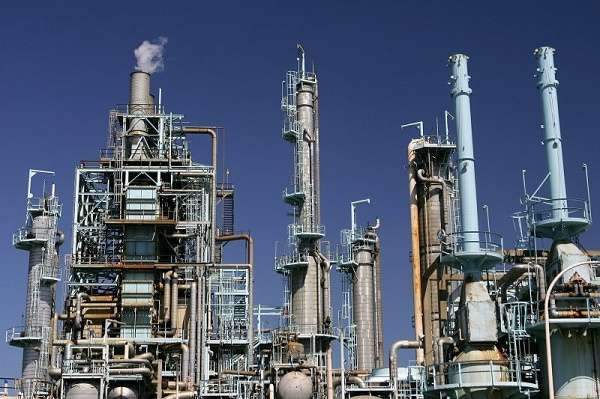
The Tema Oil Refinery (TOR) is currently unable to refine crude oil produced from Ghana’s offshore oilfields because the refinery lacks key processing units required to meet domestic fuel standards, according to the Ministry of Energy and Green Transition.
Technical Adviser at the ministry, Yussif Sulemana, revealed that the refinery does not possess two essential processing units needed to convert Ghana’s crude into refined petroleum products that comply with national fuel quality requirements.
The challenge affects crude sourced from the country’s major offshore production sites, including the Jubilee Oil Field, TEN Oil Field, and Sankofa Oil Field.
Speaking in an interview, Dr. Sulemana explained that without additional equipment, the refinery cannot effectively process Ghana’s premium-grade crude oil into petrol and diesel suitable for domestic consumption.
According to the ministry’s technical adviser, the refinery requires the installation of a diesel hydro-treating unit and an isomerisation or reformer unit to meet the country’s fuel quality standards.
These facilities play a crucial role in modern refining processes by improving fuel characteristics such as sulphur levels and octane ratings.
“We need to add some other equipment.
“Let’s say a diesel hydro unit that can reduce the sulphur content, and also an isomerisation unit, what you call the reformer unit, that can increase the octane number.”
Yussif Sulemana, Technical Adviser at the ministry
He further noted that TOR’s existing crude distillation process cannot produce petrol that meets Ghana’s required 91 Research Octane Number (RON) specification.
Without the additional units, petroleum products derived from Ghana’s crude would fail to meet the quality standards required for sale on the local market.
As a result, such fuel cannot legally be sold at the pump within the country.
Why Ghana Exports Its Crude Oil
Dr. Sulemana said the refinery’s technical limitations explain why Ghana exports most of its crude oil production while relying on imported crude for domestic refining.
“I don’t think that we are refining what is coming from Jubilee. We are not bound to refine what is coming from Jubilee. Normally, it is the economics that will dictate.”
He explained that Ghana’s crude oil is considered high quality on the global market, which means it often attracts a premium price when sold internationally.
Because of this advantage, exporting crude and importing more suitable feedstock for the refinery may be economically more viable under the current setup.
Despite the current constraints, the Ministry of Energy says efforts are underway to upgrade TOR so that it can eventually process Ghana’s crude oil.
Dr. Sulemana disclosed that the government is exploring plans to expand the refinery’s capabilities and introduce additional processing infrastructure within the facility. “Our effort is to make sure that TOR would be in a better position to refine Ghana crude,” he stated.
He further revealed that authorities are considering the development of a new refinery facility within the existing TOR enclave.
Such an upgrade, according to energy experts, could significantly improve Ghana’s energy security by reducing reliance on imported petroleum products.
Leave a Reply