
Kizito CUDJOE
Government is targetting an end of liquid-fuel purchases for electricity generation by 2027 as it steps up efforts to expand natural gas supply.
This move is expected to lower thermal generation costs, reduce pressure on the energy sector and improve local industry’s competitiveness.
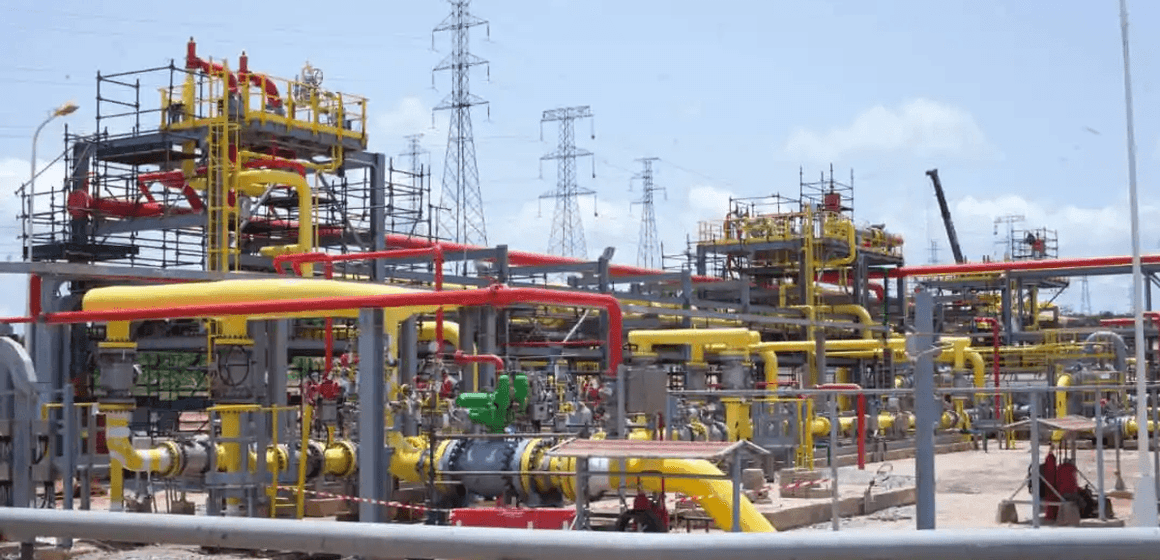
The Director of Power-Ministry of Energy and Green Transition, Suleman Abubakar, said government is working to double gas volumes through the West African Gas Pipeline while developing a 278-kilometre pipeline to connect the country’s principal power centres.
The plan builds on a reduction in liquid-fuel purchases from eight cargoes to two, which government says generated approximately US$500million of savings in a single year. If achieved, the 2027 target will mark a significant shift in Ghana’s power generation fuel mix, although its success will depend on the availability of sufficient gas and timely delivery of supporting infrastructure.
The announcement also comes amid a wider debate about how Ghana should deploy its natural gas resources, particularly the balance between export earnings and domestic industrial needs.
The energy session Chair on day-2 of the 2026 Ghana Economic Forum (GEF), Kwame Jantuah, urged government to prioritise domestic gas availability – arguing that the resource can play a greater role in addressing the country’s longstanding industrialisation challenges.
“Right now, if we were to sell gas we would make a lot of money. Domestically, let’s look at how we produce that gas for local production and for industry,” he said.
Mr. Jantuah, who is also Chair of the Energy Sector-Association of Ghana Industries (AGI), said the country’s energy conversation must extend beyond electricity supply to the resources that make power generation possible.
“You can’t talk about power on its own without talking about the resource of power. So, you talk about gas; you talk about crude because all these are part and parcel of the fuel that helps bring power to be,” he said.
Mr. Abubakar, who was delivering the keynote address on behalf of sector minister Dr. John Abdulai Jinapor at the forum in Accra, noted that government has made significant progress in addressing the financial challenges which have constrained the energy sector.
He said US$1.47billion in legacy energy-sector debt has been cleared, while the full US$500million World Bank guarantee has been repaid and restored. Approximately US$500million owed to Eni and Vitol was also settled in 2025, with payments now being made for gas consumed.
“Today, close to GH¢15billion is declared into the Cash Waterfall Mechanism every month and Independent Power Producers (IPPs) receive near-100 percent of their invoices,” he stated.
He further disclosed that agreements with nine IPPs have been renegotiated, yielding approximately US$250million in immediate savings and restructuring US$1.1billion in legacy debt for payment between 2026 and 2028.
Beyond these financial measures, the country’s installed generation capacity now stands at 6,000 megawatts – meeting domestic demand while exporting electricity to Burkina Faso, Côte d’Ivoire, Benin and Togo, he said.
Government also aims at strengthening the transmission network to accommodate growing electricity demand, which the minister put at approximately 10 percent annually.
Mr. Abubakar said the ministry is working with the Ministry of Finance to mobilise US$500million for transmission investments, including the proposed Accra-Kumasi 330kV line, Ho-Asiekpe line and installation of more than 2,000 transformers.
The Anwomaso thermal plant is expected to reach 250 megawatts by end-2026 alongside other generation projects involving CENIT and AKSA, as well as additional projects planned for the Greater Kumasi metropolis.
In the upstream petroleum sector, he said crude oil production has increased by approximately 30 percent following about six years of decline.
The Jubilee and Tweneboa-Enyenra-Ntomme (TEN) field licences have also been extended to 2040, with up to 10 new wells planned from mid-2027.
The minister’s address further indicated that government is pursuing expansion work at Tema Oil Refinery (TOR) and Sentuo, which are expected to meet approximately 70 percent of the country’s demand for refined petroleum products.
The broader energy agenda also includes discussions on a proposed 2,000-megawatt nuclear power programme with Russia, as government seeks to diversify the country’s generation mix.
Speaking at the forum, Partner, Strategy and Transactions-EY Ghana, Alice Osei Okrah, said the progress made in stabilising the economy must provide a foundation for sustained productive growth.
“Stability becomes truly meaningful when businesses can invest with confidence; industries can expand, entrepreneurs can innovate and Ghanaian companies can compete successfully at home, across Africa and globally,” she said.
She emphasised that reliable and affordable energy will be central to translating economic stability into business expansion, industrial productivity and wider competitiveness.
The 2026 Ghana Economic Forum – the 15th edition of the flagship programme organised by Business and Financial Times (B&FT) – was held under the theme ‘Future Economy Runs on Power: Building Ghana’s Energy Advantage for Sustainable Industrial and Economic Growth’.
Leave a Reply