
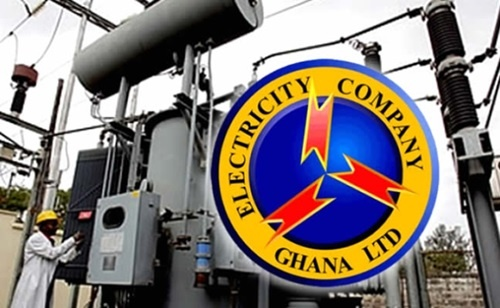
A new policy report has challenged the narrative that Ghana’s power sector woes stem solely from the Electricity Company of Ghana (ECG), pointing instead to deeper institutional and systemic failures across the energy value chain.
Authored by Seth Owusu-Mante for the International Perspective for Policy and Governance (IPPG), the report titled Securing Ghana’s Energy Future: Policy Actions for Sustainability and Efficiency—was released in July 2025 following a high-level expert roundtable held in Accra earlier this year. It features insights from over a dozen professionals spanning government, academia, industry, and civil society.
The report provides a clear-eyed assessment of the country’s energy sector, arguing that while ECG’s shortcomings—such as poor revenue collection, electricity theft, and growing debts are serious, they are symptoms of more entrenched problems including policy incoherence, weak enforcement, and institutional overlap.
Mounting Debt, Currency Risks
By the end of 2024, Ghana’s energy sector debt had ballooned to nearly US$3 billion. ECG, which collects most of its revenue in Ghana cedis, must meet significant contractual obligations in U.S. dollars. The resulting currency mismatch exacerbated by periodic cedi depreciation has weakened ECG’s financial viability and pushed the company to the brink of unbankability.
However, the IPPG report warns against singling out ECG as the root of the crisis. “The sector is not suffering from a shortage of policies but from an excess of overlapping rules, weak enforcement and institutional fragmentation,” the report states.
Some Progress Amidst the Challenges
Despite its struggles, ECG has made notable progress in honouring its financial obligations under the Cash Waterfall Mechanism (CWM), a transparent payment framework that ensures timely disbursement to sector players.
In May 2025 alone, ECG paid out GH¢1.07 billion to key stakeholders including GH¢554.9 million to Independent Power Producers (IPPs) and fuel suppliers, and GH¢518.3 million to state-owned utilities and regulators. A validation report from the Public Utilities Regulatory Commission (PURC) confirmed ECG’s full compliance with the approved allocations, citing improved transparency and fiscal discipline. Major recipients included Cenpower (GH¢105 million), Bui Power (GH¢88.4 million), and ECG itself, which retained GH¢235.5 million to support its operations.
Sector-Wide Gaps and Bottlenecks
Beyond ECG, the report highlights inefficiencies across the energy ecosystem. It points to falling crude oil production from a peak of 215,000 barrels per day in 2019 to just under 190,000 by the end of 2024 as a sign of upstream underperformance. This shortfall, the report notes, is far below the 500,000-barrel daily output many experts believe Ghana is capable of achieving.
In the gas subsector, repeated shutdowns at the Atuabo Gas Processing Plant have hampered consistent supply to thermal plants, forcing the country to rely more heavily on costly heavy fuel oil. The authors argue that without swift investment in the long-stalled Second Gas Processing Plant (GPP II), Ghana’s domestic gas potential will remain underutilised.
The Role of Politics and Institutional Dysfunction
The report introduces the concept of “political settlement” to explain the persistence of inefficiencies. It argues that informal elite arrangements focused on distributing political and economic benefits often override technocratic policy decisions.
“These informal arrangements reward loyalty over competence and have created a system where technically sound policies are routinely sidelined,” the report observes.
While reforms such as the Energy Sector Recovery Programme (ESRP) and Energy Sector Levies Act (ESLA) have been introduced, poor execution and lack of political will have limited their impact.
Roadmap for Reform
The IPPG outlines a series of policy actions spanning short, medium, and long-term timelines:
- Short-term: Encourage targeted private sector involvement in ECG’s commercial operations, improve transparency in cash flow management, and fast-track completion of GPP II.
- Medium-term: Clarify and consolidate institutional mandates to reduce duplication and reform the ineffective Net Metering Code to better support distributed renewable energy.
- Long-term: Transition ECG into a performance-based utility and establish a more attractive investment climate across the energy value chain.
The report closes with a stark warning: “Technical solutions are necessary but they are not sufficient. Reform will only succeed if it confronts the political-economic constraints that have sustained the current system.”
Ultimately, the IPPG calls for bold and coordinated reforms that address both the visible and hidden dysfunctions in Ghana’s energy sector urging policymakers to look beyond surface-level fixes and tackle the entrenched political economy that continues to undermine progress.