

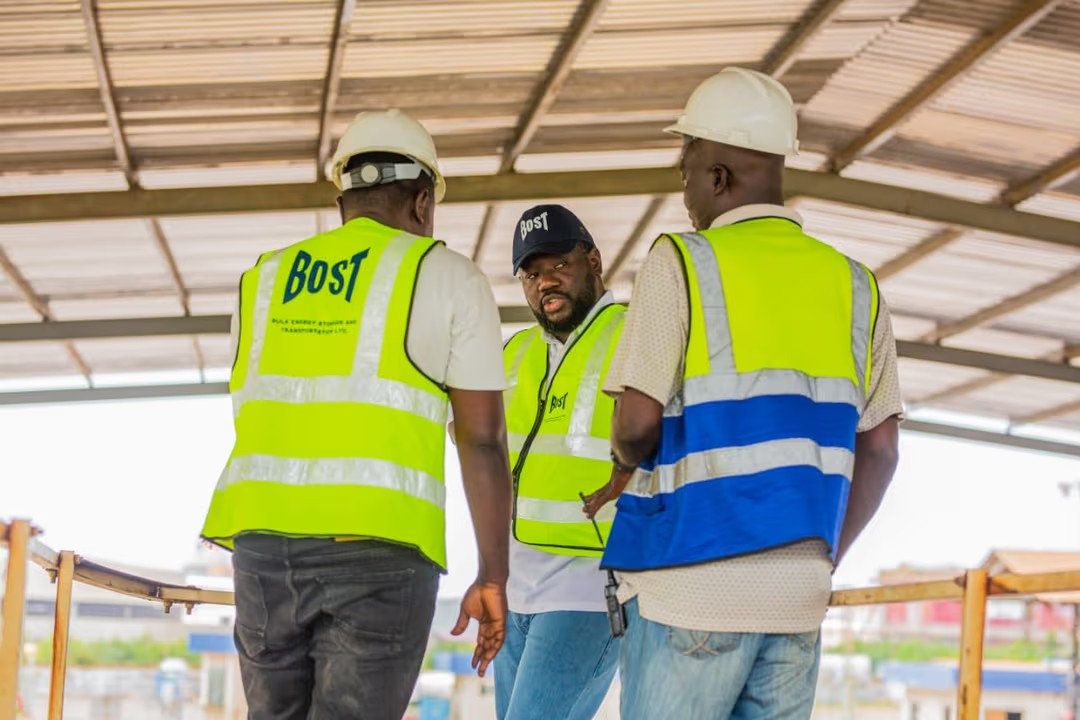
The Bulk Oil Storage and Transportation Company (BOST) has launched an ambitious solar energy initiative across its major fuel depots, reinforcing its commitment to Ghana’s national Energy Transition Framework.
This strategic rollout forms part of BOST’s broader sustainability agenda aimed at cutting emissions, reducing fuel costs, and aligning with the country’s goal of achieving net-zero carbon emissions by 2070. The national framework targets a 10% emissions reduction by 2030.
To drive the agenda, BOST has established a dedicated Green Transition and Alternative Fuels Department to spearhead the company’s shift to cleaner energy solutions.
Solar installations are already in progress at the Buipe and Kumasi depots, with Tema slated as the next site. These systems are designed to power essential depot functions such as lighting, fuel pumps, and surveillance equipment, replacing diesel generators that have become increasingly expensive to operate.
“Energy is one of our biggest costs, and with diesel prices hovering above GH¢12 per litre, switching to solar makes strong economic sense,” said BOST Managing Director Afetsi Awoonor.
He noted that the transition to solar will not only cut operational costs but also unlock opportunities in Ghana’s emerging carbon market. “Each solar-powered depot supports national climate goals and positions BOST as a key player in Ghana’s sustainable energy journey,” he added.
The solar transition comes amid heightened national climate efforts under President John Dramani Mahama’s administration. The creation of the Ministry of Green Transition, led by Minister John Abdulai Jinapor, along with the Climate Change and Sustainability Secretariat, signals a stronger institutional push for a greener economy.
According to Awoonor, initiatives like BOST’s solar project are in sync with this national vision and demonstrate public sector readiness to shift from carbon-intensive operations to more sustainable energy models.
While acknowledging potential challenges such as technical capacity and system upkeep, BOST maintains that solar is a necessary step toward energy resilience and operational sustainability.
“This isn’t about abandoning oil overnight,” Awoonor emphasized. “It’s about ensuring that BOST remains relevant in a rapidly evolving energy landscape.”
