

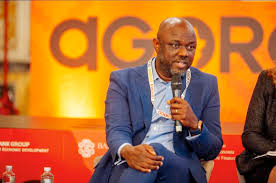
Executive Director of the Africa Centre for Energy Policy (ACEP), Benjamin Boakye, has cautioned that government’s plan to assume Springfield Exploration & Production’s interest in the West Cape Three Points Block 2 (WCTP2) — the Afina discovery — represents an “illogical and fiscally dangerous” move given the absence of commercially viable data and Ghana’s limited risk-bearing capacity.
Speaking during an intensive X Space discussion hosted by NorvanReports, the Economic Governance Platform (EGP) and the Ghana Anti-Corruption Coalition (GACC), on the topic, “WCTP2 Under Review: Technical Truths, Political Pressures & The Future of Ghana’s Oil Governance”, Mr Boakye argued that current technical assessments undermine the basis for any state-led investment in the block.
According to him, the Afina discovery does not meet commercial thresholds and any attempt by the state to purchase the asset amounts to “Ghana buying its own block,” as petroleum resources within the continental shelf already belong to the state.
“It doesn’t make sense for government to even think about taking that much risk when commercial players can be engaged to assume that risk. We should wait and make our 75 percent, not pump money we may never recover,” he said.
No Commerciality, High Risk
Mr Boakye cited the Petroleum Commission’s technical assessment, which estimates the viable flow rate of the Afina well at 370–500 barrels per day, significantly lower than Springfield’s reported average of 4,000 barrels per day.
He stressed that the divergence is too substantial to ignore.
“The difference between the Commission’s interpretation and Springfield’s report is vast. Even with some data gaps, it won’t materially change anything,” he maintained.
International analyses by GaffneyCline and McKinsey, he added, also do not support Springfield’s commerciality claims.
Given this, he argued, further exploratory work not state takeover — is required to determine whether any section of the block can deliver commercially viable results.
Government Should Not Absorb Private Risk
Mr Boakye criticised attempts to justify government intervention on the basis of protecting a local company.
“There is so much we can pump our money into than coughing up several hundreds of millions of dollars to save a local company,” he said. “The job of government is not to go save people who are losing money.”
He stressed that Ghana does not currently have the financial strength to absorb high-risk upstream investments, referencing failures in previous state-supported ventures.
GNPC Censured for Wasteful Spending
The ACEP boss also faulted the historical management of Ghana National Petroleum Corporation (GNPC), arguing that funds earmarked for strategic, risk-bearing investments have been squandered.
“Over $1.45 billion has been given to GNPC to grow into an oil company. They didn’t drill even one well,” he said.
He commended the recent cuts imposed by the Minister of Finance on GNPC’s allocations, describing the institution as “wasteful” and capable of abusing access to free money.
Lessons from the Aker Energy Episode
Referencing the Aker Energy debacle, where the state nearly borrowed $1.65 billion to acquire an asset later transferred for $1, Mr Boakye warned that Ghana risks repeating past mistakes.
“If government had gone ahead with that transaction, look at the losses Ghana would have accumulated after four years of non-production,” he cautioned.
Commercial Players, Not Politics, Should Lead
According to him, Springfield should seek partnerships with credible commercial operators instead of relying on political influence.
He noted that global upstream practice relies on risk-sharing arrangements such as farming-in, and Ghana should not deviate from that model.
“Data credibility is everything. If the data is credible, commercial players will come,” he said.
Ghana Already Holds Up to 75% Interest When Oil Flows
Mr Boakye reiterated that the state already benefits significantly when oil is produced, through taxes, royalties, GNPC carried interest and ExploCo shares.
“Cumulatively, government’s interest could be 70 to 75 percent over the life of the project. We don’t need to buy what already belongs to us,” he argued.
Call for Public Vigilance
He emphasised that civil society’s role is to protect the public purse and not to target companies, stating that decisions around WCTP2 must be scrutinised to prevent needless financial exposure.
“We wake up looking at how we can protect the public interest. The local champion seeking to benefit from the public purse is not more important than a child going to school without shoes,” he said.
Mr Boakye maintained that Ghana must avoid repeating costly upstream errors and allow commercial logic, not political considerations, to drive the future of the Afina block.