

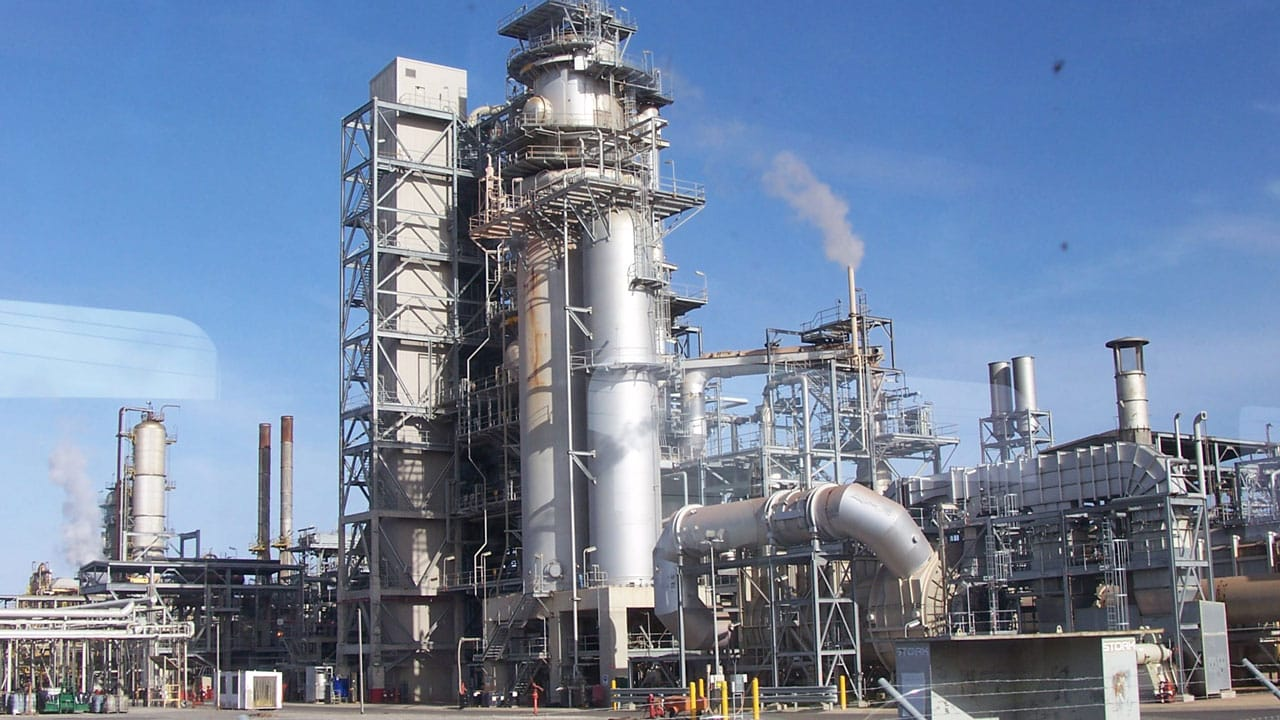
The 650,000 barrels per day capacity Dangote Petroleum Refinery in the Ibeju-Lekki area of Lagos is currently bailing the Federal Government out of a pressing financial crisis with the steady supply of foreign currencies, Business Hallmark can report shows.
The continued flow of FX to the refinery owned by Africa’s richest man, Alhaji Aliko Dangote, BH findings revealed, apart from adding to Dangote’s wealth, have also helped the nation to stabilize its struggling currency and bring down inflationary pressures.
According to findings, the nation, apart from being awash in foreign currencies, has drastically cut down its dollar spendings on imported refined petroleum products, which used to gulp about 40 percent of the country’s FX earnings, thanks to the coming on board of the world largest single-train refinery that commenced operations in January 2024.
It would be recalled that Nigeria has been battling a myriad of economic challenges, including a massive drop in crude oil production from a high of 2.4 million barrels per day to below 900,000 bpd; a sharp revenue drop; a failing economy and galloping inflation.
In a desperate move to address the situation, the incumbent President Bola Tinubu had effected a flurry of reforms, including the scrapping of the controversial fuel subsidy regime; unification of the multiple foreign exchange windows operated by the Central Bank of Nigeria (CBN), as well as the signing of executives orders to free up the troubled oil and gas sector, among many other reforms.
The policies, the government had argued, would help stop the nation’s economy from further bleeding, attract the needed foreign direct investment (FDI) and long-term capital that will help Nigeria to grow its productive capacity.
While the policies, particularly, the ramping up of crude oil production, had no doubt helped to stabilize the economy, the coming on board of Dangote Refinery, experts argued, has made a big impact by helping to crash the huge FX bill the nation spent on importing fuel and also contributes to public treasury.
On July 22, Nigerians got a much clearer picture of how the Dangote Refinery had been impacting the nation’s economy when the President of Dangote Group, Alhaji Aliko Dangote, revealed at the Global Commodity Insights Conference on West African Refined Fuel Markets held in Abuja, that the plant exported one million tonnes of Premium Motor Spirit (petrol) to other countries of the world between June and July this year.
“Today, Nigeria has actually become a net exporter of refined products. Before I came on the podium, I asked my people how many tonnes of PMS we have actually exported. From June beginning to date, we have exported about 1 million tonnes of PMS, within the last 50 days”, Dangote had disclosed.
A breakdown of the 1 million tonnes of petrol exported by Dangote by BH showed that the refinery exported 27 million litres of petrol daily within the period.
For instance, one (1) ton of petrol is roughly equivalent to 1,350 liters. This translates to 1,350,000,000 (1.350 billion) liters for the 1 million tons exported by Dangote Refinery in the period under review.
At the current local pump price of N865, it translates to a revenue of N1,167,750,000,000 (N1.168 trillion) for the company, which is $763,235,294.11765 at the present exchange rate of N1535/$.
Meanwhile, Dangote is also exporting other refined petroleum products from his refinery like aviation fuel, diesel, and naphtha to neighbouring African countries, America, Europe and Asia, meaning that more foreign currencies have been flowing into the country through the plant.
For instance, in February this year, the Dangote Refinery exported two jet fuel cargoes to Saudi Aramco, the national oil company of Saudi Arabia and the world’s largest oil producer.
When the cargoes (ultra-large container ships with fuel capacity of 3 million to 5.5 million gallons were shipped in February, a liter of diesel in the International oil market was $1.22.
Using the median of 3 million gallons per cargo, BH calculates that Dangote supplied nothing less than 24 million liters to its U.S customers in February alone, translating to a revenue of $29.3 million (exclusive of other transaction charges).
About a month after shipping aviation fuel to Saudi Arabia, the refinery expanded its footprint in the global energy market when it supplied over 2 million barrels of jet fuel to the United States in March 2025.
A barrel of aviation fuel nominally contains 55 U.S gallons or 200 liters, meaning a cargo contains 200 million litres and the two exported cargoes amounted to 400 million litres.
At the time of the transaction in March, a litre of Jet-A fuel stood at $1.66. This translates to a revenue of $664million earned by Dangote on the two exported cargoes to the U.S.
The refinery has also been exporting gasoline to other countries like Oman, Malaysia, Ivory Coast, Ghana, Cameron, Singapore and Niger.
These included 90,000 metric tonnes exported via the Pis Kerinci to Sohar, Oman; 89,000 metric tonnes on the Hafnia Larissa to Pasir Gudang, Malaysia; 35,000 metric tonnes on the Sabaek to Abidjan, Ivory Coast; and a further 39,000 metric tonnes aboard the Sabaek in June.
Apart from petrol, diesel and aviation fuel, Dangote Refinery also produce and export other products, such as naphtha, a partially refined petroleum fraction used chiefly as solvents and as raw material to produce petrol.
It was gathered that the Dangote refinery rakes in about $2billion monthly ($24bilion annually) from its overseas trading, which is about $3billion in excess of remittances of $20.93 billion from Nigerians in the Diaspora in 2024.
BH has not been able to independently confirm this figure as all official sources contacted in Dangote declined comment.
Hafsat Ibrahim
August 5, 2025