

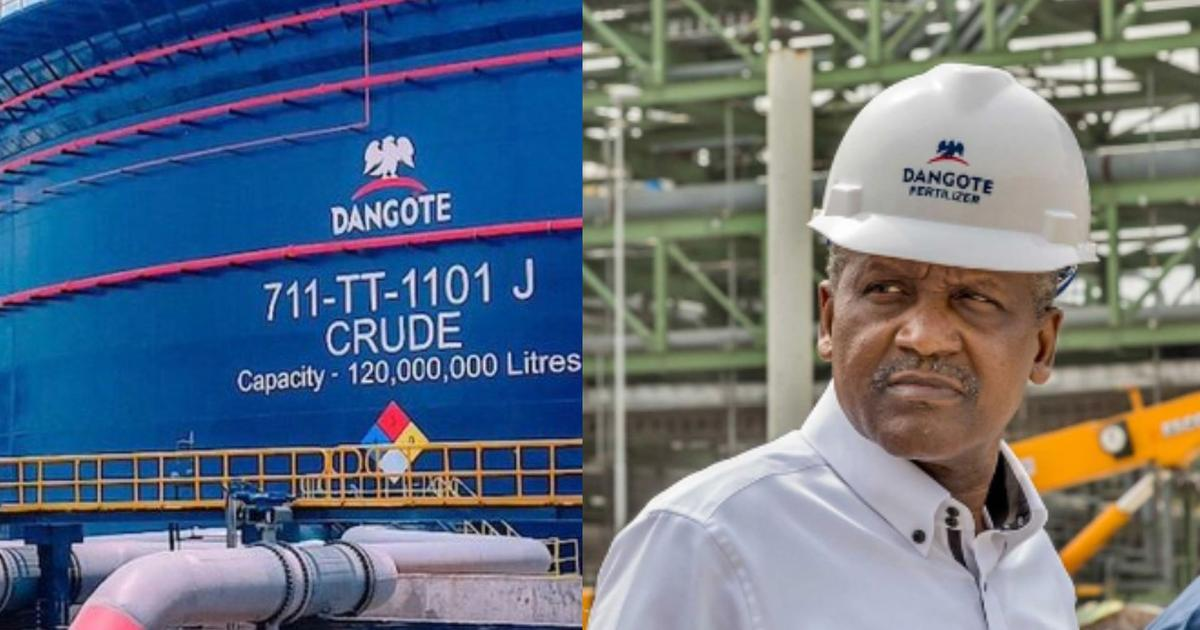
Lagos, Nigeria — The $20 billion Dangote Refinery, Africa’s largest oil refining complex, is set to run entirely on Nigerian crude oil by the close of 2025, marking a critical shift toward domestic energy self-reliance for Africa’s biggest oil producer.
According to Devakumar Edwin, Executive Vice President of Dangote Industries, the 650,000-barrel-per-day refinery owned by billionaire industrialist Aliko Dangote sourced over half of its crude oil from local suppliers in June. That figure is expected to increase sharply as more Nigerian producers redirect supply to the refinery rather than fulfilling offshore export commitments.
“We expect some of the long-term contracts will expire. Personally, and as a company, we expect that before the end of the year, we can transition 100% to local crude,” Edwin told Bloomberg.
Commissioned in 2024 after several years of construction delays, the Lagos-based megaproject is already reshaping Nigeria’s petroleum landscape. It is producing aviation fuel, diesel, gasoline, and naphtha, and has been credited with positioning the country as a net exporter of refined products for the first time in decades.
A Pan-African Shift in Energy Trade
In its early operations, the refinery imported large volumes of crude from Brazil, the United States, Angola, Ghana, and Equatorial Guinea due to gaps in domestic supply. In June, roughly 53% of its feedstock came from Nigerian producers, with the remaining 47% sourced from the U.S. The refinery is currently processing about 550,000 barrels per day, Edwin said.
The move to fully local crude supply not only supports Nigeria’s upstream sector but also signals a broader continental push for energy independence. As one of the largest refining facilities in the world boasting a capacity greater than the ten largest refineries in Europe—it represents a potential model for other African nations striving to add value to their natural resources rather than exporting them raw.
Analysts say the refinery’s impact could reverberate well beyond Nigeria, improving fuel security across West Africa, stabilizing regional prices, and reducing reliance on imports from Europe and Asia.
Next Steps: Infrastructure and Supply Coordination
While the refinery’s progress is encouraging, meeting its long-term goals will require continued collaboration between the facility, indigenous oil traders, and the Nigerian government. Greater consistency in local crude output remains a priority.
Still, the transition is being closely watched by global energy stakeholders. The success of the Dangote Refinery could reshape how African nations manage and monetize their vast hydrocarbon wealth transforming Nigeria from an oil-exporting economy reliant on fuel imports into a hub for refined petroleum exports across the continent and beyond.