
The recent move by the House of Representatives to establish a National Commission for the Decommissioning of Oil and Gas Installations (NC-DOGI) has sparked intense debate within Nigeria’s petroleum governance space. The Ministry of Petroleum Resources, the Nigerian Upstream Petroleum Regulatory Commission (NUPRC), and the Nigerian National Petroleum Company Limited (NNPCL) have all strongly opposed the bill, warning that it could create unnecessary duplication and scare off investors.
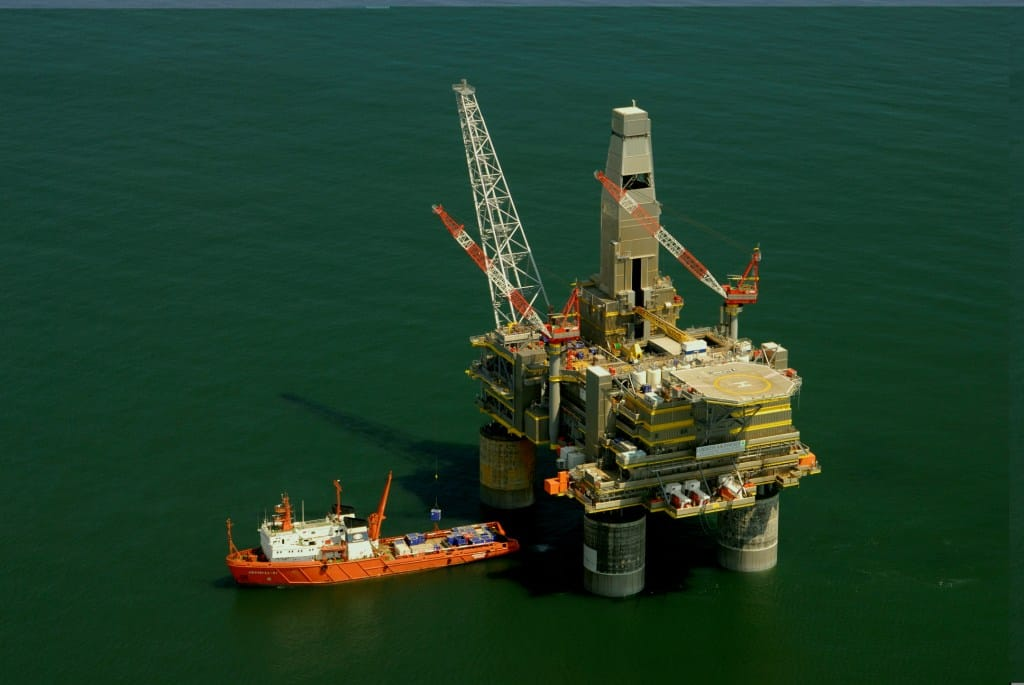
At first glance, the proposal to create a specialized decommissioning agency may seem appealing. Many mature oilfields are approaching the end of their economic life, and Nigeria faces growing obligations for environmental remediation, well abandonment, and site restoration. The fear of inadequate oversight of decommissioning funds often running into hundreds of millions of dollars is legitimate. Yet, the solution must be carefully aligned with institutional logic, not driven by bureaucratic impulse.
In principle, a dedicated commission could provide focused accountability and technical oversight, ensuring that decommissioning trust funds are properly managed and that environmental restoration is not compromised by regulatory neglect. It could also help improve public confidence in how operators handle post-production liabilities. However, these potential benefits must be weighed against the structural consequences of introducing another layer of regulation into an already complex institutional landscape.
The Petroleum Industry Act (PIA 2021) deliberately streamlined Nigeria’s oil and gas governance framework to eliminate overlapping mandates and improve efficiency. The Act clearly assigns responsibility for decommissioning and abandonment to the NUPRC, under Sections 232 to 241. Creating another commission to perform similar functions would therefore contradict the spirit and structure of the PIA, reintroducing the very inefficiencies the reform sought to eliminate.
Moreover, regulatory fragmentation tends to increase transaction costs, create jurisdictional conflicts, and deter investors who crave predictability and clarity. Each additional agency adds its own bureaucracy, approvals, and administrative expenses costs that ultimately undermine project economics and national competitiveness. In a sector already burdened by fiscal uncertainty and infrastructural constraints, adding another regulator could be interpreted as policy inconsistency and a signal of weak governance discipline.
Globally, countries with advanced upstream sectors—such as Norway, the United Kingdom, and Malaysia—retain decommissioning and abandonment oversight within their main upstream regulatory authority. These jurisdictions emphasize capacity building, ring-fenced financial assurance mechanisms, and transparent reporting, not institutional proliferation. The lesson is clear: effective decommissioning governance depends more on institutional integrity than on institutional multiplication.
Nigeria’s priority should therefore be to strengthen the NUPRC’s capacity—technically, financially, and procedurally—to enforce decommissioning obligations. The Commission can be supported through clear fiscal rules, external audits, and parliamentary oversight to ensure that the Decommissioning and Abandonment Fund is properly administered. Transparency, not another agency, is the missing link.
Ultimately, the creation of a new Decommissioning and Abandonment Commission may offer the illusion of reform but would likely yield diminishing returns in governance efficiency. The goal should be to improve coordination within existing institutions, not to multiply them. Nigeria must resist the temptation to solve a coordination problem by creating a governance problem.
Sound petroleum governance is about clarity, competence, and credibility. The PIA provides the right institutional framework—what is needed now is the discipline to let it work.