

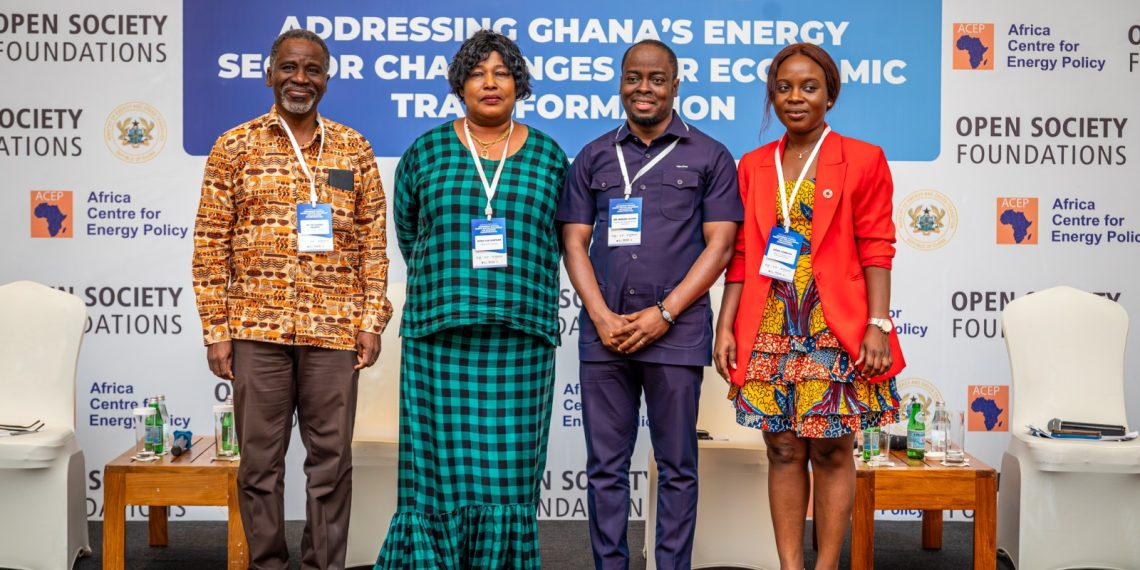
Dr. Ishmael Ackah, Advisor to the Minister for Energy and Green Transition, has sounded the alarm over persistent inefficiencies in Ghana’s power generation segment, describing it as the leading cause of the country’s growing energy sector debt.
Speaking during a high-level stakeholder dialogue on “Addressing Ghana’s Energy Sector Challenges for Economic Transformation,” Dr. Ackah stressed the need for transparent procurement, strategic planning, and greater private sector involvement to rescue the struggling sector.
“Roughly 65% of electricity tariffs and the sector’s debt challenges are linked to generation,” Dr. Ackah stated, adding, “If we fix generation, we can resolve a significant part of the energy sector crisis.”
He cited three critical issues undermining the generation segment: poor planning, vague institutional responsibilities, and a lack of cost-competitive procurement.
Dr. Ackah questioned why Ghana continues to sign Power Purchase Agreements (PPAs) far beyond its electricity demand and reserve margins. “Any generation that surpasses our reserve margin and cannot be exported becomes a cost either passed to consumers or accumulated as public debt,” he said.
He also criticised the current policy arrangement where distribution companies sign long-term dollar-denominated PPAs, while the government bears the financial risk. “In Nigeria, PPA prices are not escalated annually. But in Ghana, they are pegged in dollars and increase every year this is not sustainable,” he warned.
On procurement, Dr. Ackah lamented the absence of benchmarking or cost comparison, which allows Independent Power Producers (IPPs) to bring in expensive generation plants without evaluating alternatives across the sub-region.
He also highlighted serious challenges in metering and revenue collection, revealing that over 40% of customers either lack meters or have faulty ones. “Out of about six million utility customers, more than 40% have no meters or non-functional ones. How do we expect to collect revenue under such conditions?” he queried.
Dr. Ackah acknowledged ongoing reforms, including new competitive procurement frameworks and the World Bank-backed initiative to distribute one million meters, as positive steps toward resolving the crisis.
He further called for increased private sector involvement in distribution operations, urging ECG and NEDCo to step up efforts in billing, metering, and collections. The two utilities currently face a monthly revenue shortfall of over GHS250 million.
In his closing remarks, Dr. Ackah underscored the importance of aligning all generation and procurement decisions with the Integrated Power Sector Master Plan (IPSM) developed by the Energy Commission.
“Until we ensure transparent procurement processes and strictly follow the IPSM, achieving sustainability in the power sector will remain elusive,” he cautioned.