
The Ministry of Energy and Green Transition has begun negotiations with Independent Power Producers (IPPs) to restructure $1.7 billion in outstanding payments, as part of efforts to ease Ghana’s energy sector debt burden, currently pegged at \$3.1 billion.
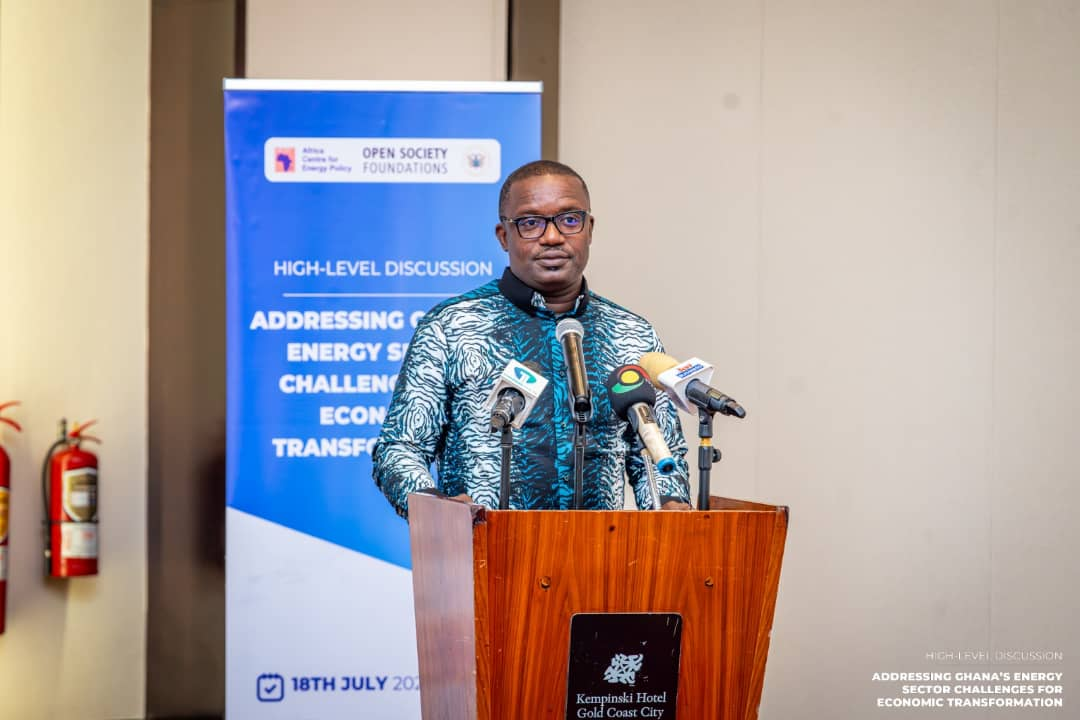
Energy Minister John Abdulai Jinapor disclosed the ongoing engagements during a High-Level Dialogue themed “Addressing Ghana’s Energy Sector Challenges for Economic Transformation.” He described the talks as crucial to restoring fiscal balance in the sector.
“We are currently in discussions with IPPs to secure more favourable payment terms,” the Minister said. “Our goal is to reach a win-win outcome that will bring some relief to the sector while sustaining private investor confidence.”
He emphasized that while systemic challenges remain, government has already rolled out critical reforms aimed at improving operational performance and ensuring long-term financial sustainability.
Key reforms underway include:
- Distribution Network Improvement Programme: Routine patrols and fault resolution across ECG’s power lines to reduce outages.
- Contract Termination Drive: Cancellation of 202 underperforming contracts valued at \$227 million, £1.17 million, and €4.08 million.
- Zeus Billing System Rollout: A new billing platform set to go live within three months to enhance revenue tracking and assurance.
- Cash Waterfall Mechanism Compliance: Ensuring prompt, transparent payments to generators and fuel suppliers.
- Revenue Boost: ECG recorded its highest-ever monthly revenue in June 2025 GHS1.678 billion, a 47.3% increase year-on-year.
- Private Sector Participation (PSP): Cabinet has approved a multiple leasehold model to invite private players into electricity distribution.
- Fuel Security: Strengthened commitments from N-Gas, ENI, and Jubilee partners to improve reliability of gas supply for power generation.
Despite these measures, structural inefficiencies including excess capacity and low revenue recovery continue to place significant strain on the national budget. The forum revealed that under-recoveries in the sector represent around 2% of Ghana’s GDP roughly four times the nation’s annual infrastructure capital investment.
Stakeholders at the event called for an acceleration of the reforms to unlock investment opportunities and fiscal space essential for sustainable economic growth.
They also emphasized the need for a just energy transition, ensuring that future reforms prioritize access, affordability, and social equity particularly for vulnerable populations.