

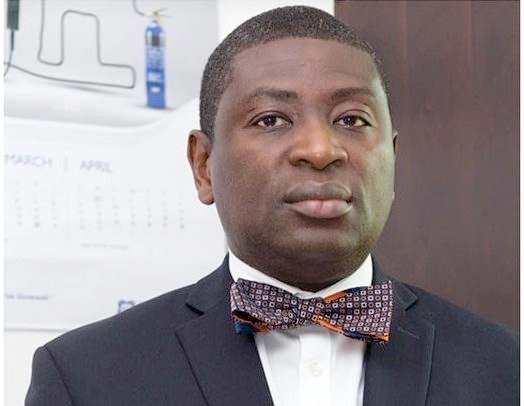
Ghana Must Decide Whether It Backs Its Own”: INSTEPR’s Kwadwo Poku on the Kevin Okyere Saga
Ghana’s turbulent upstream oil debate took a sharp turn this morning after Kwadwo Poku, Executive Director of the Institute for Energy Policies and Research (INSTEPR), delivered one of the strongest public defences yet of embattled Springfield founder Kevin Okyere.
In an exclusive conversation with NorvanReports, Poku challenged Ghanaians to rethink their posture toward local industry leaders at moments of crisis.
“Do Ghanaians want to see their compatriots succeed?” he asked pointedly.
“Nobody is suggesting government should take money from the treasury and hand it to Springfield. The question is whether we even want to see a Ghanaian entrepreneur rise in a sector dominated by foreigners.”
His comments come at a time when Okyere’s legal, regulatory and commercial battles are converging in a way that could reshape the future of Ghana’s upstream oil governance.
As NorvanReports revealed earlier today, Okyere is expected to arrive in Accra after reportedly paying an initial amount as part of a negotiated arrangement connected to the US$94 million alleged fraud claim filed in Dubai by an affiliate of Swiss trader Petraco Oil Company SA.
The payment, which sources describe as the “first tranche,” appears to have eased travel restrictions imposed during the UAE enforcement process.
But Mr Okyere’s impending return “fundamentally changes the dynamic.”
The Economic and Organised Crime Office (EOCO) has already confirmed two active investigations involving Springfield-linked entities. Okyere’s presence in the country now forces the question, What will EOCO do when Kevin Okyere touches down at Kotoka?
Will he be invited for questioning? Will his passport be flagged? Or will the investigations remain frozen until the UK arbitration concludes?
Poku’s frustration was evident, and he stated again, “We should ask ourselves: what exactly is wrong with us? When Nigerians supported Dangote with billions to finish his refinery, we applauded them. A Ghanaian has invested over US$200 million in deepwater oil development, and instead of national support, some people are cheering for his downfall.”
The government has meanwhile signalled interest in a state-led acquisition of Springfield’s stake in the West Cape Three Points Block 2 (WCTP2), with GNPC and the Petroleum Commission already preparing an independent valuation.
Officials describe the move as a “strategic safeguarding” of national petroleum assets. But Okyere’s legal troubles abroad, and the fragmented public narrative at home, complicate the picture.
Mr Poku argues that the public criticism of Okyere risks undermining a potentially national asset, “There are structured ways the government, through GNPC-Explorco, can intervene. No one is saying throw public money at an individual. But this is a Ghanaian who has drilled, has a discovery, and has put his own capital at risk.”
Yet the state faces significant risk. The Okyere episode lands at a time when Ghana’s upstream output continues to decline, and investor appetite, some analysts say, is waning. The country has struggled to attract large-scale exploration commitments in recent years.
For Poku, that is precisely why the nation must decide what its posture should be toward domestic champions trying to break into a capital-intensive, technically demanding industry overwhelmingly dominated by foreign players.
“My question is simple,” he told NorvanReports. “Do Ghanaians want to see their compatriots succeed, or are we content watching entire sectors, mining, manufacturing, hospitality, being dominated by foreigners while ridiculing our own?”
Failure to handle these decisions with clarity, Poku warns, could send the wrong message to global investors. Ghana’s upstream gamble, he argues, now hinges on a simple but profound question, “Do we back our own, or do we tear them down while applauding foreign dominance?”
With Okyere’s imminent arrival, Ghana may finally be forced to answer.