

Ghana has appealed to African leaders to unite behind an ambitious drive to mobilise $100 billion annually for climate adaptation and mitigation, cautioning that the continent cannot bear the mounting costs of climate change on its own.
The call was delivered in Nairobi by the Minister of State for Climate Change and Sustainability, Alhaji Baba Seidu Issifu, on behalf of President John Dramani Mahama, at the African Leaders’ Meeting on Climate Adaptation, chaired by Kenyan President William Ruto.
He conveyed goodwill messages from President Mahama, explaining that although the President was unable to attend in person, he “fully aligns with the aims and aspirations of this important meeting.”
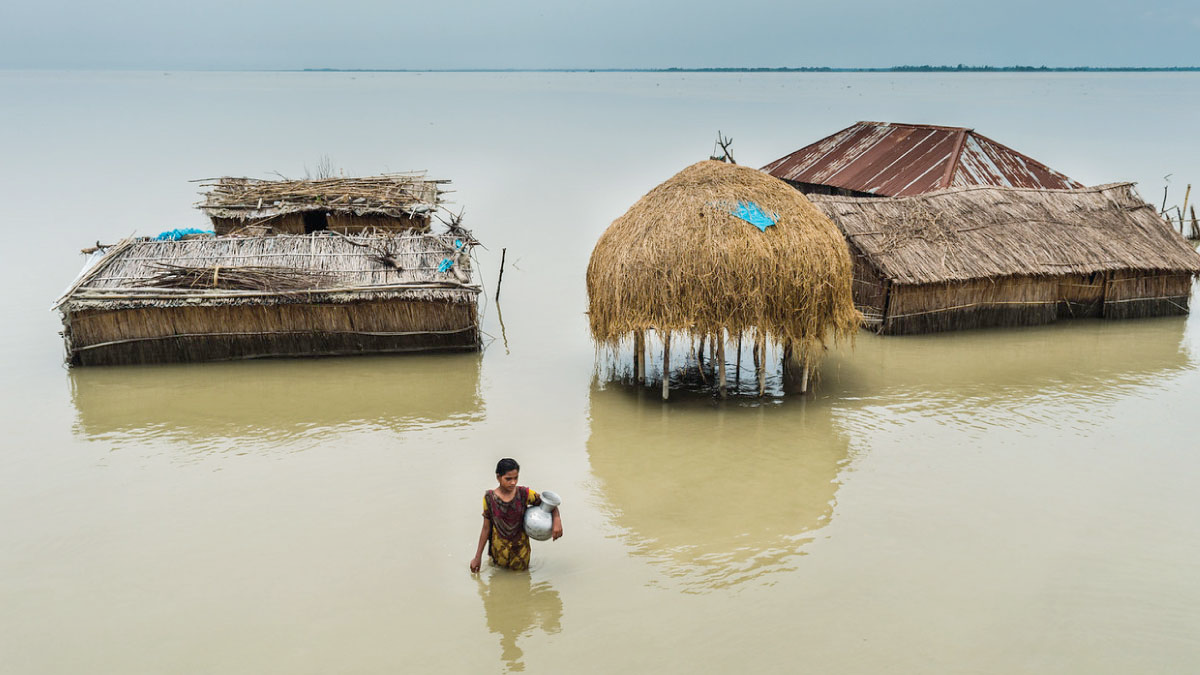
According to the minister, Africa is grappling with severe climate shocks, including prolonged droughts, devastating floods and rising temperatures, which continue to endanger lives, undermine livelihoods and erode hard-won development gains.
He said deliberations and outcomes from COP30 in Belém, Brazil, underscored the urgency for Africa to take decisive action in addressing the climate emergency.
Alhaji Issifu stressed that climate adaptation is a core development necessity, rather than a discretionary policy choice for African countries. He urged governments across the continent to seize high-impact opportunities for resilience-led growth, by tapping into climate finance, strengthening multilateral cooperation and deepening private-sector participation.
He described the Africa Adaptation Acceleration Programme (AAAP2.0) as “a source of optimism,” and called on leaders to act collectively to secure concrete and predictable funding commitments.
The minister emphasised that the financing appeal was grounded in reality. He noted that “the urgency of this call became even clearer at the recently concluded COP30 in Belém, where adaptation talks faced significant challenges.”
He criticised the revised Global Goal on Adaptation framework, which reduced the number of indicators from 100 to 59, describing the move as “widely regarded as a regression.”
He said several parties raised concerns about the technical credibility of the revised indicators and the lack of transparency in the process, warning that this had deepened trust gaps at a critical stage of negotiations.
Although consensus was eventually reached, Alhaji Issifu observed that the final agreement contained weak provisions on Loss and Damage, with no clear reference to the scale of needs or corresponding financing.
He added that discussions on climate finance remained disjointed, and that the proposed Article 9 work programme still failed to create a dedicated platform for developing countries to engage on the delivery of public finance under the new climate finance goal.
Overall, he said the broader financing package fell short of bridging the growing divide between climate needs and actual funding flows.
On the domestic front, the minister said Ghana is mainstreaming climate resilience into its national development strategy, promoting green employment and rolling out its 24-hour economy, with sustainability at its core.
He explained that Ghana’s 24-hour economy agenda is anchored on green growth, renewable energy and sustainable infrastructure development.
“We are channeling investments into solar and hydro power, as well as climate-smart agriculture, to secure our long-term energy and food systems,” he said.
However, he acknowledged persistent obstacles, including high financing costs, limited access to technology and unfair trade regimes.
He stressed that these constraints mean Ghana — like many African countries — cannot confront the climate challenge in isolation.
“We require solidarity at both the continental and global levels, equitable financing arrangements and effective technology transfer,” he said.
Alhaji Issifu highlighted the continent’s unequal exposure, noting that Africa accounts for less than 4% of global greenhouse gas emissions, yet bears a disproportionate share of climate-related losses.
He described this imbalance as unjust, insisting that Africa needs fair and accessible climate finance — built on partnership, not debt or aid.
The minister said AAAP2.0 provides a clear pathway toward a climate-resilient Africa but warned that success depends on the mobilisation of adequate resources.
“AAAP2.0 presents an opportunity for Africa to leap ahead into a resilient future. We must raise $100 billion each year for adaptation and mitigation and position climate action as a driver of Africa’s industrial transformation,” he said, urging development partners to turn commitments into tangible action.
Calling for a strong and unified communiqué, he said Africa must send a clear signal that its climate resilience is non-negotiable, while reaffirming Ghana’s dedication to regional and global climate initiatives.
Addressing young people, he urged Africa’s future leaders to step forward, innovate and champion climate action within their communities.
“Ghana and Africa stand ready to partner, co-design solutions and advance sustainable development,” he said.
He concluded by urging participants to leave the meeting with a clear, actionable roadmap, emphasising that Africa’s resilience cannot be compromised and that the moment for decisive action is now.