

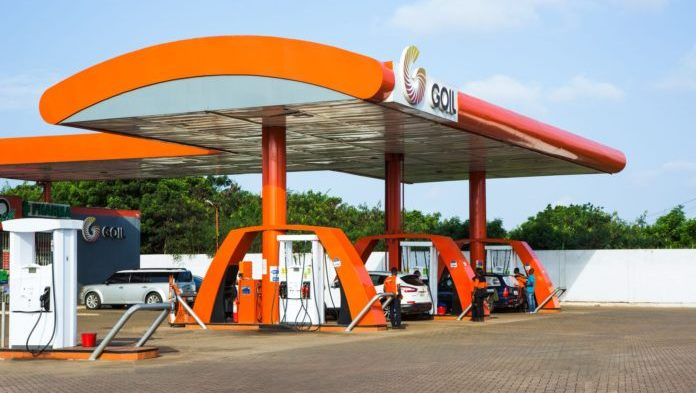
Accra — August 1, 2025
GOIL PLC, Ghana’s leading indigenous oil marketing company, has reported a sharp decline in profits for the second quarter of 2025, even as revenues ticked upward a sign of persistent cost pressures and tight margins plaguing the downstream petroleum sector.
Unaudited financial results for the period ending June 30, 2025, show that GOIL’s net earnings were significantly eroded by rising administrative expenses and high finance costs, underscoring the challenging business environment facing fuel marketers in Ghana.
Revenue Climbs, But Profit Drops Sharply
GOIL’s company-level revenue rose by 6.8% year-on-year to GHS 5.31 billion in Q2 2025, buoyed by increased fuel volumes and marginal adjustments in pump prices. Half-year revenue reached GHS 9.62 billion, slightly up from GHS 9.33 billion in the same period of 2024.
However, net profit for the second quarter fell dramatically to GHS 13.59 million a 55.7% drop from the GHS 30.69 million recorded in Q2 2024. For the first half of the year, total profit stood at GHS 30.69 million, less than half of the GHS 73.30 million posted in H1 2024.
Q2 EPS slid to GHS 0.035, compared to GHS 0.078 in the same period last year, reflecting the pressure on shareholder returns.
Mounting Costs Undermine Gains
Despite a relatively stable gross profit of GHS 292.3 million in Q2, operating profit fell by 27% to GHS 78.65 million, due to higher general, selling, and administrative expenses mwhich rose to GHS 237.1 million from GHS 224.4 million in Q2 2024.
Finance costs also remained high at GHS 60.53 million, as GOIL continued to rely on short-term borrowing to fund operations amid delayed receivables and Ghana’s high interest rate environment. This wiped out nearly 44% of the company’s operating profit, posing a significant threat to cash flow sustainability.
Balance Sheet Snapshot
GOIL’s total equity increased modestly to GHS 595.13 million as of June 2025, up from GHS 564.64 million at the start of the year. However, this slight growth in equity contrasts with the strain from continued debt servicing, highlighting the need for improved financial resilience.
Strategic Challenges and Path Forward
The company’s Q2 performance reflects broader structural issues in Ghana’s downstream sector where increased sales volumes are not translating into improved profitability.
GOIL’s management is now being urged to:
- Diversify into higher-margin products such as lubricants, LPG, and bitumen;
- Enhance working capital efficiency to reduce interest burden;
- Strengthen cost control mechanisms to contain inflationary pressure on logistics and operations.
Market watchers caution that fuel pricing regulations and volatility in global oil prices continue to compress margins, and that recovery will require strategic shifts beyond fuel retailing.
“GOIL’s Q2 results highlight the urgent need for a pivot toward more profitable product lines and tighter financial management,” one analyst said.
Outlook
With profit margins under sustained pressure, GOIL faces a critical second half in 2025. While revenue growth remains positive, the company’s ability to contain costs and broaden its product base will determine whether it can rebound from this earnings slide.
GOIL #Q22025Results #DownstreamPetroleum #GhanaBusiness #EnergySector
