

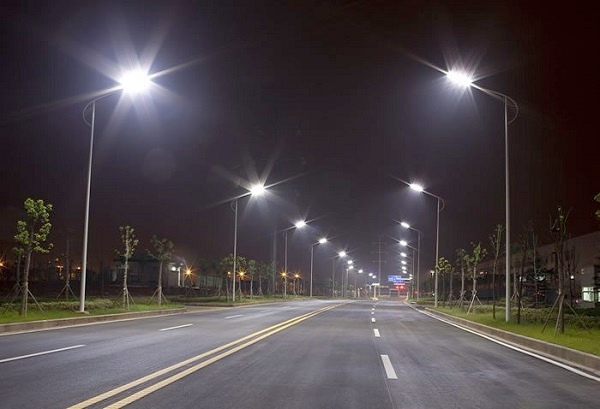
The government, under the leadership of the Ministry of Energy and Green Transition, has begun the nationwide rehabilitation and installation of modern, energy-efficient streetlights to enhance public safety. It is to boost nighttime economic activities and drive Ghana’s transition toward a greener, more productive 24-hour economy.
The project, in partnership with the Greater Accra Regional Coordinating Council, Ministry of Roads and Highways, Ministry of Local Government, and other partners, is a major step under the leadership of the President to advance the government’s vision of a 24-hour economy.
Speaking at the launch and handing over of the project site to the contractor, Grey Oak Ventures, Deputy Minister for Energy and Green Transition Richard Gyan-Mensah said the project covered all regional and district capitals. He reiterated that the initiative would extend productivity beyond daylight hours by ensuring safe nighttime movement, longer business operations, and renewed community confidence.
“The 24-hour economy is about sustaining productivity even after sunset, and street lighting is central to achieving this goal,” he added.
He said the project had two main components: the Grid Street Light Rehabilitation and Installation Project and the Solar All-in-One Installation Project.
Mr. Gyan-Mensah said while the grid-based component targeted all regional capital and ceremonial routes, the solar installations were being deployed in areas without grid infrastructure, ensuring nationwide coverage.
“So far, Greater Accra has received about 3,000 streetlights, in addition to those being installed by the regional administration. Other regions, including Central and Eastern, have also received their allocations, which have been distributed to the various MMDCEs.”
“In the coming months, the Ministry, in collaboration with its partners, will oversee the installation and rehabilitation of thousands of energy-efficient lighting systems across the country,” he noted.
Mr. Gyan-Mensah said the success of the initiative depended on collective responsibility, urging all stakeholders to protect the infrastructure from theft, vandalism, and neglect.
“We are not going to leave this project solely in the hands of the Ministry. The police, MMDCEs, and community members must take ownership. Any faults or tampering should be reported to ECG for the southern sector and NEDCo for the northern zones,” he stressed.
He added that the government would fund operations and maintenance for the first two years, after which local assemblies would take full responsibility for upkeep.