

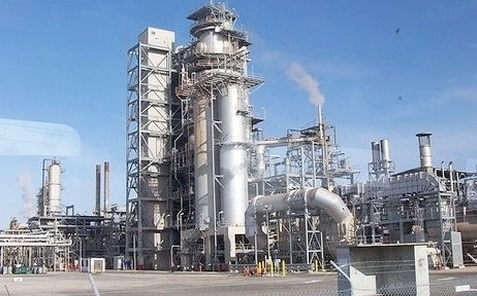
The Government of Ghana has announced plans to restart crude oil refining operations at the Tema Oil Refinery (TOR) by the end of this year as part of a broader strategy to reduce the country’s annual USD 10.2 billion fuel import bill, stabilize domestic fuel prices, and conserve foreign exchange.
Once operational, the refinery is expected to meet up to 60 percent of Ghana’s domestic fuel demand, potentially saving the country an estimated USD 400 million per month in import costs. Originally designed to refine 45,000 barrels of crude oil per day, TOR’s capacity has since been expanded to 60,000 barrels per day following recent upgrades.
Part of the “Resetting Ghana” Economic Agenda
Speaking on behalf of Chief of Staff Julius Debrah at the Africa Best Business Awards in Accra, Deputy Presidential Spokesperson Shamima Muslim said the refinery’s revival forms part of President John Mahama’s Resetting Ghana Agenda, which aims to rebuild the economy through targeted reforms, industrial revitalization, and strategic partnerships.
“The refinery is on track to resume operations by the close of this year,” Ms. Muslim stated. “This milestone is critical to achieving energy security, conserving foreign exchange, and reducing Ghana’s dependence on imported petroleum products.”
According to her, the refinery’s restructuring and technical assessment have reached 98 percent completion, paving the way for full operations under a new tolling model in partnership with Sentuo Oil Refinery Limited.
A Sustainable Business Model for TOR
Under the new tolling arrangement, TOR will no longer bear the commercial risk of crude oil trading. Instead, private partners will source and finance their own crude oil cargoes, while the refinery provides processing services for a fixed fee.
This approach, experts say, will transform TOR’s revenue base from a volatile trading-dependent model into a predictable and sustainable service operation.
The Centre for Energy Management and Sustainable Energy highlighted that TOR’s renewed business model is already bearing fruit. The refinery reportedly earned USD 21 million in revenue from terminal operations and has secured a take-or-pay storage agreement with Sentuo Oil Refinery, guaranteeing a monthly income of USD 2 million. TOR also benefits from new revenue streams, including pipeline right-of-way fees, loading rack charges, and dividends from the Ghana Petroleum Mooring System.
Upgrades to Boost Refining Capacity
Government’s plan also includes significant upgrades to TOR’s distillation units, pipelines, and storage infrastructure to ensure long-term operational efficiency. The improvements are designed to enhance Ghana’s energy security and reduce exposure to global fuel price volatility — a recurring source of inflationary pressure and currency depreciation.
A Broader Economic Recovery Drive
Ms. Muslim noted that TOR’s revival aligns with wider fiscal and monetary reforms under the Resetting Ghana Agenda, which have helped reduce inflation to 8 percent and stabilize the cedi. The measures are also supported by strong foreign exchange inflows, including over USD 8 billion generated through the Ghana Gold Board’s export initiatives.
She also cited the 24-Hour Economy Initiative and the revitalization of the Ghana Free Zones Authority as additional growth engines. The 24-hour policy, backed by a USD 4 billion investment plan and USD 400 million seed fund, aims to create two million jobs and boost industrial productivity across ports and manufacturing zones.
In the energy sector, government partnerships with private investors have already delivered tangible results — including the commissioning of a 5-megawatt floating solar photovoltaic plant at the Bui reservoir, the first of its kind in West Africa. An additional 25 MW is expected to be added next year, as Ghana works toward a diversified and balanced energy mix.
Private Sector Partnership Encouraged
Ms. Muslim urged private investors to take advantage of the enabling business environment being cultivated through the Resetting Ghana Agenda.
“Government is providing the fertile ground — the private sector must now sow, water, and harvest alongside us,” she said.
She emphasized that reviving TOR and investing in renewable energy projects represent the government’s twin priorities of ensuring energy security and driving sustainable industrial growth, positioning Ghana as an emerging energy and export hub in West Africa.
Significant Economic Impact Expected
TOR has been largely inactive since March 2021, leaving Ghana dependent on imports for about 97 percent of its petroleum products. Acting Managing Director Edmund Kombat previously told Parliament’s Energy Committee that Ghana spends roughly USD 400 million each month on fuel imports.
He explained that with TOR operating at full capacity, the country could meet between 45 and 60 percent of domestic fuel needs, sharply reducing reliance on external suppliers and preserving foreign exchange reserves.
The refinery’s return to full operation would therefore mark a major milestone in Ghana’s industrial recovery and energy independence a critical step toward reducing import dependence and building a more resilient, self-sustaining economy.