
Sampson Enyongekere, Uyo
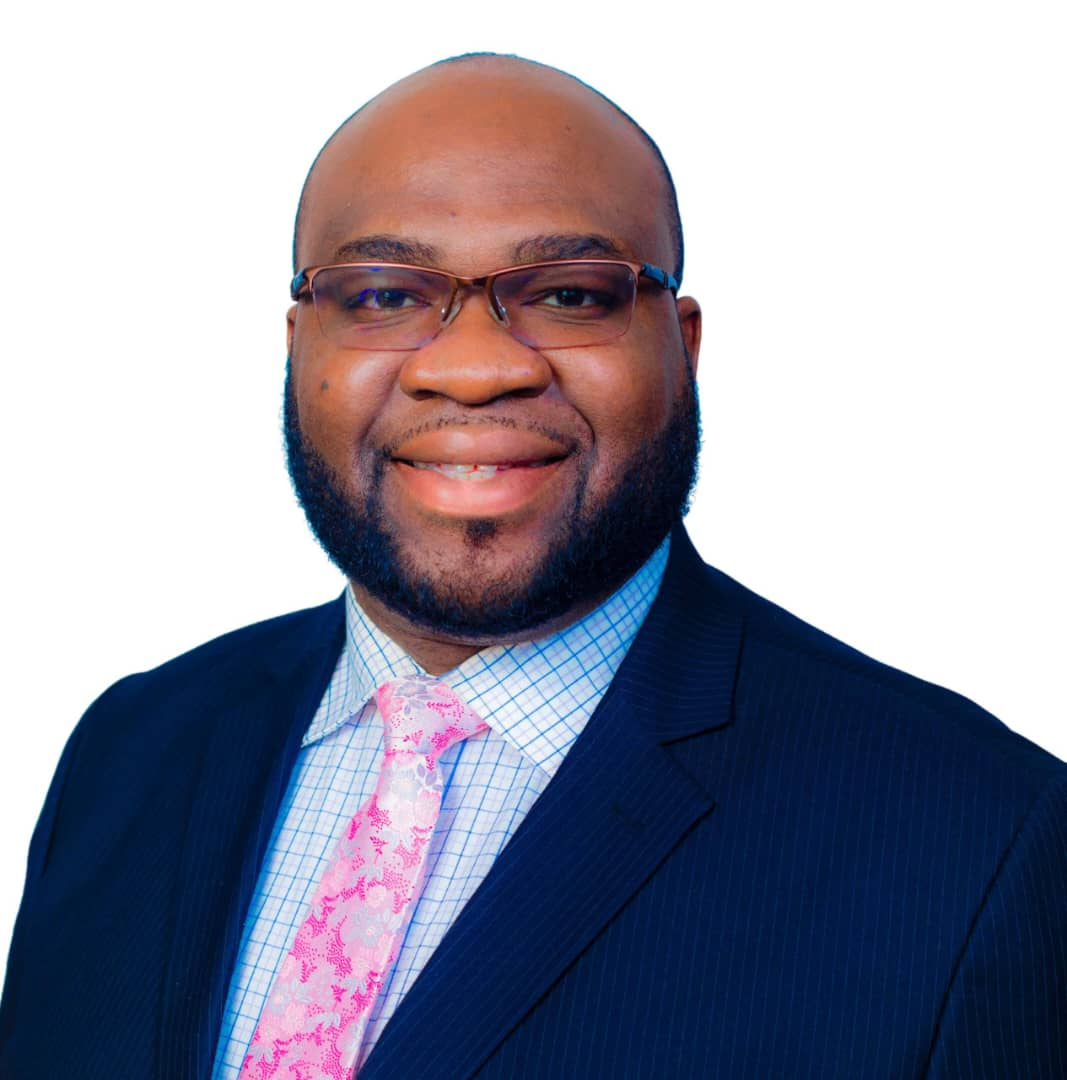
As Nigeria marked her 65th independence anniversary on October 1, an Adjunct Professor of the North Dakota University, USA, and an internationally respected Energy Policy and Governance Expert, Engr. (Dr.) Wisdom Patrick Enang, described the milestone as a moment not only for national reflection but also for renewed determination under President Bola Ahmed Tinubu’s leadership.
Speaking with newsmen in Uyo, Dr. Enang, who consults globally for IOCs, NOCs, and policymakers, observed that at a time when Nigeria faces profound economic and social challenges, President Tinubu has demonstrated the vision and courage required of a leader determined to reposition the nation for greatness. He stressed that Nigeria at 65 must not only celebrate endurance but also embrace the reforms that can unlock prosperity for generations.
Dr. Enang further explained that one of the most defining steps of the President Tinubu administration has been the bold removal of fuel subsidy. According to him, though controversial, the decision was a necessary pathway toward fiscal sustainability and long-term economic reform.
He recalled how international institutions such as the World Bank and IMF had consistently warned that subsidy expenditure drained over $10 billion annually from Nigeria’s coffers while fueling smuggling, inefficiency, and corruption.
Drawing parallels with Indonesia’s 2015 subsidy removal, which freed up funds for health and infrastructure, and Egypt’s gradual subsidy phase-out, Dr. Enang emphasized that President Tinubu’s policy was not only courageous but also in line with global best practice.
“By redirecting subsidy funds into infrastructure and social services, the government has begun addressing inefficiencies that had plagued the economy for decades.”
Enunciating further, the erudite scholar highlighted the introduction of the Crude-for-Naira policy, describing it as a revolutionary step designed to strengthen the local currency and stabilize trade.
“Alongside foreign exchange reforms such as the floatation of the Naira, these measures have grown Nigeria’s net foreign reserves to over $42.2 billion in September 2025, providing a strong buffer against global economic volatility.”
In his analysis, Dr. Enang commended the administration’s massive infrastructure drive, pointing to the Lagos-Calabar Coastal Highway and Sokoto-Badagry Superhighway as symbols of renewed national integration. These projects, he said, will enhance trade, boost local economies, and bridge the gap between rural and urban areas.
“With over 440 road projects and more than 2,700km of superhighways underway, Nigeria’s infrastructure landscape is being reshaped.”
According to him, this is not merely about asphalt and concrete but about creating economic corridors that reduce logistics costs, ease trade within the African Continental Free Trade Area (AfCFTA) and establish the foundation for regional competitiveness.
“Globally, the World Bank has shown that every dollar invested in logistics returns four dollars in economic activity. Nigeria is now positioning itself to reap those dividends,” he added.
The oil and gas governance specialist also emphasized that Tinubu’s focus on human capital is commendable. He referenced the Students Loan Scheme and the 100% increase in the national minimum wage as life-changing interventions.
“By investing in education and fair compensation, the government is empowering a new generation of Nigerians to innovate and contribute meaningfully to the economy.”
He further noted the Presidential Loan and Grant Scheme, which has already supported over 900,000 entrepreneurs and small businesses, thereby revitalizing the informal sector and unlocking innovation. In his view, this aligns with the International Labour Organization’s recognition that wage justice and youth empowerment are cornerstones of sustainable development.
On national security, Dr. Enang acknowledged the administration’s proactive steps in strengthening agencies and fostering collaboration with local communities to address insecurity at both immediate and structural levels. He also pointed to the push for local government autonomy and the establishment of new Regional Development Commissions as initiatives that decentralize growth and give States a stronger voice in national development.
“Comparative experiences show that decentralization, as seen in India’s Panchayati Raj system and Brazil’s municipal autonomy, creates more responsive governance and accelerates rural development.”
Turning to the oil, gas, and solid minerals sectors, where he is globally recognized as an authority, Dr. Enang observed what he described as a renaissance. He explained that over $8 billion in new energy investments have been unlocked, ensuring not just energy security but also industrial expansion.
“With lithium, cobalt, and manganese critical for electric vehicle batteries and renewable technologies, Nigeria is uniquely placed to become a hub for 21st-century industrialization.”
“In the solid minerals sector, more than $800 million was attracted in 2024 alone, positioning Nigeria for a post-oil economy. Broadly speaking, President Tinubu’s reforms yielded a 3.84% economic growth in Q4 2025, the highest in three years.”
Speaking further, the Ethical and Attitudinal Re-orientation Czar praised the landmark tax reforms introduced by the administration, which simplify compliance, boost non-oil revenues, and create a more transparent, growth-oriented fiscal system. Drawing comparisons with Rwanda’s digital tax reforms, Dr. Enang stressed that Nigeria’s fiscal reset can become the bedrock of investor trust and accelerated economic growth.
In foreign policy and fiscal management, the administration has, according to Dr. Enang, cleared over $10 billion in FX debt while stabilizing the naira.
“These efforts, combined with investor-friendly reforms, have attracted over $50 billion in new foreign direct investments and boosted Nigeria’s foreign reserves from $3.99 billion in May 2023 to about $42.2 billion in September 2025, an unprecedented leap that restores global confidence in the Nigerian economy.”
He likened this rebound to India’s post-1991 liberalization, when bold reforms transformed the country from near-bankruptcy into a global growth engine.
Commenting on the ongoing dispute between Dangote Group and the Petroleum and Natural Gas Senior Staff Association of Nigeria (PENGASSAN), Dr. Enang called for caution and constructive dialogue. He warned that if not resolved amicably, the feud could reverse Nigeria’s industrial gains, weaken investor confidence, and disrupt job stability in the sector.
He stressed that this was not just a labour issue but a test case for Nigeria’s industrial future, urging the government, labour, and corporate stakeholders to find a common ground that protects national interest. Drawing parallels, Dr. Enang recalled how prolonged strikes in South Africa’s platinum industry in 2014 cost billions in lost output and undermined investor faith. Nigeria, he insisted, must avoid making such costly mistakes.
Reflecting on the larger picture of President Tinubu’s leadership, Dr. Enang emphasized courage, foresight, and resilience as the defining hallmarks of the administration so far. According to him, the President’s willingness to take difficult decisions, even in the face of opposition, demonstrates a rare commitment to long-term national progress. He urged that what Nigeria needs now is to institutionalize its reforms and scale them up for the benefit of future generations.
In his closing reflections, the seasoned policy strategist and energy consultant expressed optimism that as Nigeria charts its course beyond 65, the foundations for a new era of prosperity are already in place.
“The journey of transformation has begun. Every Nigerian is invited to be part of this historic endeavor. Together, we can achieve greatness,” Dr. Enang declared.