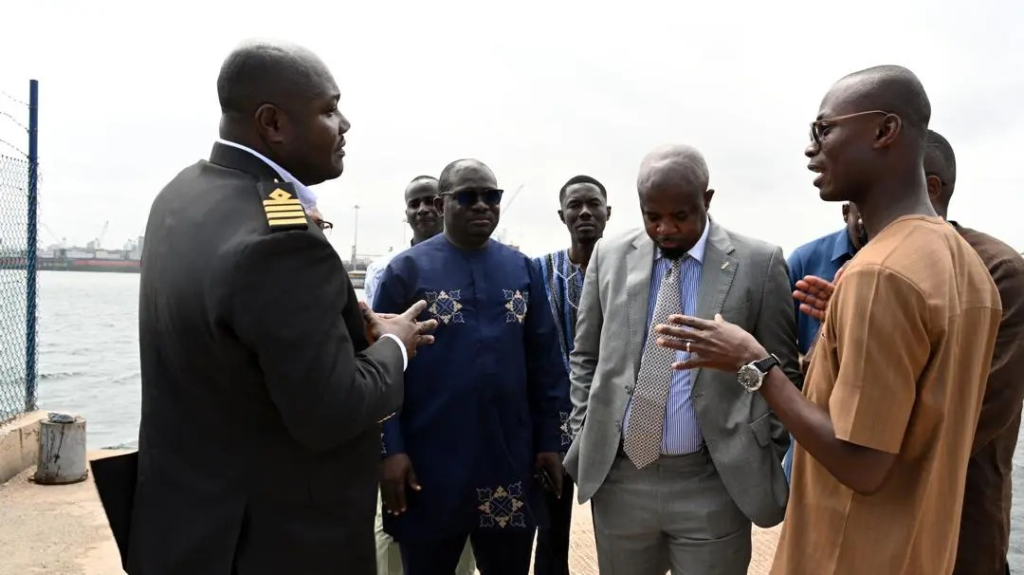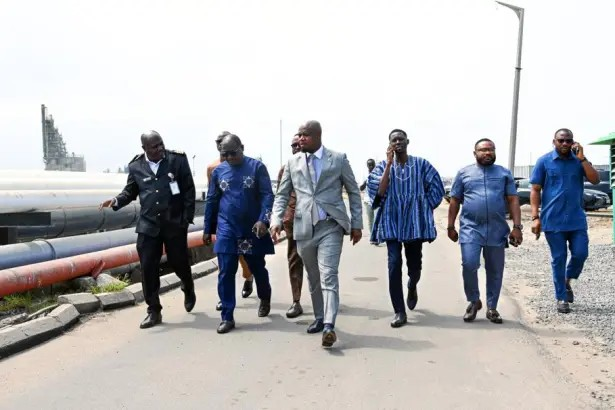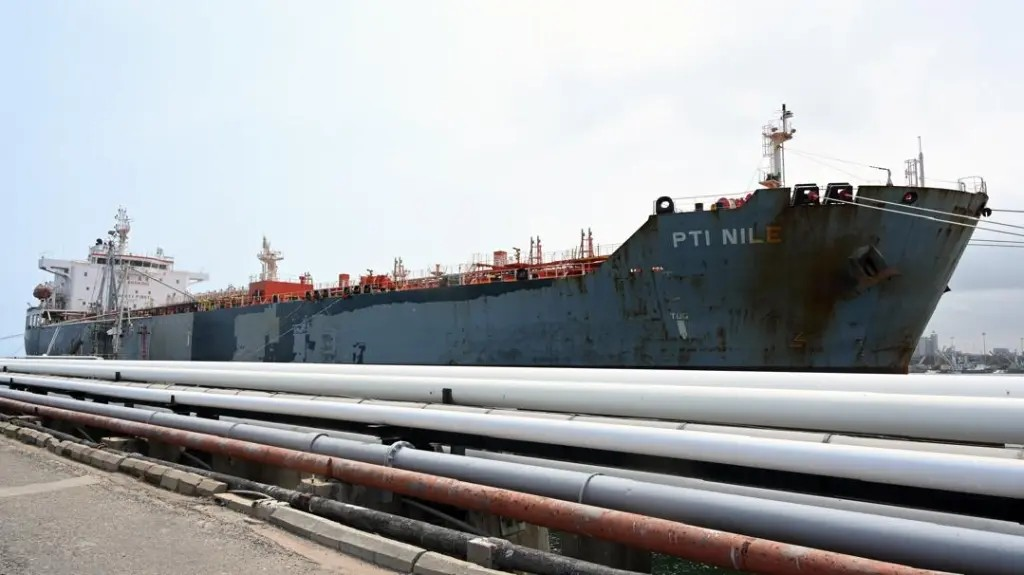

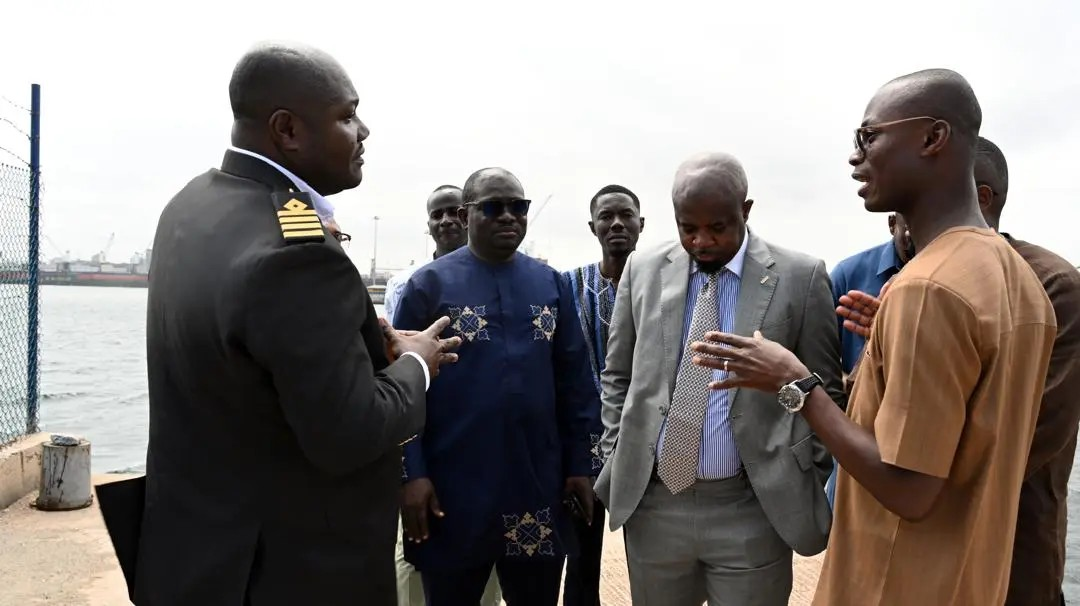
Ghana’s ambition to roll out a 24-Hour Economy in strategic sectors is gaining momentum, with the Port of Tema set to become the first petroleum hub to operate around the clock. The Ghana Ports and Harbours Authority (GPHA) and the National Petroleum Authority (NPA) are spearheading preparations to transform the oil jetty into a 24/7 operational facility, a move expected to boost efficiency across the downstream petroleum value chain and drive national economic growth.
A Strategic Visit to Tema Port
On Thursday, August 21, 2025, a high-level delegation from the NPA, led by Chief Executive Godwin Edudzi Tamaklo and Director for Economic Regulation and Planning Abass Tasunti, paid a working visit to the Port of Tema. The team, hosted by Tema Port Director Tebon Zumah, inspected facilities at the oil jetty to assess readiness for night-time berthing and discharge of petroleum vessels.
According to Mr. Tamaklo, the initiative is designed to eliminate bottlenecks in petroleum logistics by ensuring vessels can dock, discharge, and clear products at any hour. “The downstream petroleum sector is uniquely positioned to lead this transformation, aligning with national development goals and energy security priorities,” he said.
Infrastructure Upgrades in Motion
As part of preparations, the NPA and GPHA are collaborating to upgrade lighting systems and safety infrastructure at the oil jetty. These enhancements are expected to be completed by September 2025, paving the way for uninterrupted petroleum vessel operations.
Mr. Zumah described the initiative as “timely and necessary,” noting that it aligns with government’s broader 24-Hour Economy Agenda, which seeks to accelerate economic transformation, enhance competitiveness, and create jobs.
Industry Concerns and Stakeholder Demands
The move toward 24-hour operations, however, also highlights persistent industry challenges. Just a day before the Tema inspection, Tanker Drivers’ Union Chairman, George Nyaunu, raised concerns about the poor state of roads leading to petroleum depots, which he said are damaging vehicles and slowing down product distribution.
He appealed to the Minister of Roads and Highways to prioritise rehabilitation works, warning that without improved road infrastructure, the full benefits of the 24-Hour Economy may not be realised in the downstream petroleum sector.
Steering Committee Sets Roadmap
Parallel to the port preparations, the NPA Steering Committee on the 24-Hour Economy, inaugurated by President John Dramani Mahama through the Ministry of Energy and Green Transition and the 24-Hour Secretariat, has held its first strategy meeting.
The committee’s mandate is to craft both short- and long-term regulatory frameworks, strategies, and timelines for the rollout. It is also tasked with mobilising resources including public-private partnerships (PPPs) to finance the initiative and to address institutional or jurisdictional bottlenecks that may arise.
The committee is chaired by Mr. Tamaklo, supported by deputies Dr. Dramani Bukari and Dr. Sheila Addo, alongside directors of the NPA. Members include Afetsi Awonoor (Managing Director of BOST), Dr. Patrick Ofori (Chief Executive of CBOD), Dr. Riverson Oppong (CEO of the Chamber of Oil Marketing Companies), Roland Azuvgu (24-Hour Secretariat), and Chief Superintendent Benjamin Aniah of the Ghana Police Service, among other industry players.
To ensure efficiency, three subcommittees have been established: Infrastructure and Technology, Regulatory, Policy and Compliance and Stakeholder Engagement and Public Awareness.
National Policy Priority
Reaffirming government’s commitment, Mr. Tamaklo said the President is determined for the downstream petroleum sector to serve …
[08:38, 8/23/2025] Mr wiafe Asaase Radio..Benson: MISA Unveils First Service Station in Weija, Marks New Era in Ghana’s Oil Marketing Sector
The Chief Executive Officer of MISA has officially unveiled the company’s first branded service station at Weija, describing the milestone as a bold step in its journey to becoming a leading African energy brand.
Speaking at the ceremony, the CEO said the launch goes beyond the opening of a new facility, symbolizing “growth, commitment, and partnership.”
The rebranding follows the acquisition of Engen Ghana Ltd by Mocoh Ghana in March 2019, after which the company operated under the Engen brand while expanding its footprint. In August 2025, MISA officially launched its new identity, positioning itself as a proudly Ghanaian brand with continental ambitions.
“It is quite significant that the first retail presence of the MISA brand is being unveiled here at this beautiful station,” the CEO said. “This station will go down in history as the very first MISA-branded station, not just in Ghana but in Africa.”
The choice of Weija was described as deliberate, owing to the station’s strategic location, reputation for exceptional customer service, and its operator, Mr. Felix Asare Mensah, popularly known as Babona. The CEO highlighted the 17-year partnership with Mr. Mensah, stressing that strong dealer relationships are the backbone of the oil marketing industry.
“This service station stands as a symbol of our renewed vision — a modern facility designed to deliver convenience, efficiency, and a superior customer experience,” the CEO noted. “At MISA, every station is not just a point of sale, but a hub of community connection.”
He added that beyond fuel, MISA is committed to providing safe, clean, and customer-friendly facilities, creating job opportunities, and supporting local development.
With its vision to become a “Champion in Africa,” MISA pledged continued investment in technology, infrastructure, and human capital to meet the evolving needs of customers.
“As we unveil this station today, we assure you that MISA will continue to fuel every dream and every journey. The Babona Service Station is a true reflection of our promise to deliver not just fuel, but trust, convenience, and excellence,” the CEO concluded.