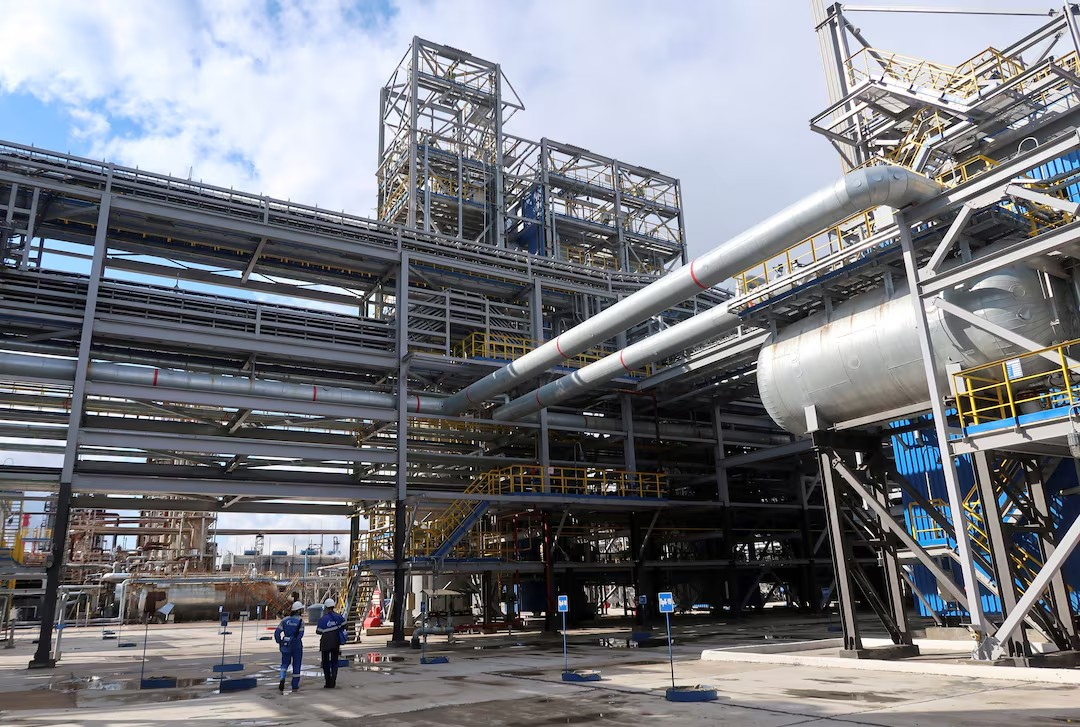
MOSCOW, Sept 24 (Reuters) – Ukrainian drones attacked one of Russia’s largest petrochemical complexes, Salavat in the southern Bashkortostan region, for the second time in less than a week, the local governor said, and two sources said a major unit caught fire. Ukraine has attacked more than 10 Russian refineries and export terminals over the past two months, some more than 1,000 km (620 miles) from the border, dealing the biggest blow to the Russian economy since the start of the war. Gazprom Neftekhim Salavat has been subjected to another terrorist drone attack. We are assessing the extent of the damage. All emergency services are on scene, and firefighting measures are underway,” governor Radiy Khabirov said on Telegram on Wednesday. Two industry sources said the CDU-6 crude distillation unit caught fire after the attack. The unit normally processes around 6 million tons of oil and gas condensate per year, accounting for around 60% of the plant’s total production capacity. The plant’s press service declined to comment. The drones attacked the same complex, controlled by energy giant Gazprom (GAZP.MM), opens new tab, last week, when, according to the sources, another main unit, CDU-4, was set ablaze. It was not clear when the units would return to operation. Russian refining has dropped by almost 20% during some days and exports have fallen too, forcing Russia to consider oil production cuts and limit fuel exports to avoid exacerbating shortages at home. With peace talks stalled, Ukrainian drones earlier this month also hit an oil refinery in Ufa, Bashkortostan’s regional capital, about 1,400 km (870 miles) from the Ukrainian border. The Salavat petrochemical complex produces gasoline, diesel, kerosene and other petroleum products as well as liquefied gases, butyl alcohols, polyethylene, polystyrene and ammonia. According to the sources, the plant processed 7.2 million tons of oil in 2024, or around 2.7% of Russia’s total oil refining, producing 2.5 million tons of diesel, 1.5 million tons of gasoline and 700,000 tons of fuel oil.