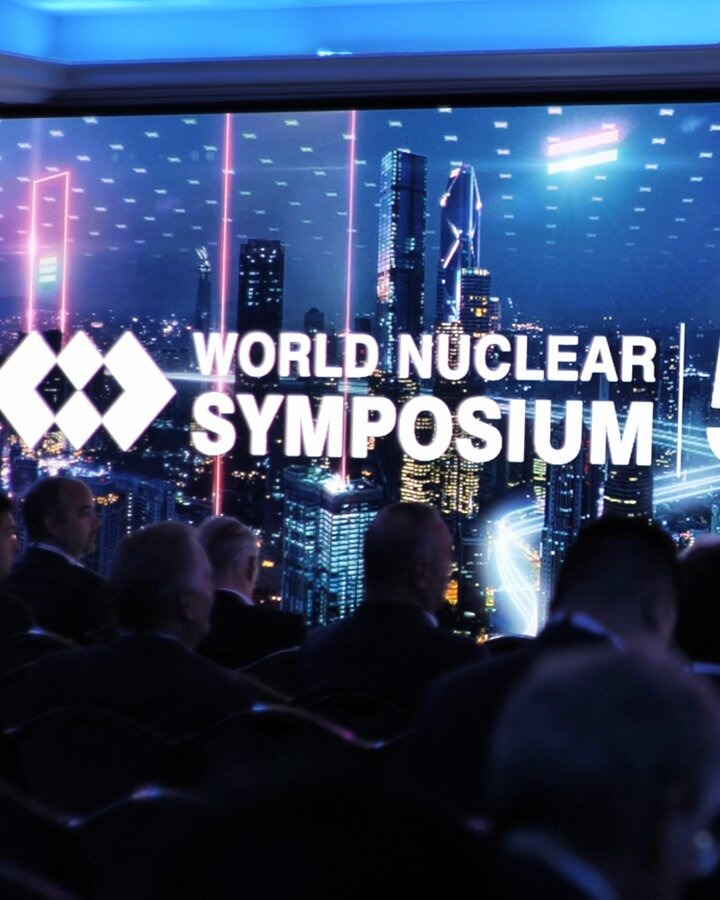


At World Nuclear Symposium 50, the latest edition of World Nuclear Fuel Report: Global Scenarios for Demand and Supply Availability 2025-2040 was published.
The report maintains the upward trend in nuclear generating capacity projections from the previous editions, as the positive momentum for nuclear power continues to grow. In addition to climate change mitigation and supporting socio-economic development, there continues to be an increased interest in nuclear power for energy security and sovereignty. Governments, utilities and industrial end-users are showing a strong interest in nuclear reactors to meet their growing energy demands.
This projected expansion of nuclear generation will therefore lead to a corresponding increased demand for primary uranium production. While sufficient uranium resources exist to meet the need for uranium in the Upper Scenario to 2040, further investment and timely decisions are needed to increase production.
The report considers three scenarios, the Reference Scenario, informed by government and utility targets and objectives, the Lower Scenario, which assumes delays in implementing these plans, and the Upper Scenario, which is underpinned by more favourable conditions, largely reflecting the targets announced in many countries to achieve net-zero carbon emissions, and the acceptance that nuclear power will play an indispensable role in reaching this goal.
Key highlights from the report include:
• From the current 372 GWe of nuclear capacity in 2024, the Reference Scenario projects that nuclear capacity will reach 686 GWe by 2040 (up 60 GWe from the 2023 edition), with capacity reaching 966 GWe in the Upper Scenario (up 35 GWe) and 582 GWe in the Lower Scenario (up 66 GWe).
• Global reactor requirements for uranium in 2025 are estimated at about 68,920 tU. In the Reference Scenario these are expected to rise to just over 150,000 tU in 2040, with requirements rising to over 204,000 tU in the Upper Scenario and over 107,000 tU in the Lower Scenario by the same date.
• In 2022, approximately 78% of annual reactor uranium requirements were covered by primary (i.e. mined) uranium; this has increased to 90% of annual reactor requirements in 2024. However, as existing mines face a depletion of resources in the middle of the next decade, the need for new primary uranium supply becomes even more pressing.
This edition of World Nuclear Fuel Report introduces a new chapter on regional primary supply and demand, reflecting the growing influence of geopolitical factors—particularly since the onset of the Russia-Ukraine conflict in March 2022. These dynamics continue to shape both the global demand for nuclear energy and the availability of key fuel cycle services, including uranium, conversion, enrichment, and fabrication.