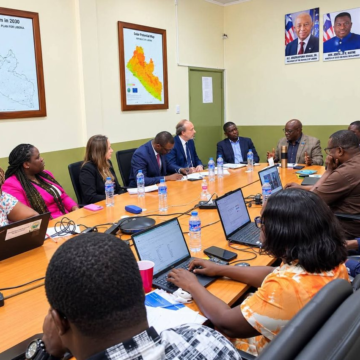
The Rural and Renewable Energy Agency, RREA, has held talks with the Millennium Challenge Corporation, MCC, on reforms and institutional changes aimed at improving Liberia’s energy sector. The meeting in Monrovia focused on policy gaps, institutional responsibilities and possible areas where the MCC could provide support ahead of the anticipated launch of a new MCC...

Author: Energy Crossroad (Energy Crossroad)
Post
Post
Exxon hopes to repeat Guyana’s oil boom offshore Trinidad and Tobago
ExxonMobil (XOM) is looking to replicate Guyana’s oil and gas boom off the coast of Trinidad and Tobago, the company’s head of exploration told the Financial Times in an interview Tuesday. “A lot of people ask, where’s the next Guyana? In Trinidad, we moved in as a play extension to Guyana,” Exxon’s (XOM) head of...
Post
Nigeria Opens 2026 Licensing Round, Offers 40 Oil and Gas Blocks to Investors
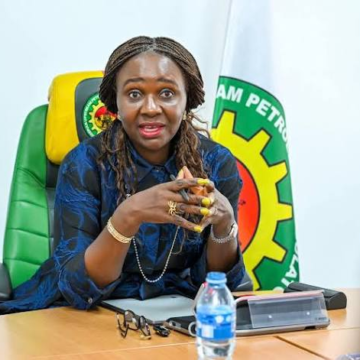
LAGOS, Nigeria — The Nigerian Upstream Regulatory Commission (NUPRC) has officially announced the 2026 Nigerian Licensing Round, offering 40 petroleum blocks across land, shallow-water and deepwater terrains as the Federal Government seeks to attract fresh investment into the country’s upstream oil and gas sector. The Commission’s Chief Executive Officer, Oritsemeyiwa Eyesan, announced the licensing round, saying it had received the approval of President Bola Ahmed Tinubu, who also serves as Minister of Petroleum Resources. “Ladies and gentlemen, the wait is over. It is with great joy that I announce that pursuant to the approval of His Excellency, President Bola Ahmed Tinubu, GCFR, President and Commander-in-Chief of the Armed Forces of the Federal Republic of Nigeria and Honourable Minister of Petroleum Resources, the Nigerian 2026 Licensing Round is hereby announced,” Eyesan said. According to her, the 40 blocks are open to investors with the required technical competence, financial capability and commitment to developing Nigeria’s petroleum resources. Eyesan said Nigeria must remain competitive in the global race for upstream capital, noting that investors have multiple destinations from which to choose. “Investors have choices. They go where the rules are clear, where the process is predictable and where data can be trusted.” Eyesan said the 2026 licensing round would build on the reforms introduced by the Petroleum Industry Act (PIA) 2021, which established the NUPRC and introduced a more transparent framework for the award of petroleum licences. She stressed that petroleum acreage in Nigeria would no longer be awarded through discretionary processes. “Of all the reforms the PIA brought, none speaks more to who we are than this: in Nigeria, petroleum acreage is won, not given. It is no longer discretionary,” she said. Eyesan added that transparent and competitive bidding had become the established rule for awarding Petroleum Prospecting Licences and Petroleum Mining Leases. The Commission also plans to strengthen transparency by publishing its evaluation methodology, providing fuller disclosure of licensing-round results and requiring bidders to disclose their beneficial. The NUPRC CEO said the Commission would publish the licensing-round timetable at the beginning of the process and adhere strictly to it. She referenced the 2025 licensing round, saying the Commission had faced scepticism over its ability to meet its announced timeline but ultimately delivered as scheduled. “In 2025, when we published, there was a lot of scepticism about whether we would meet the timeline. And we proved all our skeptics wrong. We were right on time, not one day late,” Eyesan said. She explained that predictable timelines are critical to investors because licensing decisions require board approvals, financial mobilisation and detailed investment planning. “Investors must plan. Boards must approve. Funds must be mobilised. Every one of these decisions depends on dates that hold. We will certainly hold,” she stated. Level playing field for investors Eyesan further assured prospective bidders that all material clarifications during the licensing process would be made available to every participant. “And every material clarification will be shared with all participants. No bidder will know what others do not,” she said. She also emphasised that the guidelines would establish clear eligibility requirements, bid parameters, evaluation criteria and conditions of award. According to Eyesan, these provisions would ensure that both Nigerian and international investors, regardless of size, compete under the same rules. “The Nigeria 2026 Licensing Round guidelines will clearly set out the eligibility criteria, bid parameters, evaluation criteria and conditions of award. They will be applied consistently so that every eligible investor, large or small, Nigerian or international, competes on a level playing field. Eyesan also issued a strong message to successful bidders, warning that winning a petroleum licence must translate into actual investment and development activity. “To those who will win, my message remains the same: Drill or Drop. A licence is a commitment to Nigeria, not a trophy on the wall,” she said. She said the Commission’s objective was to make Nigeria a more attractive destination for global hydrocarbon investment by improving the consistency and predictability of the award process and ensuring investors have access to reliable technical . “We will put comprehensive, current and investment-ready technical data in the hands of bidders so that they can evaluate with confidence and bid competitively,” Eyesan said. The 2026 licensing round represents another major test of Nigeria’s efforts to attract upstream capital, increase exploration and development activity, and translate the country’s petroleum resources into greater economic value.
Post
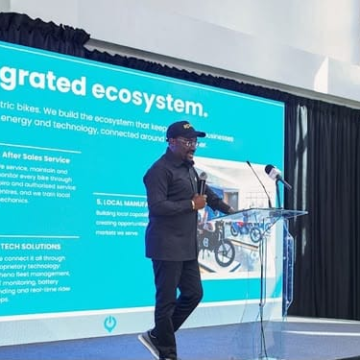
Spiro’s Ghana Entry Puts Electric Mobility On A New Track
SPIRO prepares to enter the country with locally assembled electric motorcycles, battery-swapping infrastructure and a wider support network designed around commercial riders. The planned entry is more than the arrival of another motorcycle brand. It places energy consumption, transport costs and local industrial development at the centre of Ghana’s emerging electric-mobility market, at a time...
Post
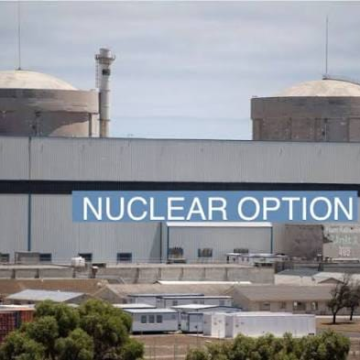
Nuclear Power’s African Push Puts Ghana’s Ambition Under Pressure.
Africa’s nuclear energy ambitions are entering a more consequential phase as a growing number of countries move from political declarations towards the institutional, technical and financial work required to build their first reactors. A new assessment of the global nuclear industry identifies Ghana, Kenya, Nigeria and Uganda as African countries pursuing nuclear power programmes, while...
Post

Energy Commission, VRA Plan Joint Media Capacity Building
The Energy Commission and the Volta River Authority (VRA) are considering a joint approach to strengthening the capacity of professionals responsible for communicating developments across Ghana’s energy sector. The discussions emerged from a courtesy engagement between the Commission’s Public Affairs Unit and the Corporate Communications and Branding Section of VRA’s Corporate Affairs and External Relations...
Post

Korea Eximbank Delegation Visits GRIDCo to Assess Impact of Transmission Project
A delegation from the Korea Export-Import Bank (Korea Eximbank) has completed a two-day post-evaluation project visit to the Ghana Grid Company Limited (GRIDCo) to assess the impact of a Korea-funded power transmission project on Ghana’s electricity network. The delegation, led by Mrs. Je Hea Song, held discussions with a cross-section of GRIDCo’s engineering staff. The...
Post
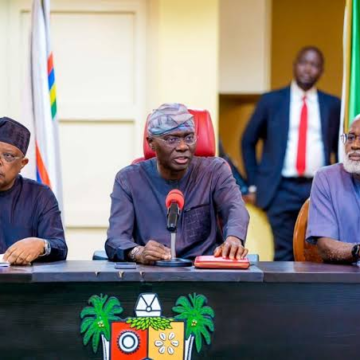
FG Advances Energy Zones Plan to Deliver 24-Hour Electricity in Nigeria’s Key Economic Corridors
FG Advances Energy Zones Plan to Deliver 24-Hour Electricity in Nigeria’s Key Economic Corridors LAGOS, Nigeria — Energy CrossroadThe Federal Government is intensifying efforts to improve electricity reliability across Nigeria through a proposed Energy Zones initiative designed to deliver stable, round-the-clock power to homes, businesses and industries in the country’s highest-demand economic corridors. Minister of...
Post
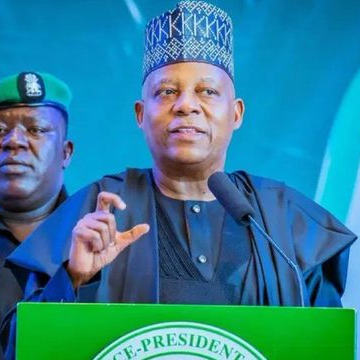
Nigeria Builds New National Grid Control Centre as Government Targets Greater Grid Stability, Renewable Integration
OSOGBO, Nigeria — The Federal Government has commenced construction of a new ultra-modern National Control Centre (NCC) for the Nigerian Independent System Operator (NISO) in Osogbo, Osun State, as part of efforts to strengthen Nigeria’s electricity grid and improve the management of a rapidly evolving power system. Vice President Kashim Shettima said the new facility...
Post
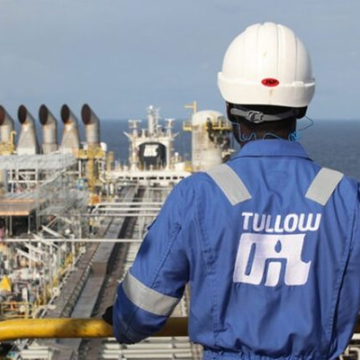
Tullow Oil posts $101m half-year loss despite production gains
Tullow Oil has recorded a loss after tax of US$101 million for the first half of 2026, slightly higher than the US$61 million loss recorded over the same period in 2025. The results were contained in the oil producer’s half-year financial report released to investors. Tullow said the loss was primarily driven by refinancing costs...