
Africa’s next chapter in electricity generation may not be written by sprawling conventional nuclear plants but by a new generation of compact reactors designed for countries with smaller power grids, a development that could significantly reshape Ghana’s long-term energy strategy as the country pushes to diversify its electricity mix and strengthen energy security.Across the continent, momentum is building around Small Modular Reactors (SMRs), a technology increasingly viewed as a practical alternative for emerging economies that cannot accommodate traditional gigawatt-scale nuclear facilities.While Egypt remains on course to become Africa’s second country to operate a commercial nuclear power plant, Ghana is steadily positioning itself among the first wave of nations planning to deploy SMRs in the early 2030s.For Ghana, the growing continental interest extends beyond technology.It represents a test of whether years of planning, regulatory preparation and international partnerships can translate into a reliable source of low-carbon baseload electricity capable of supporting industrialisation, digitalisation and future economic growth.
The technology is evolving in ways that benefit countries with small grids, and Africa can be among the early adopters.Rwandan President Paul Kagame said at this year’s Nuclear Energy Summit in Paris, underscoring the changing landscape for emerging nuclear markets.For decades, nuclear power remained largely beyond the reach of most African countries.Why Smaller Reactors Are Changing Africa’s Nuclear ConversationTraditional nuclear plants typically generate around 1,000 megawatts of electricity from a single reactor.
Such facilities require enormous capital investment and, perhaps more importantly, electricity networks capable of absorbing large volumes of power without destabilizing the grid.That reality effectively excluded many African countries, including Ghana, whose electricity systems are significantly smaller than those found in established nuclear markets.
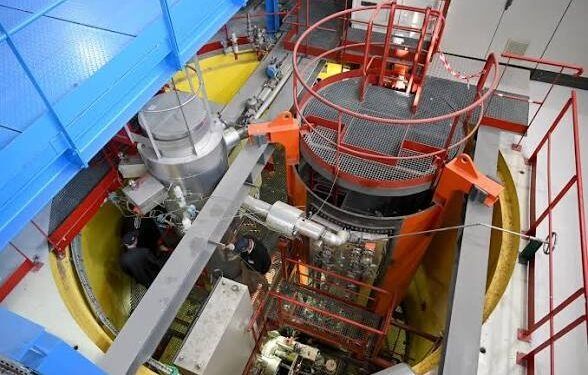
Small Modular Reactors are changing that calculation.Rather than relying on one massive generating unit, SMRs are designed as factory-built modules of roughly 50 megawatts each, allowing countries to add capacity gradually while reducing upfront investment requirements and operational risks.The technology also offers greater flexibility for countries seeking to integrate cleaner energy sources without compromising grid stability.For Ghana, where thermal generation remains dominant and renewable deployment continues to expand, SMRs could eventually provide the dependable baseload power needed to complement intermittent solar generation.
Ghana Moves Beyond Nuclear PlanningAlthough commercial nuclear power remains years away, Ghana’s programme has advanced steadily through institutional and regulatory preparation.Nuclear Power Ghana has already entered into an agreement with Regnum Technology Group to deploy the NuScale VOYGR-12 small modular reactor, with the country’s first nuclear plant targeted for commissioning in the early 2030s.The development places Ghana among a relatively small group of African countries progressing beyond preliminary discussions toward concr Unlike many nations still evaluating technology options, Ghana has spent years building regulatory capacity through the Ghana Atomic Energy Commission (GAEC), the Nuclear Regulatory Authority and specialised institutions responsible for safety oversight.The country’s nuclear ambitions also align with broader government efforts to diversify electricity generation while reducing long-term dependence on imported liquid fuels for thermal power production.Energy planners increasingly view nuclear power as part of a balanced energy mix that combines natural gas, renewable energy and future battery storage systems.Regional Momentum Is GrowingGhana’s ambitions are unfolding against a rapidly evolving continental backdrop.Egypt expects the first reactor at its El Dabaa Nuclear Power Plant to begin operations in 2028, making it only the second African nation after South Africa to generate commercial nuclear electricity.South Africa’s Koeberg Nuclear Power Station, operational since 1984, remains the continent’s only functioning nuclear facility, supplying approximately five per cent of the country’s electricity.Elsewhere, Rwanda has emerged as one of Africa’s most ambitious SMR adopters.Following an International Atomic Energy Agency infrastructure review earlier this year, Rwanda signed an agreement with Holtec to deploy SMR-300 reactors as part of a long-term strategy that could eventually deliver around five gigawatts of nuclear generating capacity.Kenya is also evaluating competing reactor technologies while expanding public engagement on nuclear power.According to international energy assessments, Ethiopia, Ghana, Kenya, Niger, Nigeria, Rwanda, Tanzania and Uganda have all expressed varying levels of interest in developing nuclear generation over the coming decades.Collectively, those plans could contribute around 15 gigawatts of nuclear capacity across Africa by the mid-2030s if financing and implementation challenges are successfully addressed.Financing Remains the Biggest BarrierDespite growing enthusiasm, financing continues to cast a long shadow over Africa’s nuclear ambitions.Large infrastructure projects require substantial upfront capital, lengthy construction periods and long-term policy certainty before investors commit funds.No African country today is ready financially to implement a nuclear power plant immediately. Lassina Zerbo, Chair of the Rwanda Atomic Energy Board, observed during the World Nuclear Exhibition in Paris.That assessment resonates across much of the continent.For Ghana, securing affordable financing may prove just as important as selecting reactor technology.The economics of SMRs remain under close global scrutiny because relatively few commercial units have entered operation.Consequently, financing costs, insurance requirements and sovereign borrowing conditions could significantly influence project timelines.There are, however, encouraging developments.The World Bank recently reversed its longstanding position against financing nuclear energy projects through a new cooperation framework with the International Atomic Energy Agency, potentially opening additional avenues for countries pursuing nuclear programmes.Similarly, the Organisation for Economic Co-operation and Development’s Nuclear Energy Agency, the African Union and the African Commission on Nuclear Energy have strengthened cooperation aimed at supporting peaceful nuclear development across Africa.Those institutional shifts could improve investor confidence over time.What Nuclear Means for Ghana’s Energy FutureThe renewed attention surrounding SMRs should not be interpreted as Ghana abandoning renewable energy or natural gas.Rather, nuclear power increasingly appears to be part of a broader strategy to ensure long-term electricity reliability.As electricity demand grows alongside industrial expansion, digital infrastructure, electric mobility and urbanization, maintaining dependable baseload generation will become increasingly important.Hydropower generation remains vulnerable to changing rainfall patterns, while thermal generation continues to face fuel price volatility and foreign exchange pressures.Renewable energy is expanding rapidly, but solar and wind alone cannot presently provide uninterrupted electricity throughout the day without significant storage investment.That is where SMRs could eventually fit into Ghana’s future electricity mix.Their relatively smaller generating capacity makes them better suited to Ghana’s grid than conventional nuclear stations while providing stable, carbon-free electricity capable of operating continuously regardless of weather conditions.Yet caution remains necessary.Nuclear development demands world-class regulatory oversight, skilled human resources, transparent procurement processes and sustained public engagement.Public acceptance will likely become as important as engineering readiness.For Ghana, therefore, the question is no longer whether nuclear energy deserves consideration.Instead, the challenge is ensuring that when the country eventually joins Africa’s emerging group of nuclear power producers, it does so with the financial discipline, regulatory credibility and technical capacity necessary to make the technology both economically viable and publicly trusted.As more African countries turn to SMRs to strengthen energy security, Ghana’s long-prepared nuclear programme may soon move from planning documents to practical implementation, provided the financing, partnerships and policy consistency required to support such an ambitious transition fall into place.