
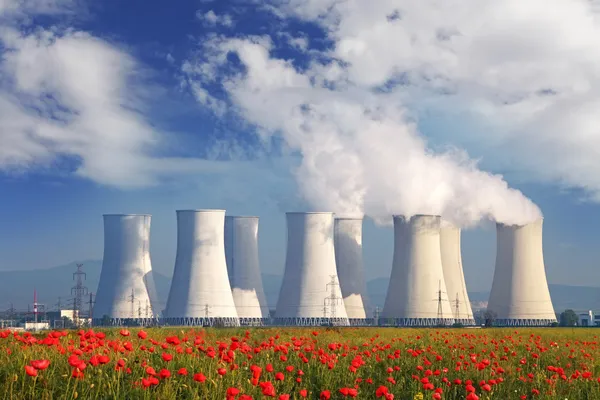
A new report from the OECD Nuclear Energy Agency (NEA) reveals rapid global momentum behind Small Modular Reactors (SMRs) a technology increasingly being recognised as a strategic tool for clean, reliable, and decentralized energy production. The latest edition of the NEA’s SMR Dashboard identifies 127 unique SMR designs worldwide, up from 98 in the previous year.
Of these, 51 are engaged in licensing processes, and 85 active discussions are ongoing between developers and prospective host sites, underscoring growing international interest in SMRs as countries strive to meet energy security and decarbonization targets.
The report, covering developments up to February 2025, presents valuable insights for Africa’s policymakers and energy sector stakeholders as the continent grapples with power deficits, industrialisation demands, and climate resilience planning.
Funding Surge and Technology Maturity
Since the last edition in 2024, the number of SMR designs securing financial backing has jumped by 81%. Currently, seven SMR projects are either under construction or operational, with a broader portfolio of projects progressing toward first-of-a-kind deployments. This trajectory signals a maturing sector that is now attracting institutional investors, private tech giants, and even multilateral development banks.
Director-General of the NEA, William Magwood, said the drivers of SMR adoption rising electricity demand, energy independence, and net-zero targets are “intensifying globally.” He emphasized that SMRs are increasingly central to national energy strategies, with potential applications well beyond electricity generation, including hydrogen production, industrial heat, and desalination critical for many African economies.
Fuel Innovation and Supply Barriers
Out of the 127 identified designs, 74 were analyzed in detail, while the remainder were excluded due to inactivity or developer request. A major theme in the report is the growing reliance on high-assay low-enriched uranium (HALEU), a fuel type that is not yet widely available. Thirty SMR designs require HALEU enriched between 10–20%, while another nine plan to use levels between 5–10%.
The NEA warns that limited HALEU supply is a major bottleneck, with over half of the SMR developers still in early-stage discussions or feasibility studies with national labs regarding fuel procurement. This challenge signals the need for international partnerships, particularly for countries like those in Africa that lack domestic nuclear fuel capabilities.
Meanwhile, the fuel landscape is evolving. Many SMRs under development are incorporating innovative fuels beyond traditional uranium oxide, including TRISO-based composites, which offer safety and efficiency advantages but require new supply chains and regulatory frameworks.
Private Sector Interest and Regulatory Momentum
Private investment in SMRs is accelerating. Corporations such as Amazon, Google, Meta, and Dow Chemical, are investing in the technology to power their operations while meeting sustainability goals. The entrance of SMR firms into public markets, combined with the World Bank’s new openness to nuclear project financing, is reinforcing market confidence.
From a regulatory standpoint, over 33 SMR designs initiated pre-licensing activities in 2024, a 65% rise from the previous year. Nearly 85 global siting discussions are underway, with increasing focus on non-grid applications a relevant prospect for off-grid African communities, mining operations, and special industrial zones.
Implications for Africa
For African nations facing intermittent power supply, high transmission losses, and limited grid reach SMRs offer a potentially transformative solution. Their modular scale, flexible siting, and load-following capabilities make them ideal for distributed power systems, aligning with ambitions under the African Union’s Agenda 2063 and various national electrification strategies.
However, the continent must begin laying the groundwork now:
- Regulatory frameworks must be updated or created to handle new reactor technologies.
- Human capital development in nuclear science and engineering must be prioritized.
- International cooperation is needed to overcome fuel supply constraints and ensure safe deployment.
The NEA’s SMR Dashboard also launches alongside a real-time digital tracker a valuable resource for African policymakers, researchers, and investors aiming to monitor global SMR progress and identify partnership opportunities.