


China has once again reinforced its commitment to halting the financing of coal power projects beyond its borders, as part of its global climate pledge. This reaffirmation came during a high-level engagement with participants of the ongoing Ghana-China Media Fellowship 2025 in Accra.

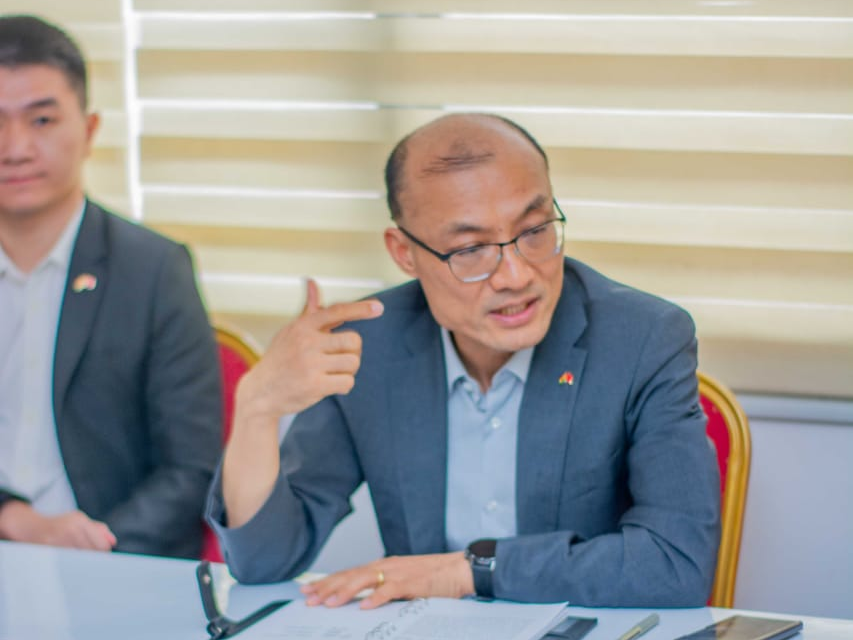
Addressing the fellows at the Africa-China Centre for Policy and Advisory (ACCPA) on Saturday, August 2, 2025, the Chinese Ambassador to Ghana, H.E. TONG Defa, emphasized Beijing’s firm stance on discontinuing overseas coal investments. The policy, first announced by Chinese President Xi Jinping at the United Nations General Assembly in 2021, marked a turning point in international energy financing and continues to shape China’s climate diplomacy.
Before this global shift, China had played a major role in financing coal infrastructure around the world, especially under its Belt and Road Initiative (BRI). Studies from the Global Energy Monitor and Boston University indicate that Chinese entities were involved in over 70% of coal power projects under construction outside China before 2021.
Since the policy change, numerous coal projects have been canceled or shelved, and China has redirected its focus toward green energy investments and sustainable infrastructure development. Ambassador TONG’s remarks in Accra underscored China’s alignment with global climate frameworks like the Paris Agreement and its ambition to achieve carbon neutrality by 2060.
The engagement formed part of a broader 12-week fellowship program aimed at equipping Ghanaian journalists with deeper insights into China’s foreign policy, climate commitments, and its evolving partnership with Africa. The ambassador’s visit offered a rare opportunity for direct dialogue and helped contextualize China’s global environmental shift within the framework of its cooperation with African nations.
China’s pivot to renewable energy and climate-resilient development was also a key theme of the interaction, with Ambassador TONG highlighting ongoing support for clean energy initiatives in developing countries, including Ghana. With Africa’s rising energy needs, China’s move toward green investments offers potential pathways for collaboration in building low-carbon economies across the continent.

