


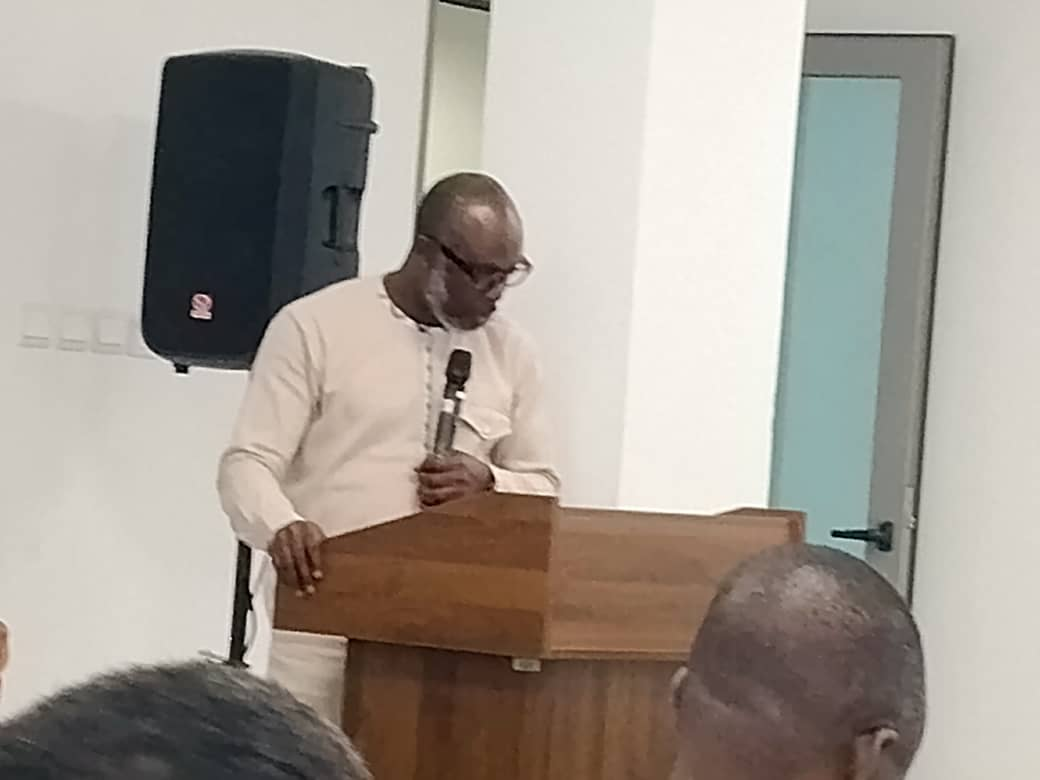
Accra – The Executive Director of Nuclear Power Ghana (NPG), Dr. Stephen Yamoah, has emphasized that Ghana’s nuclear power programme is designed as a catalyst for economic transformation rather than a narrow focus on electricity generation.
Speaking at the opening of a two-day media workshop in Accra, held at the Bui Power Authority Conference Room, Dr. Yamoah said the initiative seeks to drive industrial growth, create jobs, and build technological capacity. The workshop, themed “Media Practice: A Bridge in Building a Sustainable Community Development,” brought together media professionals to deepen understanding of the country’s nuclear journey.
Dr. Yamoah commended the role of the media particularly the Ghana News Agency (GNA) and the Ghana Journalists Association (GJA) in shaping public awareness of nuclear energy. He also acknowledged the contributions of key institutions such as the Bui Power Authority, the Volta River Authority, and the Ghana Atomic Energy Commission, which he described as central pillars of the programme.
“The real goal is to use nuclear energy as a springboard to drive industrialisation, create jobs, build local capacity, and transform Ghana’s economy,” he said, stressing that the project goes far beyond adding megawatts to the national grid.
He cautioned that the programme is not a “quick fix,” but a long-term strategic investment requiring consistent focus and greater participation of local industries in the supply chain. Drawing lessons from countries such as Egypt, the UAE, and Romania, he noted that nuclear power can successfully integrate into national development when citizens are directly involved.
Dr. Yamoah revealed that Ghana has entered into collaborative agreements, including public-private partnerships, but insisted that foreign involvement must complement rather than dominate the country’s nuclear vision.
Highlighting the importance of accurate reporting, he urged journalists to play a proactive role in shaping public discourse, adding that “Ghana will be developed by Ghanaians, not by foreigners.” He further pointed to the Ghana Atomic Energy Commission’s expertise as a strong foundation for positioning Ghana as a hub of nuclear knowledge in Africa.
Looking ahead, he reaffirmed NPG’s alignment with the International Atomic Energy Agency (IAEA) framework and maintained that Ghana’s first nuclear power plant is scheduled for commissioning in the early 2030s, subject to financing arrangements.
The two-day workshop continues with discussions and interactive sessions aimed at strengthening media engagement in Ghana’s nuclear energy agenda.