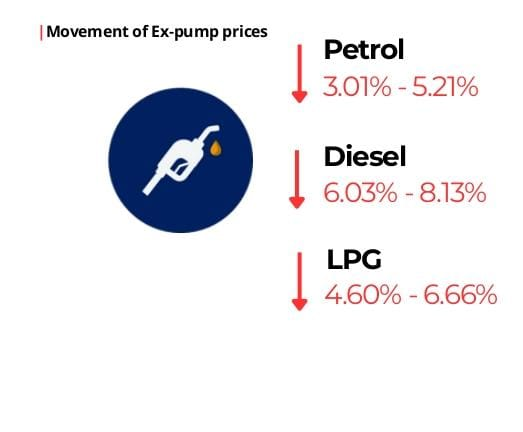



Fuel prices at the pump are expected to fall in the first week of November, with some products projected to drop by as much as 8 percent, according to the Chamber of Oil Marketing Companies (COMAC ).
The anticipated decline is being driven by two major factors: a sharp appreciation of the Ghanaian cedi against the US dollar and weakening global crude oil prices.
Brent crude prices slipped to US$61.91 per barrel in late October, while West Texas Intermediate (WTI) fell to US$58.27 the lowest level in five months. Market analysts attribute the downturn to rising trade tensions between the United States and China, as well as mounting concerns over a potential supply glut in 2026.
The International Energy Agency (IEA) has warned that global markets could face a surplus of up to four million barrels per day next year, as OPEC+ nations increase production at a time of slowing demand.
The escalating economic standoff between Washington and Beijing has seen both sides introduce new tariffs and port charges, while China’s ongoing deflationary challenges and a weakening property sector have further clouded the outlook for fuel consumption.
Domestically, the cedi recorded a strong rebound during the 16 October pricing window, appreciating from GH¢12.63 to GH¢11.21 to the dollar — an 11.2 percent gain. The recovery has nearly erased the 13.3 percent depreciation experienced in the third quarter.
Market watchers have credited the Bank of Ghana’s reintroduction of spot forex sales for enhancing liquidity and helping to stabilise pricing.
Based on current indicators, petrol prices are expected to drop between 3 and 5 percent, diesel by up to 8 percent, and liquefied petroleum gas (LPG) by nearly 7 percent.
The Chamber says the sustained decline across the last two pricing windows reflects both easing prices on the international market and renewed confidence in the cedi as the country enters the final quarter of the year.