


This year has seen waves of bad news for the global fight to halt catastrophic climate change. Fossil fuel production is still increasing, driving up planet-warming pollution; the United States is in climate denial mode; and turbulent geopolitics have pushed the climate crisis down the agenda and into the culture wars.
But there’s another, more hopeful, storym unfolding simultaneously: the exponential rise of clean energy. Countries around the world are adding renewables at a blistering pace — and this surge is happening in some surprising places. Experts say it could herald the start of a new energy age, powered by the sun and wind.
In the first half of 2025, for the first time ever, renewables overtook coal as the top source of global electricity — a major milestone, according to analysts. How the world gets its electricity is hugely important; the energy sector is the largest source of global emissions, and clean electricity is also key to decarbonizing transportation, another heavily polluting industry.
Renewable energy overtook coal as the biggest source of global electricity for the first time
Gains in solar and wind power helped clean energy surpass planet-heating coal in electricity generation in the first half of 2025. This clean energy surge is set to increase exponentially as wind, solar and batteries become cheaper and easier to install than fossil fuels.
The surprising countries pulling off stunningly fast clean energy transitions.
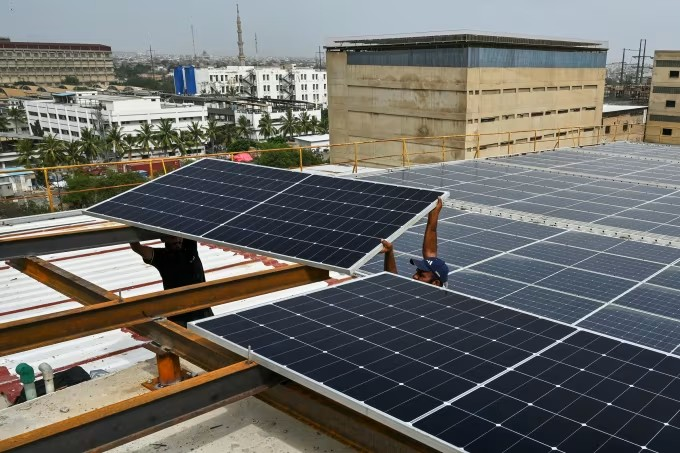
,In just six years, the share of solar in Pakistan’s power mix went from zero to 30%.
Technicians install solar panels on the …
This year has seen waves of bad news for the global fight to halt catastrophic climate change. Fossil fuel production is still increasing, driving up planet-warming pollution; the United States is in climate denial mode; and turbulent geopolitics have pushed the climate crisis down the agenda and into the culture wars.
But there’s another, more hopeful, story unfolding simultaneously: the exponential rise of clean energy. Countries around the world are adding renewables at a blistering pace — and this surge is happening in some surprising places. Experts say it could herald the start of a new energy age, powered by the sun and wind.
In the first half of 2025, for the first time ever, renewables overtook coal as the top source of global electricity — a major milestone, according to analysts. How the world gets its electricity is hugely important; the energy sector is the largest source of global emissions, and clean electricity is also key to decarbonizing transportation, another heavily polluting industry.
This clean energy surge is set to increase exponentially as wind, solar and batteries become cheaper and easier to install than fossil fuels.
Global renewable power capacity is projected to double over the next five years, increasing by 4,600 gigawatts (GW) — roughly the same as adding the total power generating capacity of China, the European Union and Japan, according to a recent International Energy Agency report.
“There is no going back,” Malgorzata Wiatros-Motyka, a senior electricity analyst at climate think tank Ember, told CNN.
Yet despite the pace, some experts say much more is needed. Renewables aren’t supplanting planet-heating fossil fuels in many countries because energy demand is growing so rapidly. That means planet heating pollution levels are still rising and every bit of warming translates to more catastrophic climate outcomes.
Transforming the entire power sector to clean energy isn’t yet inevitable, said Hannah Pitt, a director at the nonpartisan think tank Rhodium Group, where she oversees international energy research. “We don’t have it in the bag,” she told CNN.
Big polluters are turning to solar, even if they aren’t quitting fossil fuels yet
After spending decades pumping planet-heating carbon into the atmosphere to grow their economies, the world’s most-polluting countries are increasingly turning to clean energy. One of the big reasons is economics: renewables are getting cheaper and cheaper. Low-cost solar, in particular, is driving the clean energy boom.