

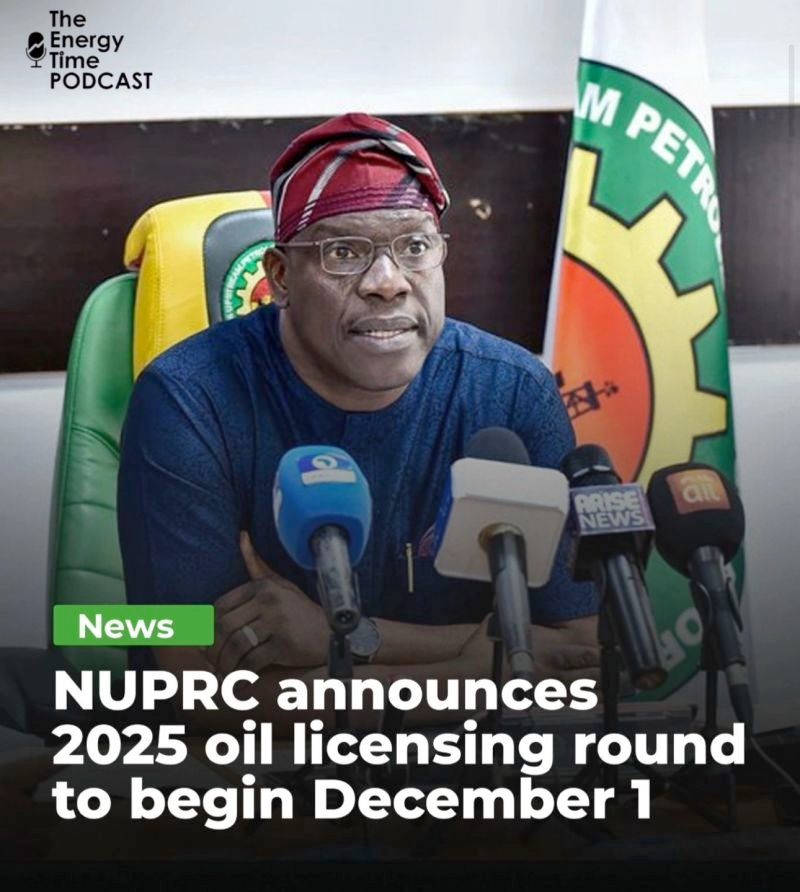
Nigeria’s upcoming 2025 Licensing Round, scheduled to open on December 1, 2025, is being positioned as a pivotal moment in the country’s energy policy—one that moves beyond traditional oil exploration to embrace a gas-focused future.
Unlike previous cycles that concentrated largely on oil-rich acreages, the 2025 round places strategic emphasis on gas-bearing blocks, reflecting Nigeria’s evolving priorities as global energy markets undergo rapid transition.
Industry analysts say the move marks one of the clearest policy shifts since the passage of the Petroleum Industry Act (PIA), signalling the government’s recognition that Nigeria’s strongest competitive advantage in the next decade lies in natural gas, not oil.
Global and Domestic Dynamics Behind the Shift
- Gas Repositioned as a Global Transition Fuel
With countries worldwide adopting gas as a key transition anchor, Nigeria is aiming to leverage its vast reserves to meet regional energy demand, support domestic industrialisation, and expand its footprint in LNG, CNG and LPG markets.
Observers say a well-executed licensing round could help Nigeria compete more effectively in both African and international gas markets. - A New Investor Class Emerging
Past licensing rounds were heavily driven by international oil majors.
Today, the investor landscape is changing. Independents, gas-focused developers, midstream infrastructure companies and integrated energy firms are taking centre stage.
This shift, experts note, demands more transparent, technical and commercially responsive engagement from regulators if Nigeria hopes to attract the right partners. - Moving From Just “Awarding Blocks” to Building Gas Value Chains
The real success of the licensing round will depend not only on how many blocks are awarded, but on Nigeria’s ability to:
• Expand midstream infrastructure
• Develop gas processing and evacuation systems
• Build market frameworks that deliver gas to industry, power plants and export corridors
Stakeholders stress that without these enablers, new upstream gas discoveries may not translate into real economic value. - Aligning with Energy Transition Realities
Nigeria’s Decade of Gas, LPG expansion agenda, mini-LNG projects and national CNG rollout all rely on a steady, reliable upstream gas supply.
By prioritising gas-rich assets, the 2025 Licensing Round could become the backbone supporting these national programmes.
A Potential Turning Point for Nigeria’s Energy Future
For many industry watchers, the key question is straightforward:
Will this licensing round accelerate the growth of Nigeria’s gas economy?
If the answer is yes, the 2025 Licensing Round will be remembered not merely as another administrative exercise, but as a defining moment in Nigeria’s long-term energy transition.