

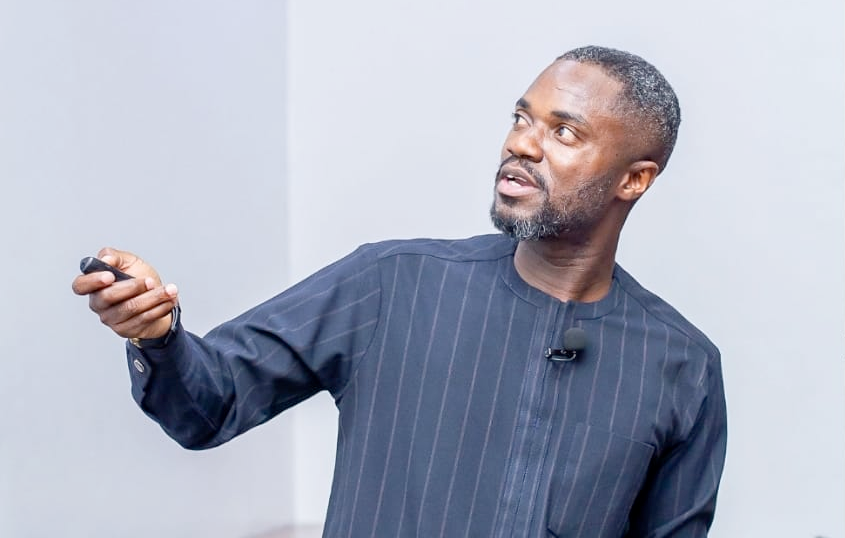
The Chief Executive Officer of the Chamber of Oil Marketing Companies (COMAC) and Africa Regional Director of the Society of Petroleum Engineers (SPE), Dr. Riverson Oppong, has called on African countries to scale up investments in renewable energy projects to achieve energy sovereignty across the continent.
Dr. Oppong made the call while delivering a public lecture at the China Europe International Business School in Accra on the theme “Energy Sovereignty in the Context of Global Energy Transition: What Africa Should Know.” He noted that although the global energy transition debate is intensifying, oil and gas development in Africa remains significant, placing the industry at a critical crossroads.
According to Dr. Oppong, global oil and gas investments continue to play a leading role and remain complementary to the development of renewable energy. He highlighted the growing relevance of Carbon Capture, Utilisation and Storage (CCUS) technology, which was traditionally used for enhanced oil recovery but is now being deployed to support net-zero ambitions.
“CCUS was previously used mainly to capture carbon for enhanced oil recovery, but today many countries are using it as a tool to meet their net-zero objectives,” he said, citing recent commitments by Gulf countries, including Saudi Arabia, to invest in CCUS across both the oil and gas and renewable energy sectors.
He urged African countries to explore CCUS opportunities but stressed the importance of credible monitoring, reporting and verification systems to ensure international trust, particularly under tightening global carbon regulations affecting exports such as cement, steel and fertilisers.
Dr. Oppong also highlighted several renewable energy projects across the continent, including Ghana’s floating solar project by the Bui Power Authority, Egypt’s 1.8-gigawatt Benban Solar Park, Ethiopia’s hydropower projects, grid energy developments in Namibia and South Africa, and Kenya’s geothermal energy initiatives which are key to achieving Africa’s energy sovereignty.
Touching on electric mobility, Dr. Oppong underscored Africa’s strategic advantage in hosting critical minerals essential for electric vehicle (EV) manufacturing. He cautioned against the continued export of raw materials without value addition on the continent, describing it as a missed economic opportunity.
He commended Ghana’s electric vehicle policy and called on policymakers to consider measures that would make EVs more affordable, noting that government policies are crucial to the growth and acceptance of the EV market. He also referenced Japan’s preference for hybrid vehicles, attributing their dominance to efficiency considerations.
Dr. Oppong further advised African governments to strengthen partnerships between International Oil Companies and National Oil Companies, enhance local content implementation, and pursue reforms that support a balanced energy mix incorporating renewables, gas and crude oil.
The public lecture brought together key energy stakeholders, including the Executive Director of the Africa Centre for Energy Policy, Ben Boakye; the Director of Research and Innovation at the Africa Sustainable Energy Centre, Dr. Elvis Twumasi, the Chief Executive Officer of Kenyon International Dr. Victor Ekpenyon and the CEO of Cubica energy Lesley Arthur.