
Ghana National Petroleum Corporation (GNPC) has projected that the country’s national gas demand will experience an exponential surge, aiming to touch an unprecedented peak of one billion cubic feet per day within the next decade.
This drastic upswing in consumer, industrial, and power sector requirements threatens to completely overwhelm the nation’s baseline energy infrastructure, risking widespread supply deficits if immediate preventative interventions are not actualized.
According to internal assessment models, the accelerating consumption trajectory indicates a severe looming deficit where domestic production channels and traditional import systems fail to match the rapidly expanding industrial footprint.
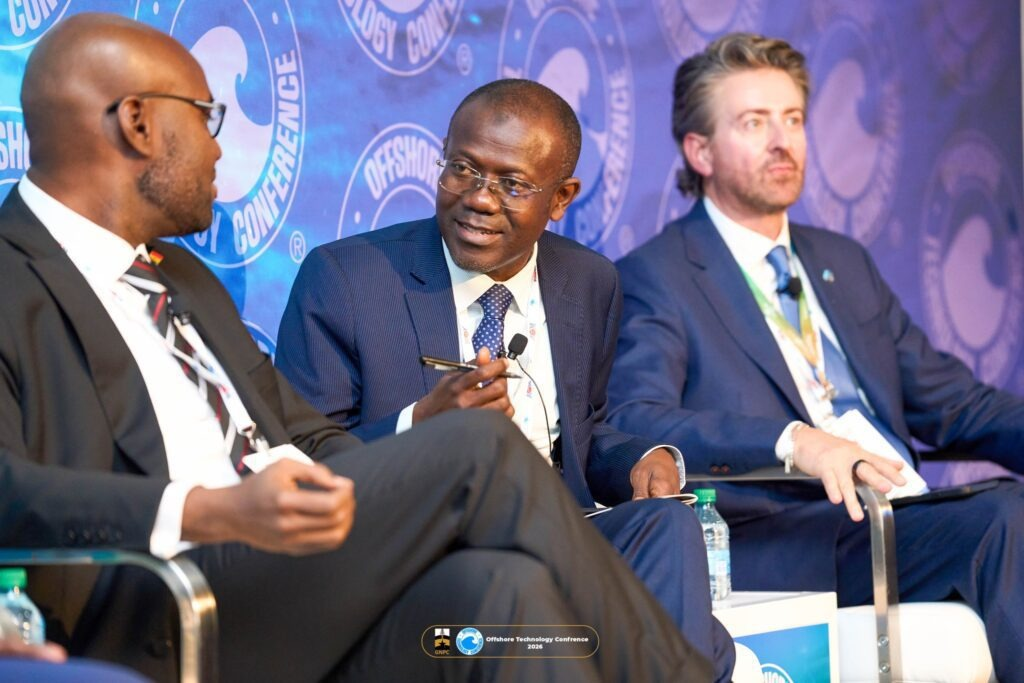
“By 2030, we are looking at around 840 million standard cubic feet per day, and by 2036, we are looking at hitting one billion cubic feet of demand per day. From our projections, we can’t meet this from domestic production, nor even with imports from Nigeria. That’s why we are working with partners to import LNG.” Deputy Chief Executive Officer for Finance, Commercial and Administration of GNPC, Hamis Ussif stated.
To prevent an impending economic slowdown driven by energy starvation, the state hydrocarbon manager is sounding alarms across the West African sub-region regarding a widening structural imbalance.
This structural vulnerability persists despite an aggressive injection of capital into existing fields, revealing that the sheer velocity of domestic market consumption is outpacing fixed asset scaling.
Officials note that unless secondary distribution channels and unconventional infrastructure assets are deployed promptly, the widening disparity between generation and demand could compromise national grid stability and restrict industrial expansion.
Capital Injections and Upstream Field Optimization
The West Africa Gas Summit (WAGS) 2026 served as the premier policy platform where energy experts detailed the capital deployment frameworks structured to mitigate these structural deficits.
Upstream field operators have already consolidated financial commitments totaling over $3.5 billion in a bid to elevate baseline extraction metrics and capture associated gas that was previously flared or reinjected.
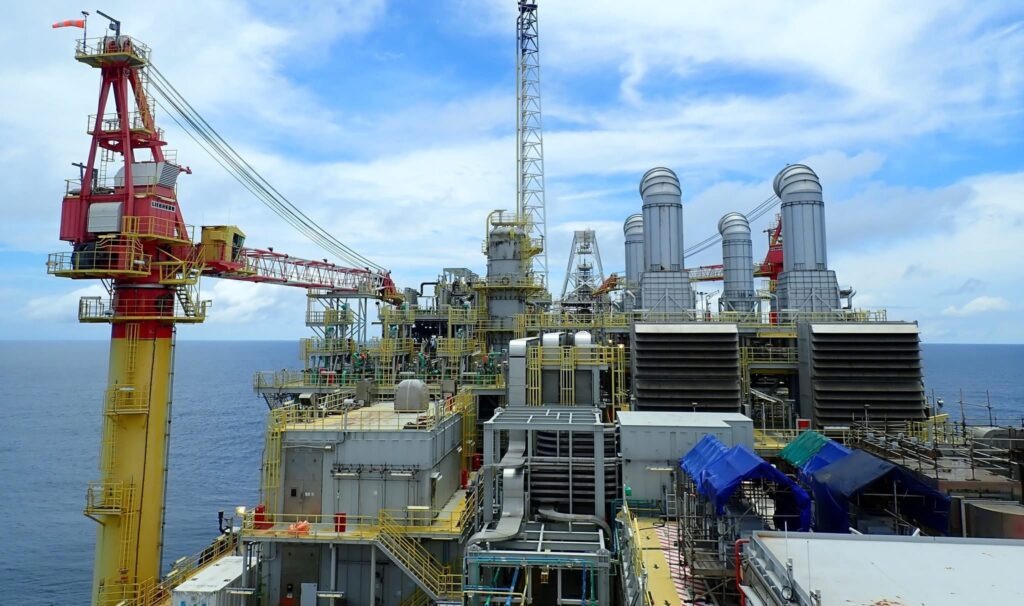
These financial reserves are being channeled directly into deepwater blocks to optimize reservoirs and expand subsurface processing installations.
Partners overseeing the legacy Jubilee and TEN fields have jointly structured a capital expenditure pipeline valued at $2 billion, which is legally bound to run through 2028.
This capital mobilization focuses on multi-lateral well drilling and subsea tie-back modifications intended to maximize both crude yields and lean gas recovery factors.
Simultaneously, the Sankofa-Gye Nyame consortium has finalized a separate $1.5 billion investment package dedicated entirely to optimizing its high-pressure gas processing loops.
While these upstream interventions provide a critical production floor, analysts argue that extracting more raw gas from deepwater wells addresses only half of the challenge, as infrastructural bottlenecks continue to limit onshore delivery capacities.
Operationalising the Tema Liquefied Natural Gas Architecture
The Ghana National Petroleum Corporation is accelerating its midstream diversification strategy by finalizing the mechanical completion of the Tema Liquefied Natural Gas (LNG) import terminal.
Currently standing at 95 percent execution capacity, this specialized regasification facility is engineered to decouple Ghana from its historical reliance on single-source pipeline deliveries.
By introducing maritime cryogenic transport into the national fuel procurement matrix, the state can source flexible spot-market cargos from global producers to buffer seasonal variations in domestic deepwater outputs
This coastal terminal architecture integrates an offshore floating storage and regasification unit (FSRU) linked via subsea pipelines directly to the industrial enclave of Tema.
Beyond satisfying local thermal power plants, the facility is strategically sized to transform the nation into a regional energy distribution hub, positioning it to export surplus volumes to neighboring West African nations via interconnected pipeline networks.
State planners emphasize that finalizing this project is vital to building an immediate supply buffer, ensuring that unforeseen supply disruptions at domestic fields do not result in widespread power outages.
Sub-Regional Integration and Pipeline Supply Diversification
Energy ministry strategists are advocating for a comprehensive renegotiation of regional transmission treaties alongside the expansion of land-based distribution networks to secure long-term fuel supplies.
Historical volumes delivered through the West African Gas Pipeline (WAGP) have consistently suffered from upstream volatility and political bottlenecks, requiring a shift toward more legally binding supply-or-pay architectures. Strengthening regulatory alignment with regional partners will allow the state to establish a more stable, predictable baseline flow of natural gas.
Securing regional energy security requires expanding cross-border pipeline diameters and integrating automated pressure-management systems across interconnected transmission networks.
Diversifying the energy mix also requires investing heavily in onshore compressed natural gas (CNG) distribution networks to supply industrial hubs that lack direct access to main transmission lines.
By linking international maritime imports, optimized deepwater production, and a reinforced regional pipeline system, the country can build a resilient, multi-layered energy matrix capable of supporting its projected industrial growth.