


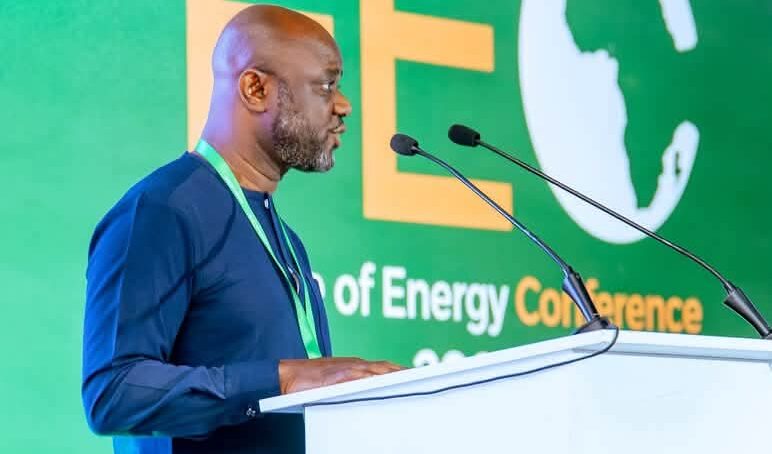
Africa’s industrialisation ambitions will remain constrained unless countries address the high cost of energy, the Executive Director of the Africa Centre for Energy Policy (ACEP), Ben Boakye, has warned.
He said energy prices were a major determinant of economic competitiveness and should therefore be treated as a central development issue rather than merely a utility-sector concern.
Mr Boakye made the remarks when he addressed participants at the 2026 Future of Energy Conference (FEC) in Accra on Tuesday, August 25, 2026.
According to him, significant variations in energy costs across African countries demonstrated the need for governments to pursue policies tailored to their individual economic circumstances.
“The point is not simply to rank countries. It is to demonstrate that energy prices shape economic possibilities,” he said.
He disclosed that ACEP was developing a data-driven Cost of Energy Tracker to provide policymakers with a clearer understanding of energy cost differences across the continent and support more targeted interventions.
Mr Boakye explained that while competitive energy prices could stimulate investment and productivity, high energy costs effectively constituted “a tax on production” and undermined competitiveness.
Ghana’s energy cost challenge
He said Ghana had begun implementing measures to reduce electricity costs while easing the fiscal burden of the energy sector on the state.
Mr Boakye cited the renegotiation of Independent Power Producer (IPP) contracts as an example of how structural reforms could reduce energy costs without necessarily requiring additional government expenditure.
He said ACEP supported the government last year in renegotiating the IPP agreements, resulting in savings of approximately US$250 million in debt and about US$7 billion in future payments and commitments.
“These are significant numbers, but the broader lesson is perhaps even more important. Reducing the cost of energy does not always require another power payment,” he said.
He argued that substantial savings could be achieved through better contracts, financing arrangements, risk allocation and improved structuring of existing infrastructure projects.
According to him, better allocation of risks could balance the interests of governments and investors while ultimately reducing the cost borne by consumers.
Innovation beyond technology
Mr Boakye said innovation in the energy sector should extend beyond technologies such as solar power, batteries and smart grids to include the way energy projects were financed, contracted and structured.
He noted that the cost of capital directly affected the cost of electricity, explaining that investors who perceived higher risks generally demanded higher returns, resulting in more expensive financing.
He called for stronger institutions, better data and more rigorous risk assessment to ensure that financing costs accurately reflected actual risks in African markets.
He also advocated a more balanced approach to sovereign guarantees, arguing that where governments assumed significant market or payment risks, such commitments should be appropriately reflected in the cost of capital.
“Better allocation of risk, combined with concessional and commercial financing where appropriate, can bring down the cost of capital and ultimately the cost of electricity,” he said.
Harnessing African innovation
The ACEP Executive Director also stressed the need to harness African innovation to address the continent’s energy challenges.
He said the previous two editions of ACEP’s Innovation Challenge had demonstrated the capacity of young Africans to develop solutions to real-world energy problems.
Promising ideas had emerged in areas including energy for agriculture, waste-to-energy and hydrogen generation, he said.
Mr Boakye said the 2026 edition presented an even greater opportunity, with the involvement of the African Union through NEPAD, the African Minerals Development Centre (AMDC) and Africa Change Lab, alongside partners including the UNDP, OSL and KSF.
He said the initiative sought to strengthen the pathway from research and ideas to practical solutions, businesses and investments.
“Our young people should not only be beneficiaries of Africa’s future energy system; they should help design it,” he said.
Regional power integration
Mr Boakye further called for deeper regional electricity integration as part of efforts to reduce energy costs across Africa.
He noted that the West Africa Power Pool, Southern Africa Power Pool, Eastern African Power Pool and Central Africa Power Pool had already made significant progress in developing regional electricity markets and improving system operations.
According to him, the power pools were enabling countries to trade electricity and take advantage of differences in their respective energy systems.
However, he said deeper integration would require African countries to address technical differences in system voltages, grid architecture, protection systems, SCADA and system controls.
He urged countries to design future infrastructure with interoperability in mind to prevent current investments from creating unnecessary barriers and costs to continental electricity integration.
AU urged to champion affordable energy
Mr Boakye also called for stronger African coordination in international energy and trade negotiations.
He said Africa needed investments that improved the economics of energy, including concessional and flexible financing, cost-reducing technologies, partnerships that supported innovation and trade policies that did not unnecessarily increase the cost of technologies needed for the energy transition.
He said ACEP intended, after the conference, to work with relevant African Union institutions to strengthen global collaboration and place energy affordability more firmly on the continental agenda.
He also expressed concern about international trade policies that could increase the cost of renewable energy technologies at a time when African countries were seeking to accelerate the energy transition.
He said the African Union should pursue a coordinated continental response to global policy and trade decisions affecting the cost and availability of energy technologies.
Energy affordability central to Africa’s future
Mr Boakye said Africa’s ability to achieve industrialisation, climate goals and an effective energy transition would ultimately depend on its ability to secure affordable and reliable energy.
“As we begin FEC, the message is straightforward. Africa needs energy that is affordable enough to power our transformation,” he said.
He identified better policies, smarter financing, appropriate technologies, African innovation, stronger regional cooperation and resilient partnerships as essential to lowering energy costs.
“The cost of energy is not a secondary consideration in our development. It is one of the central determinants of what Africa can become,” Mr Boakye said.