
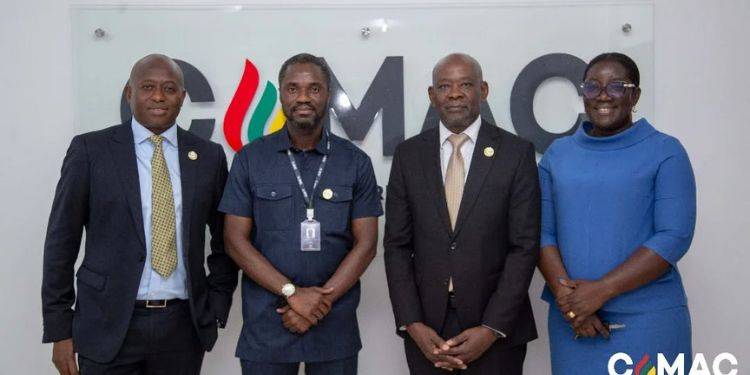
The Chamber of Oil Marketing Companies (COMAC) has called for a more balanced policy framework to ensure fair competition and enhanced consumer protection within Ghana’s downstream petroleum sector.
Speaking at a panel discussion during the 2026 World Consumer Rights Day, COMAC’s Director for Policy and Regulations, Mohammed Issah, stressed that safeguarding consumers requires policies that strike the right balance between market stability and transparent pricing.
The discussion, held under the theme “Transparency in Fuel Pricing: Is the Consumer Protected?”, brought together key industry stakeholders to examine whether current pricing mechanisms adequately serve the interests of consumers.
Mr. Issah noted that a sustainable petroleum industry must be anchored on strong regulatory oversight, cautioning against sacrificing long-term market stability for short-term gains.
He emphasised that effective policy design should promote transparency, ensure fair competition, and ultimately deliver tangible benefits to consumers.
Joining representatives from the Chamber of Petroleum Consumers (COPEC) and the Centre for Environmental Management and Sustainable Energy (CEMSE), the COMAC official contributed to a broader dialogue on the structural challenges within Ghana’s deregulated fuel market. The event was organised by the National Petroleum Authority (NPA) as part of efforts to deepen stakeholder engagement on industry reforms.
Addressing concerns about fuel pricing, Mr. Issah clarified that pump prices are primarily influenced by global crude oil prices, exchange rate fluctuations, and tax components, rather than the margins of Oil Marketing Companies (OMCs), which are often blamed for increases.
He further highlighted the importance of the Fuel Price Floor Programme, describing it as a critical tool for maintaining discipline and stability in the market, while ensuring the sustainability of both large and small operators.
Promoting Market Stability
COMAC’s position underscores the need to guard against unfair pricing practices and excessive market volatility. By supporting mechanisms such as the fuel price floor, the chamber aims to create a level playing field that enables indigenous OMCs to compete alongside larger multinational firms.
Such measures, according to the chamber, help prevent market dominance and reduce the risk of monopolistic behaviour that could ultimately drive up prices for consumers.
The chamber also advocated stronger enforcement, improved licensing systems, and the adoption of digital monitoring tools to enhance transparency and ensure compliance across the sector.
Advancing Consumer Welfare
COMAC maintained that greater pricing transparency and moderate fuel costs would translate into more predictable expenses for consumers and reduce the likelihood of supply disruptions.
Calls for uniform ex-pump pricing and the elimination of selective discounting were also highlighted as key steps toward ensuring fairness across both urban and rural markets.
The discussions at this year’s World Consumer Rights Day reinforced the idea that consumer protection extends beyond price control and requires a resilient, well-regulated industry framework.
As Ghana continues to refine its deregulation policy, stakeholders say embracing digital innovation and strengthening compliance mechanisms will be essential to building a competitive and sustainable energy sector that benefits all.