


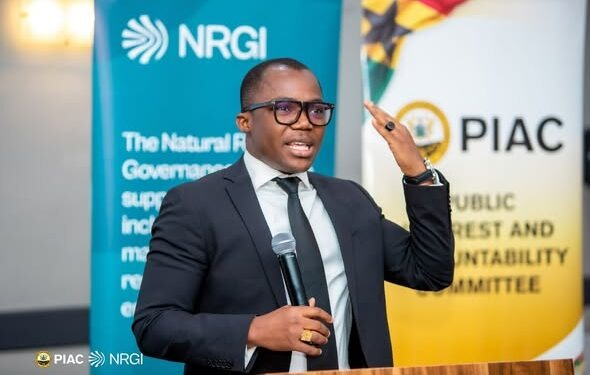
Oil ShocksThe Natural Resource Governance Institute (NRGI) has advocated for the urgent deployment of decentralized solar power infrastructure paired with storage systems across Africa to protect domestic economies from volatile international crude price shocks.According to the international policy think tank, moving toward localized renewable energy solutions is critical to dismantling the systemic vulnerabilities that leave many African countries heavily exposed to global energy supply chain disruptions.
By prioritizing decentralized solar systems, regional governments can simultaneously meet their expanding energy access goals while building long-term shield mechanisms against the boom-and-bust cycles of fossil fuels.“Decentralized renewable energy through solar and storage can reduce exposure to future oil price shocks while advancing energy access ambitions across the continent. Ghana’s push toward expanded gas-to-power investment and renewables points in the same direction — a recognition that for many African countries, energy transition and energy security are not competing priorities but part of the same resilience agenda.” Natural Resource Governance Institute (NRGI) statedThe institute emphasized that traditional emergency interventions like fuel subsidies and tax holidays are short-lived palliatives that fail to solve structural issues. ADVERTISEMENT
While these financial cushions help manage the immediate consumer impact of sudden oil price spikes, they do not resolve the deep-seated macroeconomic vulnerabilities of net energy importers and fossil-fuel-dependent nations.For instance, recent price hikes globally triggered deep domestic cost-of-living crises across sub-Saharan Africa, demonstrating that partial solutions can no longer substitute for structural, clean energy overhauls.The Failure of Short-Term Cushions and Fiscal DirectivesThe Institute highlights that the recent global energy market stabilization offers only temporary relief for citizens who have spent months absorbing exorbitant energy, transport, and food bills.The NRGI assessment underscores that structural policy defects limit the effectiveness of localized relief programs.In countries like Nigeria, despite aggressive efforts aimed at “significantly reducing its import dependence,” surging pump prices rapidly trickled down into standard commodity markets, sparking a massive cost-of-living crisis.
Similarly, Ghana’s experience with temporary energy relief proved that “subsidies were short-lived” and fiscally unsustainable over prolonged periods of global tension.When resource-dependent nations channel valuable national capital into sustaining artificially low fuel prices, they deplete the public treasury without addressing why their underlying energy networks are fragile.Consequently, relying on volatile international markets to supply primary power generation needs leaves the domestic consumer base permanently exposed to geopolitically driven inflation.The Structural Imperative for Decentralized Solar NetworksDeploying decentralized solar power infrastructure addresses these deep-seated vulnerabilities by detaching local electricity production from international fuel supply lines.Unlike centralized grids that require massive financial outlays, massive capital maintenance, and heavy reliance on fossil-fuel-fed thermal plants, decentralized solar arrays offer modular, localized alternatives.Integrating advanced battery storage systems allows these installations to distribute power reliably across rural and urban centers without forcing governments to purchase expensive refined petroleum products.
Furthermore, building localized domestic energy capacity bridges the historical gap between energy security and the broader climate transition.The NRGI notes that for forward-thinking African economies, choosing between green energy transition and foundational energy security is a false dichotomy.By embedding solar infrastructure directly within communities, nations can organically scale up their domestic power capacity, shield themselves from future external oil price spikes, and accelerate industrial progress through low-cost, predictable clean power.Strengthening Revenue Management and Regional AlliancesTrue systemic resilience, however, requires a multi-pronged approach that goes beyond simply installing renewable hardware.The NRGI advises that diversification of the energy grid must be paired with standard reforms in how national natural resource revenues are governed.
The think tank strongly warns that governments must establish strict fiscal rules to “ensure that windfall gains are saved in sovereign buffers rather than used for recurrent expenditure.”Without these financial shock absorbers, resource-rich nations will continue to find themselves broke when commodity downturns inevitably arrive.Finally, overcoming the vulnerabilities exposed by global market shocks requires dismantling the isolated, fragmented energy architectures currently dominating the African continent.