

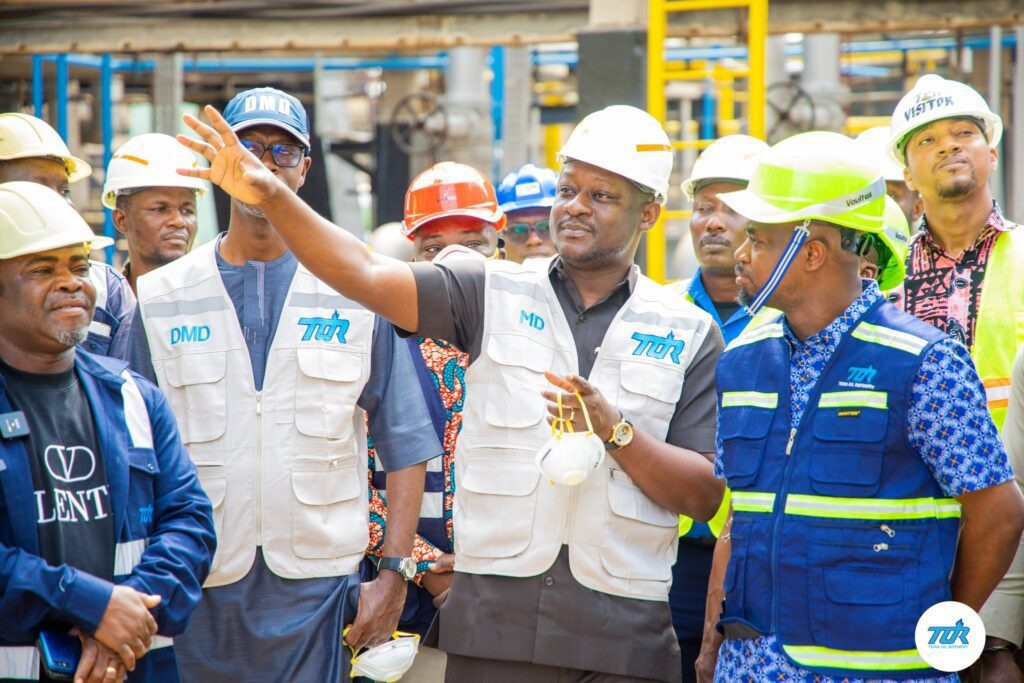
The Managing Director of the Tema Oil Refinery (TOR), Edmond Kombat, has dismissed claims that the refinery is being prepared for privatization, stressing that government’s immediate focus is on restoring the facility to full operational capacity.
His remarks come amid ongoing discussions about the future of the refinery under the administration of John Mahama, which has adopted an aggressive revival strategy aimed at rebuilding TOR’s operational strength before considering any long-term structural changes.
According to Mr. Kombat, the current blueprint does not include divestment but rather seeks to transform TOR into a self-sustaining entity capable of supporting Ghana’s energy needs. He cautioned that entering into public-private partnerships without a proper valuation could disadvantage the state.
“The last time this refinery was valued was in 2000… you don’t even know the assets that you are sitting on, and you’re going into a public-private partnership. You are going to be cheated from day one,” he stated.
Mr. Kombat noted that past attempts to introduce private sector participation were met with skepticism due to concerns that the refinery had been deliberately run down to justify a potential sale at undervalued prices. He indicated that management is prioritising transparency, efficiency, and confidence-building to safeguard the refinery’s strategic importance.
A key concern raised by the TOR boss is the absence of a current asset valuation, which he described as a major risk to any potential investment discussions. To address this, management has engaged a South African firm to undertake a comprehensive revaluation of the refinery, a process he described as essential before any partnership negotiations.
He further emphasised that operational viability remains the top priority, noting that a functional and profitable refinery would command stronger leverage in the global energy market compared to one that is dormant.
From a broader policy perspective, Mr. Kombat argued that maintaining TOR under state-led recovery is critical to Ghana’s energy security. A fully operational refinery, he said, could significantly reduce the country’s fuel import bill—previously estimated at about $400 million monthly—while strengthening national control over energy supply.
He concluded that premature privatization would not only risk undervaluing a key national asset but could also undermine Ghana’s long-term energy independence
Leave a Reply