
Texas’ rubber-stamp system allows drillers to release vast amounts of natural gas into the atmosphere.
Hakim Dermish moved to the small South Texas town of Catarina in 2002 in search of a rural lifestyle on a budget. The property where he lived with his wife didn’t have electricity or sewer lines at first, but that didn’t bother him.
“Even if we lived in a cardboard box, no one could kick us out,” Dermish said.
Back then, Catarina was a sleepy place. A decade later, oil and gas drilling picked up, and he welcomed the financial opportunities it brought. Dermish launched businesses to support the industry, offering everything from guards for drill sites to housing for oil field workers.
The growth also brought flares — flames burning off excess natural gas — that blazed day and night at wells in the surrounding countryside. Initially enamored of the industry’s potential, Dermish now worried that its pollution endangered the health of the town’s 75 residents. He began lodging complaints with the state in 2023, asking it to push companies to control emissions.
Hakim Dermish moved to the small South Texas town of Catarina in 2002 in search of a rural lifestyle on a budget. The property where he lived with his wife didn’t have electricity or sewer lines at first, but that didn’t bother him.
“Even if we lived in a cardboard box, no one could kick us out,” Dermish said.
Back then, Catarina was a sleepy place. A decade later, oil and gas drilling picked up, and he welcomed the financial opportunities it brought. Dermish launched businesses to support the industry, offering everything from guards for drill sites to housing for oil field workers.
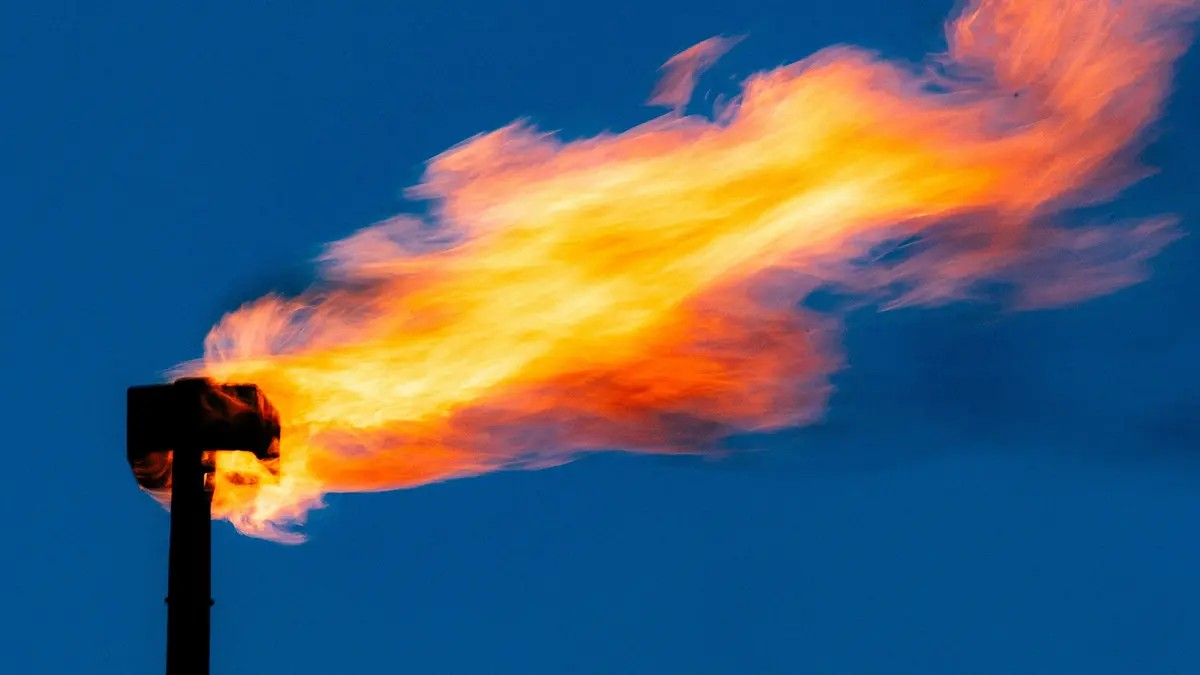
The growth also brought flares — flames burning off excess natural gas — that blazed day and night at wells in the surrounding countryside. Initially enamored of the industry’s potential, Dermish now worried that its pollution endangered the health of the town’s 75 residents. He began lodging complaints with the state in 2023, asking it to push companies to control emissions.
Inspectors with the Texas Commission on Environmental Quality investigated, finding only a handful of violations, some of which the companies addressed. But that did little to allay the concerns of Dermish and his neighbors, who continued to see flares light up the sky and to smell gas wafting over the community.
“Even if we lived in a cardboard box, no one could kick us out,” Dermish said.
Back then, Catarina was a sleepy place. A decade later, oil and gas drilling picked up, and he welcomed the financial opportunities it brought. Dermish launched businesses to support the industry, offering everything from guards for drill sites to housing for oil field workers.
The growth also brought flares — flames burning off excess natural gas — that blazed day and night at wells in the surrounding countryside. Initially enamored of the industry’s potential, Dermish now worried that its pollution endangered the health of the town’s 75 residents. He began lodging complaints with the state in 2023, asking it to push companies to control emissions.
Inspectors with the Texas Commission on Environmental Quality investigated, finding only a handful of violations, some of which the companies addressed. But that did little to allay the concerns of Dermish and his neighbors, who continued to see flares light up the sky and to smell gas wafting over the community.
Lupe Campos poses for a portrait near his home in Catarina, Texas on May 20, 2025. He and other community members in this tiny town surrounded by oil and gas extraction has complained about the negative effects that these drilling operations have had on their daily lives.
Lupe Campos poses for a portrait near his home in Catarina on May 20, 2025. Credit: Christopher Lee for ProPublica
“Starting first thing in the morning, talk about the stench. Then you call the state and nothing happens,” Dermish said. “They do absolutely nothing.”
His neighbor Lupe Campos, who worked in the oil fields for more than three decades, lives three blocks from a flare. Toxic hydrogen sulfide escapes from nearby wells, giving the air the smell of “burnt rotten eggs,” Campos said. “It’s hard to bear.”
While working to expand the nation’s oil and gas production, President Donald Trump’s administration has maintained that drilling in the U.S. is cleaner than in other countries due to tighter environmental oversight. To mark Earth Day, for example, the White House boasted in a statement that increased natural gas exports meant the U.S. would be “sharing cleaner energy with allies” and “reducing global emissions.
Back then, Catarina was a sleepy place. A decade later, oil and gas drilling picked up, and he welcomed the financial opportunities it brought. Dermish launched businesses to support the industry, offering everything from guards for drill sites to housing for oil field workers.
The growth also brought flares — flames burning off excess natural gas — that blazed day and night at wells in the surrounding countryside. Initially enamored of the industry’s potential, Dermish now worried that its pollution endangered the health of the town’s 75 residents. He began lodging complaints with the state in 2023, asking it to push companies to control emissions.
Lupe Campos poses for a portrait near his home in Catarina, Texas on May 20, 2025. He and other community members in this tiny town surrounded by oil and gas extraction has complained about the negative effects that these drilling operations have had on their daily lives.
Lupe Campos poses for a portrait near his home in Catarina on May 20, 2025. Credit: Christopher Lee for ProPublica
“Starting first thing in the morning, talk about the stench. Then you call the state and nothing happens,” Dermish said. “They do absolutely nothing.”
His neighbor Lupe Campos, who worked in the oil fields for more than three decades, lives three blocks from a flare. Toxic hydrogen sulfide escapes from nearby wells, giving the air the smell of “burnt rotten eggs,” Campos said. “It’s hard to bear.”
While working to expand the nation’s oil and gas production, President Donald Trump’s administration has maintained that drilling in the U.S. is cleaner than in other countries due to tighter environmental oversight. To mark Earth Day, for example, the White House boasted in a statement that increased natural gas exports meant the U.S. would be “sharing cleaner energy with allies” and “reducing global emissions.”
Yet a first-of-its-kind analysis of permit applications to the Railroad Commission of Texas, the state’s main oil and gas regulator, reveals a rubber-stamp system that allows drillers to emit vast amounts of natural gas into the atmosphere. Over 40 months — from May 2021 to September 2024 — oil companies applied for more than 12,000 flaring and venting permits, while the Railroad Commission rejected just 53 of them, a 99.6% approval rate, according to the data.
Natural gas is composed mostly of climate-warming methane but also contains other gases such as hydrogen sulfide, which is deadly at high concentrations. Gas escapes as wells are drilled and before infrastructure is in place to capture it. It also can be intentionally released if pressure in the system poses a safety risk or if capturing and transporting it to be sold is not profitable. Typically, drillers burn the gas they don’t capture, converting the methane to carbon dioxide, a less potent greenhouse gas, in a process called flaring. Sometimes, they release the gas without burning it, in a process called venting.
The permit applications showed oil companies requested to flare or vent more than 195 billion cubic feet of natural gas per year, enough to power more than 3 million homes and generate millions of dollars of tax revenue had the gas been captured. Those emissions would have a climate-warming impact roughly equivalent to 27 gas-fired power plants operating year-round, even if the flares burned every molecule of methane released from the wells.
“It’s a gargantuan amount of emissions,” said Jack McDonald, senior analyst of energy policy and science for the environmental group Oilfield Witness. “Because so much of this gas is methane and so much of it is either incompletely combusted or not combusted at all through the venting process, we see a huge climate impact.”
Oilfield Witness gathered and studied the Railroad Commission data on exemptions to the state’s flaring rules and shared it with ProPublica and Inside Climate News. The news organizations verified the data, including by soliciting input from professors at universities in Texas.
Railroad Commission spokesperson R.J. DeSilva said in a statement that Texas has made “significant progress” in addressing methane emissions. Companies must provide evidence that flaring is necessary, and, when approving permits, the agency follows all applicable rules, he said. “If an application lacks sufficient justification, it is returned with comments for clarification.”
The Texas oil and natural gas industry is committed to ongoing progress in reducing flaring and methane emissions while continuing to meet the ever-growing demand for reliable oil and natural gas across the globe,” Todd Staples, president of the Texas Oil and Gas Association, a trade group, told ProPublica and Inside Climate News in a statement.
Residents of communities surrounded by flares and leaking wells, like Catarina, want the state and the industry to do more to control oil field emissions. The Railroad Commission approved eight flares within 5 miles of the town during the study period and 280 across surrounding Dimmit County, according to agency data.