

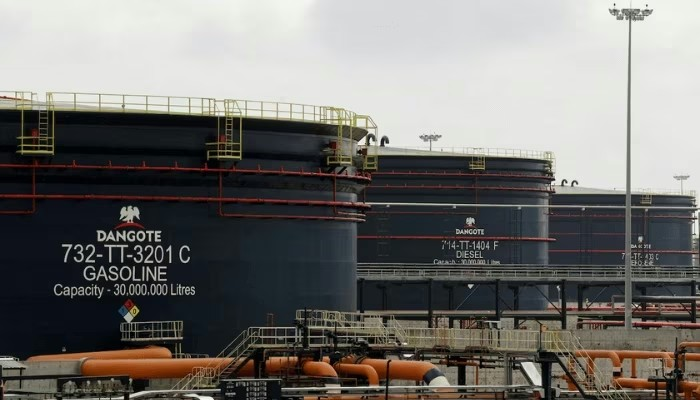
Marketers across Nigeria are intensifying engagement efforts with the refinery’s management to secure reliable and cost-effective fuel supplies as Dangote Petroleum Refinery prepares to commence the direct distribution of petrol to the domestic market on August 15.
The engagement, according to industry sources, is aimed at securing direct access to refined petrol at stable and competitive prices, amid ongoing fuel scarcity and volatile forex-driven import costs that have driven up production expenses across the country.
Industry players confirmed that both major and independent marketers have opened formal talks with Dangote Petroleum Refinery Ltd. ahead of the rollout.
Abubakar Shettima, president of the Independent Petroleum Marketers Association of Nigeria (IPMAN), told BusinessDay that most of the association’s members have already registered with the refinery to take advantage of the direct supply plan.
Most of our members have registered with Dangote Refinery ahead of the August 15 takeoff,” Shettima said. “Prices might drop due to the absence of logistics costs or petrol costs. It’s a good development, and we are positive about the implications for Nigeria’s economy.”
IPMAN, which has over 30,000 members and more than 150,000 service stations nationwide, is positioning itself to benefit from what could be a major shift in Nigeria’s fuel supply chain.
Data sourced from Dangote refinery showed the plant’s existing distribution network includes MRS, Heyden, Ardova (AP), Hyde, Optima, and Techno Oil.
Others are TotalEnergies, Garima Petroleum, Sunbeth Energies, Sobaz Nigeria Ltd., Virgin Forest Energy, Sixxco Oil Ltd., N.U. Synergy Ltd., and Soroman Nigeria Ltd. Others on the growing list are: Jezco Oil Nigeria Ltd., Jengre, Cocean, Kifayat, Triumph Golden, Sifem Global, Riquest, and Mamu Oil, among others.
Another senior oil executive told BusinessDay that Dangote refinery will leverage its relationship with some Major Energies Marketers Association of Nigeria (MEMAN), which collectively operates about 5,000 trucks as of 2025, to ensure that petrol, diesel, and aviation fuel reach every part of the country.
“Manufacturers are keenly watching the August 15 date. We have initiated steps to engage with the Dangote Refinery to explore the possibility of direct supply agreements,” one manufacturer, who is also a senior official of Manufacturers’ Association of Nigeria (MAN), told BusinessDay on condition of anonymity. “Access to affordable and reliable fuel is vital for our operations, especially in a deregulated market where import price shocks are destabilising production budgets.
Efforts to get Anthony Chiejina, chief corporate communications officer, Dangote Group, proved abortive as at the time of filling this report.
The Dangote Refinery, Africa’s largest with a capacity of 650,000 barrels per day, is expected to begin its delivery policy, which involves a fleet of 4,000 CNG-powered trucks delivering directly to petrol stations, industrial firms, and other large consumers.
This approach cuts out traditional depot owners, many of whom have long acted as intermediaries and handlers within the petroleum distribution chain. The policy also includes free delivery and generous credit facilities for large volume purchases, adding incentives for a more flexible and cost-effective delivery process.
While the move is expected to benefit marketers, rural filling stations, and large industrial users, it spells trouble for depot owners, import-dependent marketers, truckers, and petrol tanker operators.
Muda Yusuf, chief executive officer (CEO) of the Centre for the Promotion of Private Enterprise (CPPE), said the proposition would benefit consumers who are outside Lagos and “currently paying a premium for additional cost of transportation.”