
The Chamber of Oil Marketing Companies (COMAC) has expressed deep concern over what it describes as serious irregularities emerging from its latest mid-year industry report, calling for urgent regulatory scrutiny and accountability within Ghana’s downstream petroleum sector.
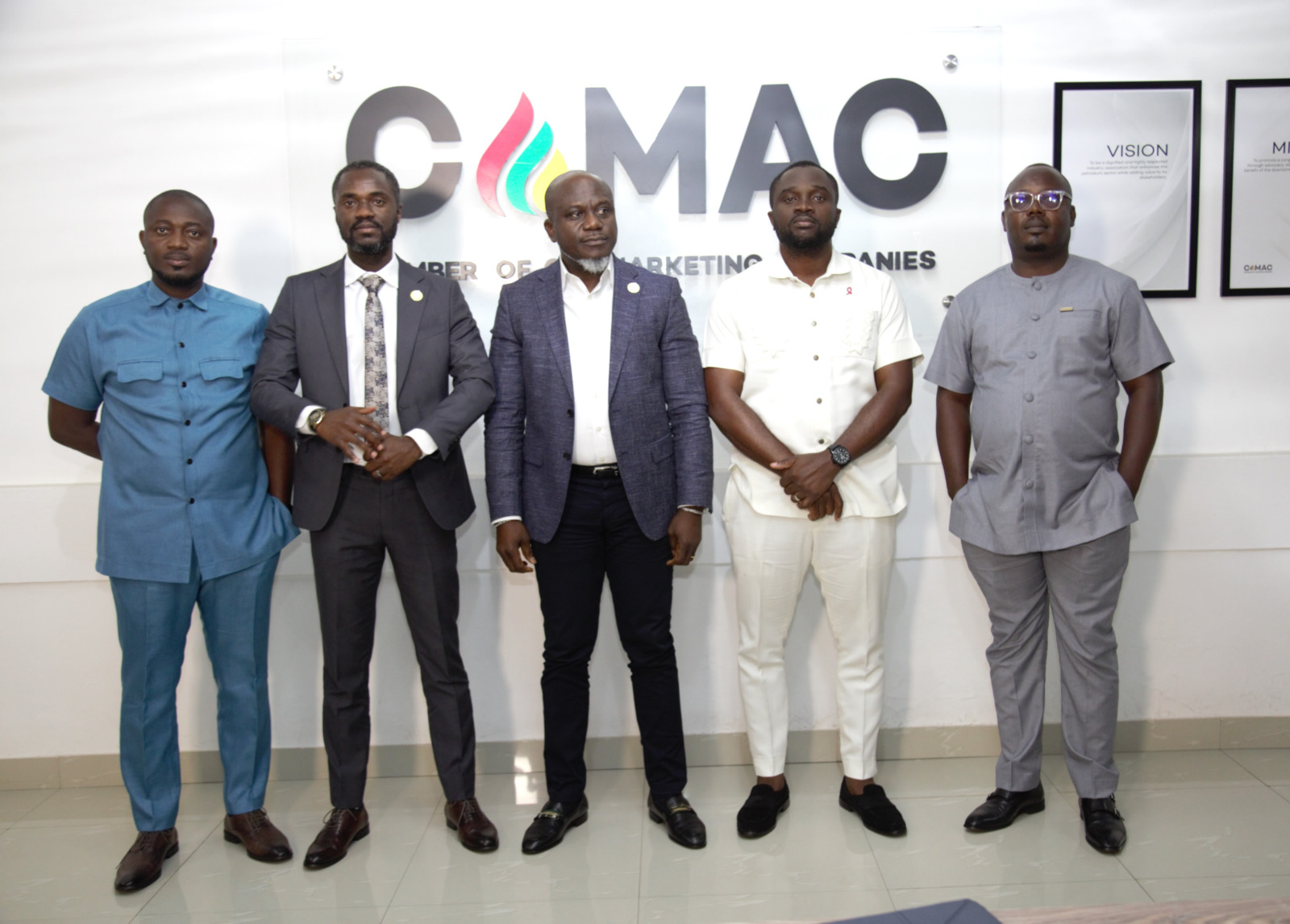
Speaking at a media briefing in Accra on Monday, the Chief Executive Officer of COMAC, Dr. Riverson Oppong, disclosed that the chamber had identified instances of some small oil marketing companies (OMCs) lifting unusually high volumes of petroleum products without facing sanctions.
He cautioned that the chamber would not hesitate to expose member companies found to be violating industry rules, adding that two firms—Moari Oil and Yass Petroleum—have been directed to submit their data for verification and further investigation.
“There are concerns about some of the figures presented in the mid-year report, and we are seeking engagement with both the regulator, the National Petroleum Authority (NPA), and our members in the oil and LPG marketing space,” Dr. Oppong said. “Charity, as they say, begins at home.”
Surge in Petroleum Consumption Raises Eyebrows
According to COMAC’s report, Ghana’s total petroleum consumption reached 3.62 billion litres in the first half of 2025, representing a 17.65% increase compared to 3.07 billion litres in the same period last year.
Regional data, however, revealed significant disparities. The Upper East Region recorded a startling 80.2% growth, followed by Ashanti (22.2%), Upper West (21.7%), and Eastern (21.2%) regions. Greater Accra, by contrast, saw only a 6.9% increase.
Product-wise, petrol consumption in the Upper East Region surged by 86.4%, diesel by 68.5%, LPG by 32.4%, and Cell Site Gasoil by an astonishing 571.5%. Conversely, kerosene consumption dropped by 50%, signaling a gradual shift toward cleaner fuels.
Chamber Calls for Sanity in the Sector
The Board Chairman of COMAC, Mr. Gabby Kumi, announced that the chamber is intensifying efforts to restore order and transparency within the downstream sector, particularly concerning the abuse of the Unified Petroleum Price Fund (UPPF)—a government fund managed by the NPA to ensure uniform pricing nationwide by subsidizing transportation costs to remote areas.
Mr. Kumi alleged that some OMCs and individuals may be manipulating the system by misreporting product distribution data.
“You cannot tell me that LPG consumption increased by only 5% nationally but shot up by 86% in the Upper West Region. This is absolutely ridiculous,” he stated. “We believe some products are lifted, sold in Accra, and falsely recorded as deliveries to Upper West to claim higher transport reimbursements from the UPPF.”
He added that the largest LPG station in the Upper West Region only recorded a 6.5% growth, making the reported figures even more questionable.
Call for Regulatory Action
Mr. Kumi urged the National Petroleum Authority (NPA) to deploy its full monitoring and enforcement mechanisms to address the issue, emphasizing that the regulator’s tracking system should be able to verify actual delivery routes.
“The NPA tracks every truck that loads petroleum products in Ghana. A proper review of the tracking data will reveal whether these reported volumes actually reached the Upper East and Upper West regions,” he stressed.
He said the irregularities affect about 95% of COMAC’s member companies, urging the NPA and relevant ministries—particularly Energy and Finance—to take decisive action to safeguard the integrity of the petroleum pricing and distribution system.
“We must tackle this canker decisively to achieve the President’s vision of resetting the economy,” Mr. Kumi concluded
The board chairman for COMAC Gabby Kumi commended the leadership and professionalism of the Chief Executive Officer of the National Petroleum Authority (NPA) Edudzi Tamaklo, since assuming office as head of the downstream petroleum regulator.
However, Mr. Kumi cautioned that all the CEO’s commendable efforts could be undermined if the current challenges facing the sector are not addressed decisively.