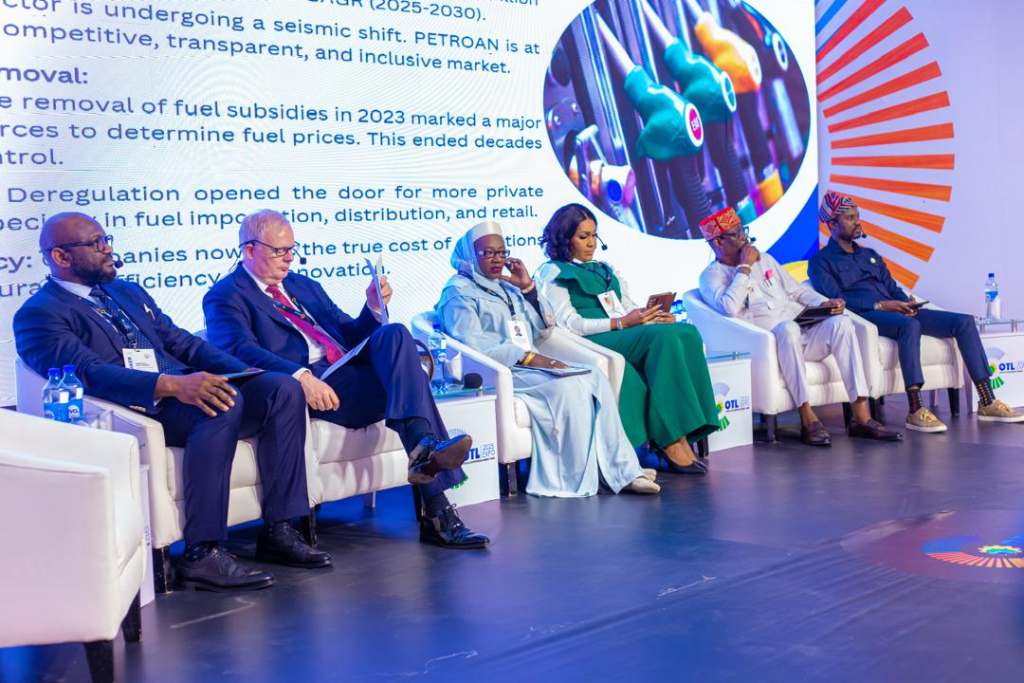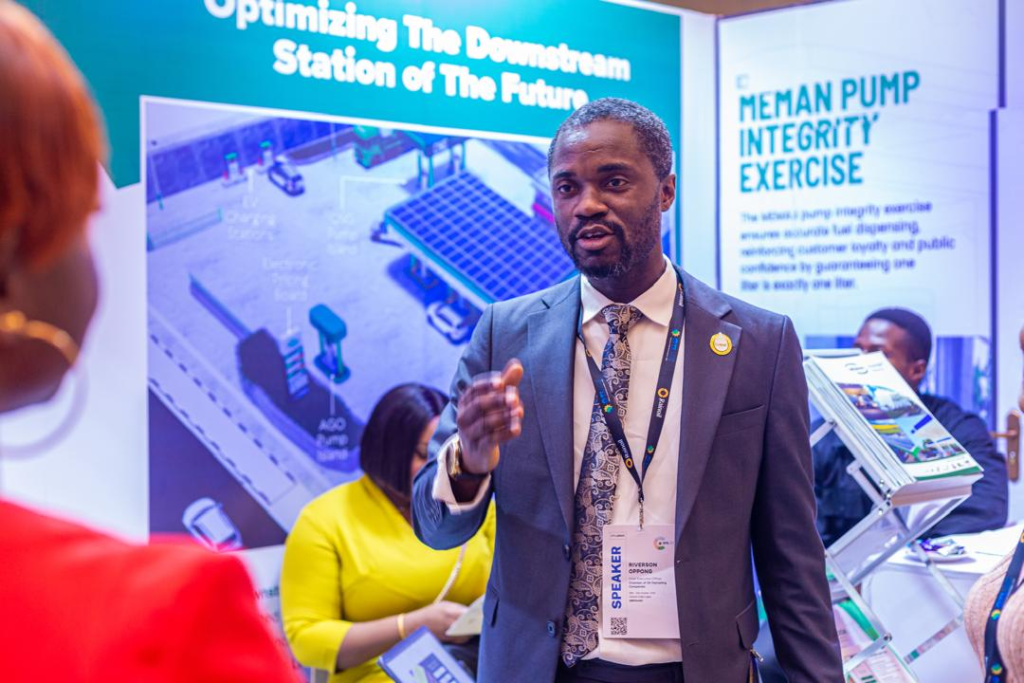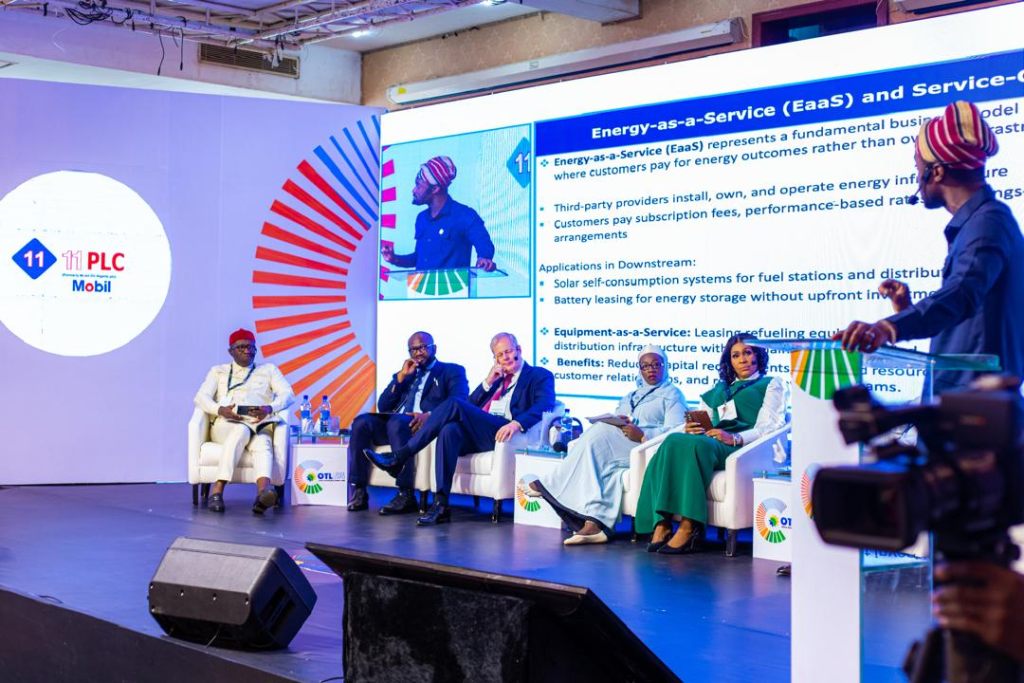

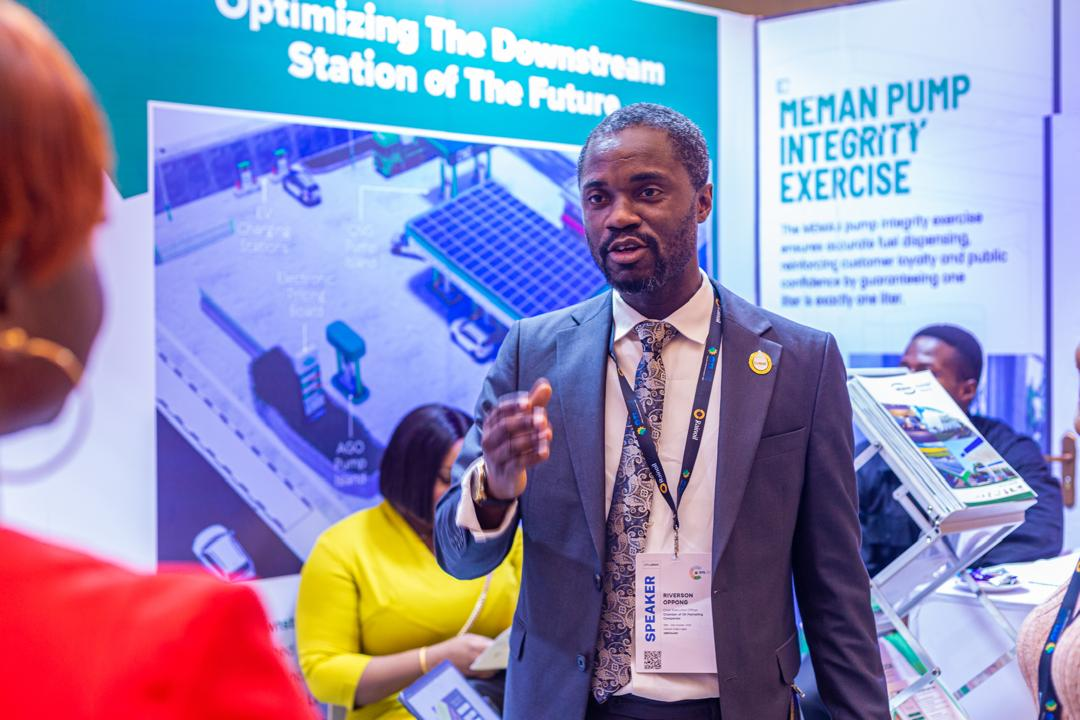
At a recent downstream sector industry event held in Lagos Nigeria, Dr. Riverson Oppong the Africa Regional Director for the Society of Petroleum Engineers (SPE) and CEO of the Chamber of Oil Marketing Companies Ghana delivered a presentation titled “Emerging Business Models within the Downstream Sector”.Dr. Oppong pointed out that while downstream demand in Europe and North America is forecast to shrink by 2035, the outlook for Africa remains “robust”. According to one recent report, the Africa oil and gas downstream market was valued at approximately USD 80.5 billion in 2024, and is projected to grow to around USD 120.8 billion by 2032, at a compound annual growth rate (CAGR) of about 5.2%.
Referencing research by McKinsey & Company, Dr. Oppong noted that Africa is expected to add roughly 2.2 million barrels per day (MMB/D) in demand between 2019 and 2035, representing a strong growth trajectory compared to other regions.
He emphasised that digitization is no longer optional, but the key framework for capturing value in modern downstream operations. According to his presentation, digitisation can result in:
• Operating-cost reductions of 12–20%
• Throughput improvements of 6–12%
• Unplanned shutdown reductions of 15–25%
• Plant-efficiency increases of 8–12%
Dr. Oppong then walked the audience through critical digital business-model components — including Advanced Process Control (APC) and real-time monitoring with digital twins, and Predictive & Prescriptive Maintenance relying on equipment-data analysis.
On the retail side, he noted evolving customer expectations at fuel service stations: customers now seek more than fuel—they expect convenience, lifestyle-oriented experiences. He pointed to mobile applications, digital wallets, real-time fuel pricing, and other customer-engagement platforms as key initiatives. Ghana’s downstream sector, he said, is already seeing adoption of systems such as Automatic Tank Gauging and BRV-tracking.
Looking at broader business-model innovation, Dr. Oppong cited modular/mini-refineries—compact, skid-mounted units—as offering lower entry barriers, faster ROI, and geographic flexibility. He also referenced integration models such as solar-energy and EV-charging infrastructure at service stations, and alternative-fuel offerings (e.g., CNG, LNG, LPG). He identified LPG distribution innovations too: cylinder-recirculation models, micro-distribution centres (MDCs), pay-as-you-go (PAYG) systems and mobile LPG delivery.
In conclusion, he said success in implementing such emerging models requires: strong regulatory frameworks, investment in digital infrastructure and workforce skills, collaborative mindsets and ecosystem thinking, a long-term strategic vision emphasising sustainable value creation, and agile pilot-testing approaches before scaling.