


By Energy Crossroad correspondent Jeremiah Aderibigbe:
The Iran-US conflict and its potential impact on international crude oil and gas prices have raised questions about the cost and availability of fuel for electricity generation in Nigeria, but the Ibadan Electricity Distribution Company (IBEDC) says the more immediate challenge facing the domestic power sector is the flow of payments among industry stakeholders.
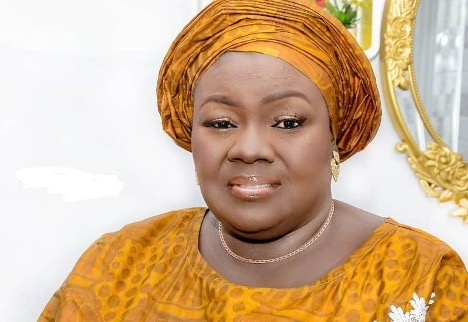
Mrs. Regina Adeloku, Senior Communication Officer, IBEDC, said international crude price movements have so far had limited direct impact on the availability of gas for Nigeria’s electricity market, arguing that payment and remittance obligations across the electricity value chain remain more critical.
“The challenge is non-payment remittance from the key stakeholders, and now they started playing their part, paying the debt in instalments, so the product is readily available,” Adeloku told Energy Crossroad correspondence in an interview in Nigeria m.
Her comments come amid heightened concerns that geopolitical tensions involving Iran and the United States could push up international energy prices, potentially increasing the cost of fuel and other inputs across global energy markets.
Adeloku, however, said the immediate issue for Nigeria’s electricity supply was the financial relationship between distribution companies, generating companies and gas suppliers.
According to her, money collected within the electricity value chain is distributed among generation, transmission and distribution, while failures to remit funds can eventually affect the ability of generating companies to settle their obligations to gas suppliers.
The comments underscore the extent to which the cost and reliability of electricity supply in Nigeria depend not only on available generation capacity, but also on the financial sustainability of the electricity market.
Band A customers pay cost-reflective tariff
IBEDC also disclosed that customers on Band A are currently the only category paying a cost-reflective electricity tariff, while the Federal Government continues to subsidise electricity costs for customers in Bands B, C, D and E.
Adeloku said this difference in tariff rates explains, in part, why customers spending the same amount of money can receive different quantities of electricity.
“The Band A customers are the only customers that are paying the cost reflective tariff. But those on Band B, C, D and E, the Federal Government is subsidising it for them,” she said.
The Service-Based Tariff framework classifies electricity customers according to the minimum daily supply they are expected to receive. Band A customers are expected to receive a minimum of 20 hours of supply daily, while Bands B, C, D and E have minimum supply expectations of 16, 12, eight and four hours respectively.
Adeloku said the Band A cost-reflective tariff had been about ₦209 per kilowatt-hour before applicable VAT.
The Nigerian Electricity Regulatory Commission’s published tariff schedule puts the relevant Band A rate at ₦209.50/kWh, with lower rates applying to customers in the other service bands under the subsidy arrangement.
IBEDC had previously said an adjustment in its Band A tariff from ₦206.80/kWh to ₦209.50/kWh was approved by NERC, citing factors including exchange rates, inflation, generation capacity and gas costs.
Free meters prioritise Bands A and B
On the Federal Government’s free metering programme, Adeloku said additional meters had been procured for customers in Bands A and B.
She said the programme was intended to improve accountability and reduce disputes and inefficiencies associated with estimated billing.
IBEDC has previously announced free prepaid meter deployments under the Meter Acquisition Fund and the Distribution Sector Recovery Programme, with unmetered customers on Band A and Band B feeders among those prioritised.
The National Mass Metering Programme is also designed to provide smart prepaid meters to unmetered customers and reduce reliance on estimated billing.
Oyo seeks higher power allocation
IBEDC said increased electricity allocation would be required to meet growing demand across Oyo State and its wider franchise area.
Adeloku estimated electricity demand in the area at between 600MW and 700MW, depending on location and prevailing requirements.
She said an allocation of between 700MW and 800MW would give the distribution company greater room to extend supply to growing communities, new layouts, existing communities and businesses.
According to her, higher allocation would also support investment in distribution infrastructure and enable IBEDC to serve more customers.
Mambila could boost generation
Adeloku also pointed to the proposed Mambila Hydroelectric Power Project as a potential source of additional generation capacity for Nigeria.
She said completion of the project could increase the amount of electricity allocated to distribution companies and improve supply to consumers.
“There will be tremendous increase in allocation. There will be availability, and our customers we can reach them better,” she said.
Adeloku also argued that hydropower could provide electricity at a lower cost than gas-fired generation.
However, she said increased generation alone would not resolve all the challenges facing the electricity sector, noting that distribution companies must also be able to sell electricity to customers who can pay for it.
Payment capacity critical to power expansion
According to Adeloku, the expansion of Nigeria’s electricity supply depends partly on customers’ ability and willingness to pay for electricity.
She explained that strong payment performance gives distribution companies the financial capacity to purchase additional electricity from generating companies.
Using a hypothetical example, she said a distributor supplying 100 customers, with 99 paying their bills, would have a stronger payment position than one supplying 1,000 customers where only 300 pay.
“Your ability to pay well will help a business like the Ibadan Electric Distribution Company to go to the GenCo and say we’ve got the financial muscle and we want to buy more power because our customers are ready to pay,” she said.
The argument reflects the financial interdependence of the electricity value chain, where collections by distribution companies support payments to generating companies and other participants in the market.
Energy theft remains a challenge
Energy theft also remains a major concern for IBEDC, according to Adeloku.
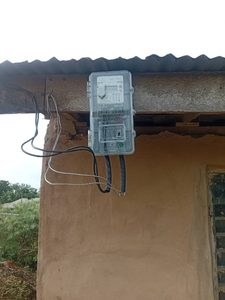
She said the company was expanding metering and distribution infrastructure to improve accountability and ensure electricity supplied to customers could be properly measured.
Metering, she added, would help reduce losses by ensuring that customers are billed for actual consumption rather than estimated usage.
IBEDC’s metering programmes similarly identify prepaid metering as a mechanism for improving payment accountability and reducing estimated billing.
Infrastructure expansion remains a priority
On preparations for higher energy-related operating costs, Adeloku said IBEDC was focused on expanding its capacity and strengthening infrastructure across its franchise area.
She said the company was also working to improve energy accountability and ensure that available electricity could reach more customers.
The broader challenge, however, extends beyond generation.
For Nigeria to translate additional generation into more reliable electricity supply, the sector also requires sufficient transmission and distribution capacity, effective metering, lower technical and commercial losses, reduced energy theft and timely payments throughout the electricity value chain.
The potential effect of international energy-market volatility adds another layer to these challenges. While IBEDC says the immediate availability of gas for domestic generation is being shaped more by local payment obligations than by international crude prices, sustained increases in global energy costs could still affect the economics of the electricity value chain through fuel, foreign-exchange and other operating costs.
For now, IBEDC maintains that improving payment compliance, expanding metering and infrastructure, and securing sufficient electricity allocation are central to its ability to deliver more power to customers.
Leave a Reply