
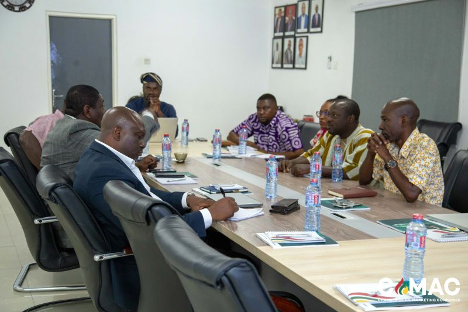
The Chamber of Oil Marketing Companies (COMAC) recently convened a strategic engagement with Civil Society Organizations (CSOs) at its Secretariat to discuss issues of mutual interest and explore opportunities for deeper collaboration within Ghana’s downstream petroleum sector.
The engagement provided a platform for open dialogue on key sectoral challenges and opportunities, with participants sharing perspectives on transparency, accountability, regulatory effectiveness, and sustainable growth.
Discussions also focused on the importance of constructive stakeholder collaboration in identifying practical solutions and strengthening the development of the downstream petroleum industry.
COMAC was represented by its CEO/Industry Coordinator, Riverson Oppong, PhD. , supported by Adjoa Baah Akuffo Esq. Head of Administration & HR, and Mohammed (Mo) Issah , Director of Policy & Regulations.
The participating CSOs included the Centre for Environmental Management and Sustainable Energy (CEMSE), represented by Nsiah Benjamin; Institute of Energy Research and Policy (IERP), represented by Kwadwo Poku; CUTS International West Africa, represented by Adomako Appiah Kusi; Revenue Mobilization Africa, represented by Geoffrey Ocansey; Growth Curve Initiative, represented by Dr. Steve Manteaw; Chamber of Petroleum Consumers, represented by Paul Ofori; and Institute of Energy Security, represented by Smith Boahene.
The engagement underscores COMAC’s commitment to fostering meaningful partnerships with civil society and other key stakeholders to promote transparency, accountability, effective regulation, and sustainable development across Ghana’s energy sector.
Leave a Reply