

Pacome Emmanuel Damalie
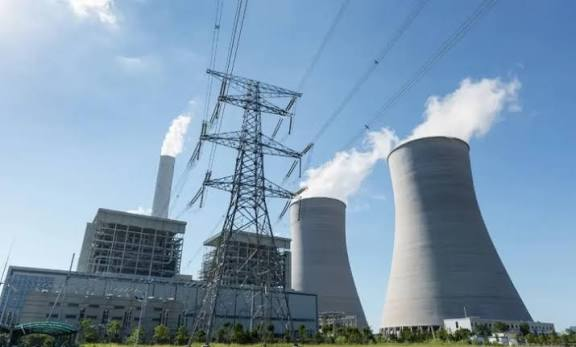
Ghana is set to begin construction on a 1,200-megawatt (MW) state-owned gas-fired thermal power plant, a facility that will become the country’s biggest power plant, and officially surpassing the 1,020-MW Akosombo Hydroelectric Power Station.
Speaking at a town hall meeting with the Ghanaian community in New York on Friday (Sept 25), President John Dramani Mahama announced that the government will sign the agreement for the 1,200 megawatts thermal power plant before the end of this year (2026).
“We are going to build the biggest thermal capacity in Ghana. Before the end of this year, we’re going to sign 1,200 megawatts of gas thermal power,” the President said.
He said the new thermal capacity has become necessary due to the global energy transition, the rise of renewable energy and electric vehicles, and the need to avoid stranded assets.
The President said, Independent Power Producers (IPPs) who previously threatened to switch off power are now offering to invest an additional 500 megawatts, but government prefers to build state-owned capacity.
Energy sector debt
He said government had cleared the energy sector debts and reorganised the Electricity Company of Ghana (ECG) to prioritise payment of power producers, a move that has stabilised power supply.
“We brought IPPs, and everybody was threatening to switch off power. Today, I can tell you, we have paid off our energy debts. And we are current with the payments.
“We have reorganised the Electricity Company of Ghana. The first charge on any money they collect is to pay the power generators. Instead of procurements, buying cables, street lights that we cannot even use for 10 years, we are measuring their procurements. We are paying the IPPs first,” he said.
He said when government took over, the oil and gas sector was characterised by despondency, with investors such as Eni moving their operations to Cote d’Ivoire and Jubilee production dwindling to about 60,000 barrels per day.
He said investor confidence has been restored, with Jubilee Partners investing $2 billion to drill 20 new wells and Eni investing $1.5 billion to bring the rest of its Sankofa field on stream.
“Already oil production has risen by almost 38 per cent since 2025,” he said, adding that major oil companies including ExxonMobil and Shell are now seeking opportunities in Ghana.
The President said the increased gas from the renewed investments would feed the new thermal plants and boost revenue for national development.
Economic stability
On the progress of the economy, President Mahama said government inherited an International Monetary Fund (IMF) programme that was off-track but has worked to bring it back on track and stabilise the economy.
He said by June 2024, the previous government had received the next tranche of the $3 billion loan, but with less than six months to elections, had failed to honour commitments under the programme.
The President said his administration had to take difficult measures before the next IMF mission arrived to restore the programme.
“We had to work before the next IMF mission came to bring the programme back on track, which we did. We had to take various scale measures, which were difficult, but Ghanaians cooperated, we all sacrificed. And by the time the mission came, the programme was back on track,” he said.
He said beyond the IMF programme, government took its own decisions to enforce fiscal discipline, including amending laws, sending bills to Parliament and taking Cabinet decisions.
President Mahama said those decisions have paid off, with the debt-to-GDP ratio declining faster than targeted.
“Our debt to GDP has come down. We’re supposed to reach 45 per cent debt to GDP by 2028. I’m happy to say that by the end of last year, we have achieved it,” he said.
On interest rates, he said Treasury bill rates had dropped sharply from 23.4 per cent to about five per cent by the end of last year.
He also said the cedi has stabilised after periods of sharp depreciation, at one point appreciating by as much as 70 per cent.
“I know you guys were happy with GHc 17. But, our national currency stabilised and came as low as even below 10. Now, the current exchange rate is 11.5, 11.6 in the bank. And then, foreign exchange rate is about 12,” he said.
President Mahama said a stable currency is important for business and helps reduce import duties and stimulate the economy.
“We don’t want a too low exchange rate. But, at the same time, we don’t want a too high exchange rate. And so, the exchange rate is being managed so that it is within a certain point of depreciation every year. And so, the economy is doing well,” he said.
Leave a Reply