

The International Perspective for Policy and Governance (IPPG) has called on the government to subject the proposed 2,000-megawatt (MW) nuclear power project between Ghana and Russia to greater transparency, policy scrutiny and comprehensive stakeholder consultation before making major commitments.
The policy think tank says the proposed partnership must be supported by a clear financing framework, appropriate technology selection and demonstrable institutional readiness to ensure its long-term economic and technical viability.
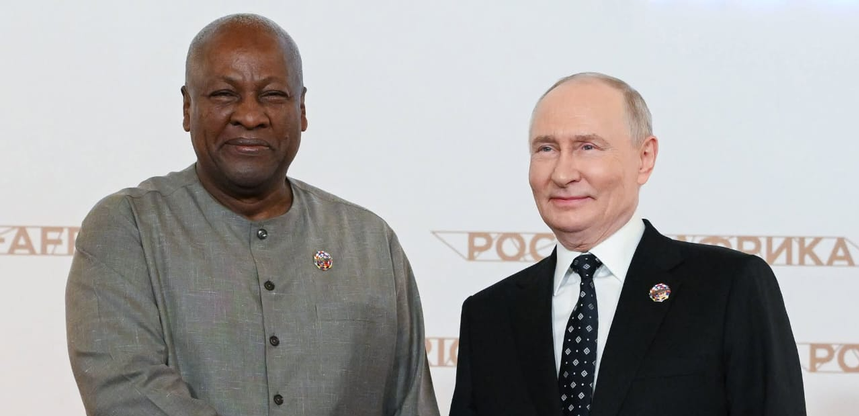
The call follows an announcement by Foreign Affairs Minister Samuel Okudzeto Ablakwa on October 31, 2026, after President John Dramani Mahama held discussions with Russian President Vladimir Putin at the Russia-Africa Summit.
The development marks a significant step in Ghana’s pursuit of nuclear energy and builds on previous engagements between the government and Russia’s state-owned nuclear corporation, Rosatom, on nuclear cooperation.
While acknowledging the potential of nuclear energy to diversify Ghana’s electricity generation mix and strengthen long-term energy security, IPPG cautioned that the scale and financial implications of a 2,000MW project require careful assessment.
According to the organisation, the proposed investment must be evaluated beyond its installed generation capacity, with particular attention to economic viability, fiscal implications and consistency with Ghana’s long-term electricity demand and energy planning priorities.
Financing and fiscal implications
IPPG identified the financing structure as one of the most critical issues requiring clarification.
It said the government must clearly establish the financial obligations of both Ghana and Russia, the allocation of construction and operational risks, and whether sovereign guarantees or other government-backed financial commitments would be required.
The organisation warned that the capital-intensive nature of nuclear power development could have significant implications for public finances, electricity tariffs and Ghana’s long-term fiscal exposure.
Technology selection and institutional readiness
The think tank also raised questions about the reactor technology and project configuration under consideration, including the suitability of the proposed 2,000MW capacity for Ghana’s electricity system.
It stressed the need to examine the reactor units being considered, grid integration requirements and how the proposed Russian partnership would align with Ghana’s existing nuclear technology assessment processes and engagements with other potential vendors.
Beyond financing and technology, IPPG emphasised the importance of strengthening institutional and regulatory preparedness.
It noted that successful nuclear power development requires sustained progress in regulatory oversight, nuclear safety, human resource development, grid infrastructure and the institutional structures needed to support implementation.
The organisation further called for the proposed partnership to be anchored in Ghana’s established Nuclear Power Programme framework and aligned with the International Atomic Energy Agency’s (IAEA) nuclear infrastructure development milestones.
IPPG maintained that the strategic value of the proposed Ghana-Russia partnership would ultimately depend on its ability to deliver reliable and affordable electricity without imposing disproportionate fiscal liabilities or undermining established regulatory and project development processes.
It has therefore urged the government to engage relevant stakeholders and develop a comprehensive framework outlining the status and scope of the proposed agreement, financing and risk-sharing arrangements, technology selection process and anticipated implementation pathway.
Leave a Reply