

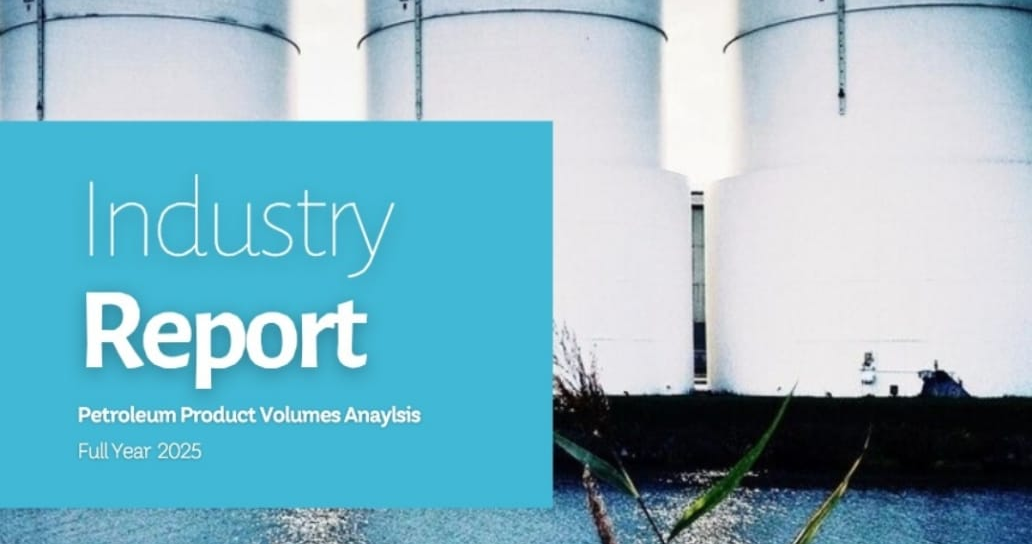
A new industry report by the Chamber of Oil Marketing Companies (COMAC) has highlighted significant growth in petroleum product consumption in Ghana in 2025, driven by strong demand across key sectors.
The report, which analyses supply and consumption trends from January to December 2025 with comparisons to 2024, shows that total national consumption rose from 6.46 billion litres in 2024 to 7.45 billion litres in 2025, representing a 15.29 percent increase.
According to COMAC, petroleum imports recorded a sharp rise during the period, increasing by 36.7 percent from 5.06 million metric tonnes (6.23 billion litres) in 2024 to 6.92 million metric tonnes (8.71 billion litres) in 2025. The surge was attributed to growing commercial and domestic demand.
In contrast, domestic refinery output declined by 11.3 percent, falling from 500,612 metric tonnes to 444,264 metric tonnes, largely due to operational challenges at local refineries. Exports, however, increased by 25.5 percent to 658,500 metric tonnes, driven mainly by re-exports of petrol, diesel, and LPG to regional markets including Burkina Faso, Mali, and Togo.
The report identified a significant spike in fuel allocation for power generation, with fuel oil for power plants increasing by 946.12 percent and gasoil by 184.29 percent. Marine gasoil (foreign) also rose sharply by 143.75 percent, while petrol and diesel recorded steady growth of 18.88 percent and 18.16 percent respectively.
In terms of product performance, petrol consumption reached 3.10 billion litres and diesel 2.76 billion litres, accounting for the largest volume increases. Liquefied Petroleum Gas (LPG) grew by 10.52 percent to 376.3 million kilograms, while gasoil for mining rose by 15.71 percent. However, several products recorded declines, including marine gasoil (local), kerosene, premix fuel, and naphtha.
On the market front, Star Oil emerged as the leading Oil Marketing Company (OMC) in 2025 with a 10.68 percent market share, narrowly surpassing GOIL PLC, which recorded a 10.32 percent share. Gaso Petroleum posted the fastest growth rate at 127.56 percent, while IBM Petroleum grew by 66.17 percent. Other firms, including Zen Petroleum, Vivo Energy, Benab Oil, and Dukes Petroleum, also recorded gains, while TotalEnergies and Puma Energy experienced declines.
In the LPG segment, Annandale Ghana maintained its lead with an 8.86 percent market share, followed by Manbah Gas and First Gas, both of which recorded strong growth in volumes.
Regionally, demand growth strengthened in the second half of the year in areas such as Brong Ahafo, Central, Western, and Greater Accra, while regions including Upper East, Ashanti, and Volta recorded slower growth compared to earlier in the year. Upper West and Northern regions experienced a reversal from growth in the first half to contraction by year-end.
The report also flagged concerns over inefficiencies within the supply chain, revealing an estimated unaccounted stock of approximately 199.6 million litres in 2025—equivalent to 2.1 percent of total supply. This translated into an estimated revenue loss of over GH¢620 million in taxes and levies.
COMAC noted that the findings highlight the need for improved monitoring, efficiency, and policy interventions to strengthen Ghana’s petroleum downstream sector and safeguard government revenue.
Leave a Reply