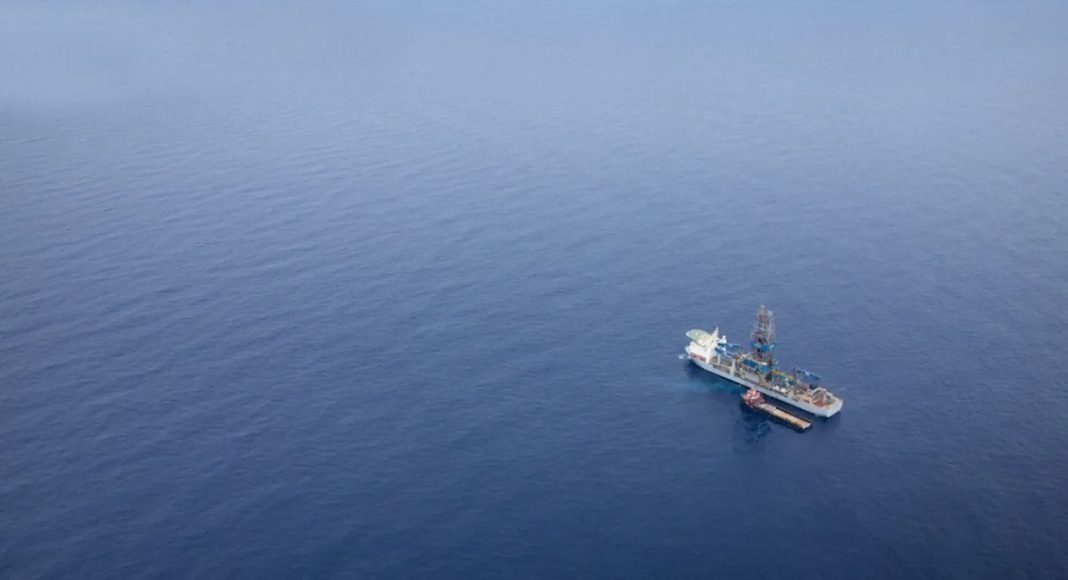
While global oil and gas exploration has slowed dramatically over the past decade, Guyana stands as one of the few nations bucking the trend. According to Palzor Shenga, Vice President – Upstream Research at Rystad Energy, the South American country remains a leading light in an industry that has seen annual discoveries fall sharply worldwide. “Annual conventional discovered volumes once averaged more than 20 billion barrels of oil equivalent (boe) per year in the early 2010s, but these have fallen to nearly one-third of that,” Shenga said in an October 20 article. “Since 2020, global discoveries have averaged slightly over eight billion boe annually despite several standout frontier finds in Namibia, Suriname and Guyana.” In fact, Guyana’s rise as an exploration hotspot has helped offset what would have been a far steeper global decline. ExxonMobil’s 2015 Liza discovery in the Stabroek Block marked the start of one of the world’s most successful petroleum provinces of the 21st century. The ExxonMobil-led consortium has since unearthed over 11.6 billion barrels of recoverable resources across more than 30 discoveries offshore Guyana, while neighboring Suriname has added another two billion. Shenga pointed out that these breakthroughs have redefined the geography of exploration success. “The contraction reflects a strategic change where E&P companies are defined less by sheer acreage and more by strategic precision,” he said. With supermajors and national oil companies narrowing their focus on a handful of high-impact basins – like Guyana’s deepwater basin, Namibia’s Orange Basin, and Brazil’s pre-salt region – only a select few countries are seeing meaningful new volumes added. Guyana’s success also underscores how technology and data-driven precision now dominate modern exploration. Advanced subsurface imaging, digital analytics, and near-field tieback designs have made deepwater development more efficient and less risky. “These advantaged exploration campaigns blend advanced subsurface datasets, low-cost near-field tiebacks, implementation of digital technologies and utilization of low-carbon infrastructures to balance risk with return,” Shenga explained. Rystad Energy’s data reveals that while exploration expenditure globally now hovers around US$50 to 60 billion per year – roughly half of its 2013 peak – countries like Guyana continue to attract heavy investment. This is because discoveries there offer high returns and align with industry efforts to shorten the time between discovery and production. Shenga cautioned that without sustained exploration, the world risks future supply shortages and instability. “Supply shortages and price volatility could threaten both energy security and the stability of the energy transition itself,” he said.