


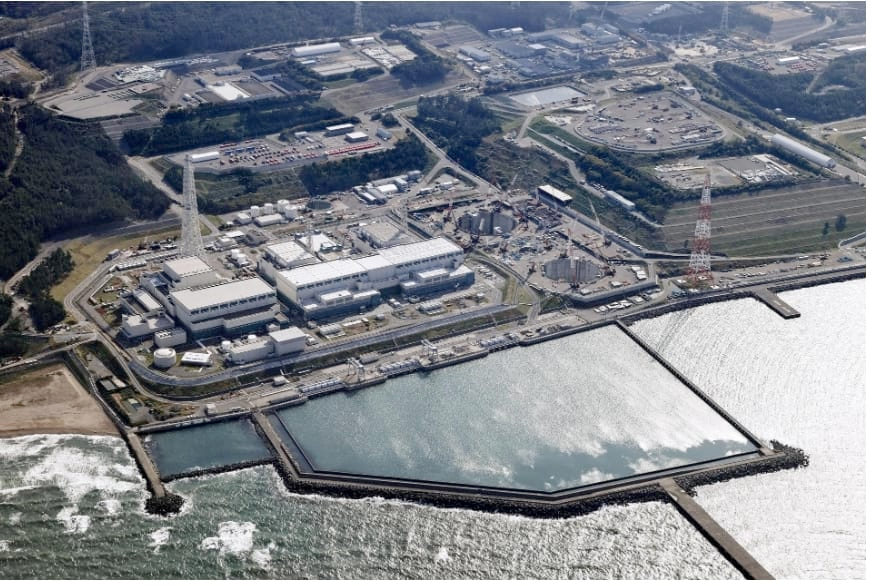
A local government in Japan voted Monday to restart the world’s largest nuclear power plant, which has been closed since 2011 Fukushima nuclear disaster.
The Kashiwazaki-Kariwa plant sits on the Sea of Japan in Niigata prefecture. The plant’s seven nuclear reactors help to power one of the world’s most populous cities, Tokyo, some 136 miles to the southeast. Niigata’s prefectural assembly passed a vote of confidence in the governor who supports the plant’s restart, essentially green-lighting the move. Kenichi Oshima is a professor of environmental economics at Ryukoku University in Kyoto. He says the government is determined to see the Kashiwazaki-Kariwa plant restart in order to send a political message.
KENICHI OSHIMA: (Through interpreter) I think they want to show that nuclear power plants and their operators will be all right, even if they cause a nuclear accident.
KUHN: Japan’s government plans to double the nuclear part of Japan’s energy mix to roughly 20% by 2040. The plant is operated by the Tokyo Electric Power Company, or TEPCO, Japan’s largest electric utility. In 2007, Kashiwazaki-Kariwa was shut down for 21 months after a magnitude 6.6 earthquake caused small radiation leaks and fires. In 2021, regulators effectively banned it from restarting due to security breaches and safety inspection records which TEPCO falsified. TEPCO also runs the crippled Fukushima nuclear plant. After the disaster there, Japanese courts cleared TEPCO executives of criminal negligence and civil liabilities. A recent poll showed that 61% of local residents felt that conditions for Kashiwazaki-Kariwa’s restart had not been met. But Oshima says that the power plant is now primarily a national issue.
OSHIMA: (Through interpreter) On a national level, memories of the Fukushima nuclear accident have started to fade. Also, national and regional governments and TEPCO have repeatedly said that the plant is economical and decarbonizing. And there are still a certain number of people who believe it, whether it’s true or not.
KUHN: Oshima says it’s not true. He calculates that even after restarting, the Kashiwazaki-Kariwa plant will be unprofitable, and he argues Japan’s increasing reliance on nuclear power will delay its transition to renewable energy sources.