

Global oil giant BP has backed out of its majority share in a $55 billion green energy hub in Western Australia’s Pilbara region, dealing Australia’s clean energy transition another major blow.
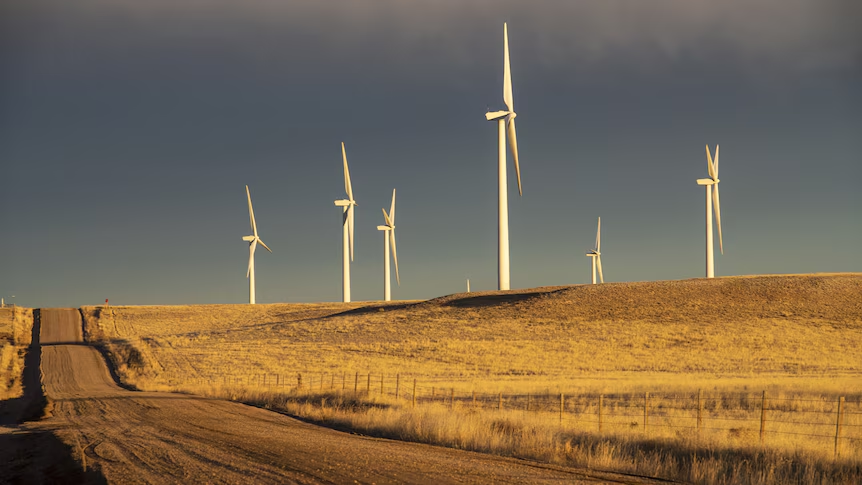
The Australia Renewable Energy Hub (AREH), 1,860 kilometres north-east of Perth, is tipped to deliver 26 gigawatts of solar and wind power by 2029, making it one of the largest renewable energy projects in the world.
If built, it will be the equivalent of about a third of all the electricity generated in Australia, and close to the country’s entire current renewable energy production.
But the future of the hub is now uncertain.
The project has been touted as a major part of WA’s renewables strategy, with the resources-heavy Pilbara producing more than 40 per cent of the state’s carbon emissions.
However, BP is not the first company to pull its support, with Macquarie removing its backing last year.
BP has held 63.7 per cent of the AREH shares since 2022.
But the British multinational said it would exit the project as operator and equity holder because the project no longer aligned with BP’s direction.
“This decision reflects BP’s recent strategy reset, which will see BP grow its upstream oil and gas business, focus its downstream business, and invest with increasing discipline into the transition,” a spokesperson told the ABC.
CWP and InterContinental Energy remain backers of AREH, with the latter assuming control of its operation.
InterContinental Energy chief executive Alex Tancock pledged to take the project to the next phase of development.
“We believe strongly in the project’s potential to decarbonise the Pilbara and diversify the state’s economy, and we look forward to delivering on this shared vision,” he said.
Green ambitions stall
AREH backers had pegged a 6,400 square kilometre footprint for the project north-east of Port Hedland, the world’s largest bulk export port.
BP hoped to connect the hub to Port Hedland by a “Pilbara green link network”, which could power major industrial proposals planned for the region, such as POSCO’s Pilbara green iron project.