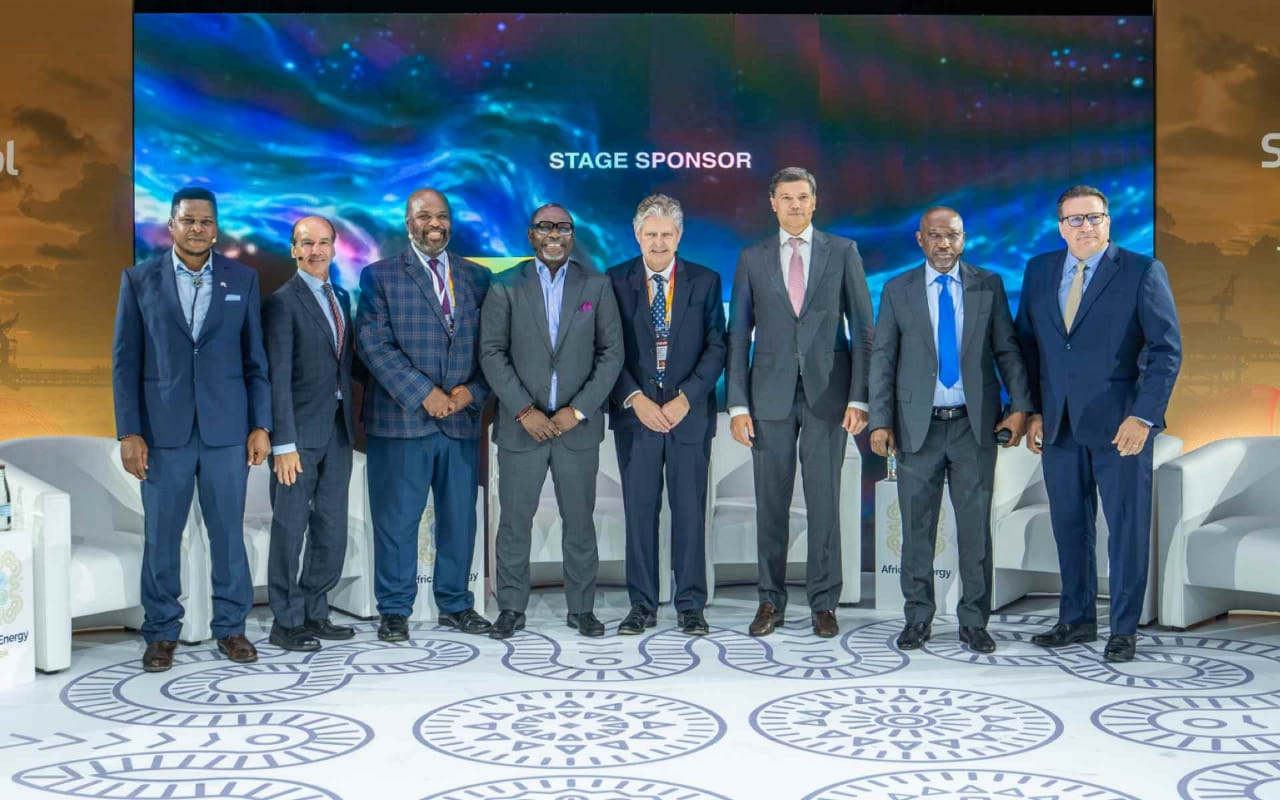
Amid regulatory overhauls and renewed U.S. export finance, leaders at African Energy Week 2025 counsel that the moment to act on U.S.–Africa energy ties is now CAPE TOWN, South Africa – U.S. political momentum and African regulatory reforms are converging to create what leaders at African Energy Week 2025 described as a strategic opening for U.S. investment in Africa’s energy sector. “This administration is unleashing opportunities,” said Mark Menezes, President & CEO of the U.S. Energy Association, pointing to the lifting of restrictions on the Export-Import Bank and other U.S. financing agencies. “Africa is resource-rich, and we see long-term partnerships not just for oil and gas but also for critical minerals.” Nigeria’s Minister of State for Petroleum Resources (Gas), Ekperikpe Ekpo, highlighted the Petroleum Industry Act and recent Executive Orders as landmark reforms designed to streamline Nigeria’s regulation, making the market more attractive to U.S. capital. “We are reducing bottlenecks and contracting timelines, as well as improving fiscal terms,” he said. Ekpo also pointed to the creation of the Midstream and Downstream Gas Infrastructure Fund, established to boost investment in gas infrastructure by de-risking projects and drawing in private investors. “Difficult issues around foreign exchange, repatriation of profits, regulatory uncertainty – those are being addressed,” said Jude Kearney, Managing Partner of Asafo & Co., commenting on the evolution of investor confidence in Africa. “African governments have also increased their capacity to do PPPs.” As stakes rise, panelists cautioned that good policy itself does not guarantee results. Andrew Inglis, CEO of Kosmos Energy, contrasted Ghana’s Jubilee project, which went from license award to production in six years, with today’s average of 20 years. “It takes more than just regulatory clarity – it takes drive from the top to get things done,” he said. “As U.S. companies, we bring finance, technology and deepwater expertise. It’s great to be supported now by an administration that believes in our industry.” Energy addition is a priority for the DOE, and nowhere can it be more impactful than here in Africa “We’re seeing a new era not only of energy dominance, but of African energy opportunity,” said NJ Ayuk, Executive Chairman of the African Energy Chamber. “But we need to back it with finance and remove the bottlenecks. There’s so much more Americans can do. We have a moment right now – seize it.” Ayuk added that African governments also have a role to play in reinforcing investor confidence. “We need to see free markets, limited government and personal responsibility. Money flows where it’s welcome. Our job in 2026 is to make Africa the most attractive destination for oil and gas investment. It also takes African ministers speaking up – when they do, it strengthens companies seeking capital to invest and expand across the continent.” Kola Karim, Group CEO of Shoreline Energy, argued that the real value U.S. companies bring is in solving infrastructure challenges. “The oil is there,” he said. “The problem is facilities, and that means financing. That’s where U.S. companies, with technology and support from DFC and EXIM, can add real value. If you can manufacture onshore in America, you can export into our markets and help us deliver faster, better projects.” From the U.S. government side, Andrew Rapp, Senior Adviser at the U.S. Department of Energy, affirmed that Washington sees Africa’s energy future as integral to global prosperity. “Energy addition is a priority for the DOE, and nowhere can it be more impactful than here in Africa. This is our goal as an agency and it has support from the highest levels of the administration.”