

By Kizito CUDJOE
Ghana needs a dedicated Gas Act to provide the legal certainty required to attract investment and drive the next phase of development in its domestic gas industry, former Ghana Gas Chief Executive Officer (CEO) Dr. Ben Asante has said.
Dr. Asante, now Paramount Chief of the Juansa Traditional Area, said the proposed legislation would provide the “legal impetus” for developing the industry, arguing that gains made in building gas infrastructure and technical capacity could be undermined without a clear statutory framework to guide the sector.
The Public Interest and Accountability Committee (PIAC) has previously identified gaps in the legal framework governing the gas sector, noting that the Petroleum Industry Act, 2016 (Act 919) regulates oil and gas within the broader definition of ‘petroleum’ rather than through a dedicated gas-specific law.
According to PIAC, the absence of gas-specific legislation has contributed to overlapping and sometimes contradictory regulatory directives, creating uncertainty for industry players.
“The lack of gas-specific legislation has resulted in overlapping and sometimes contradictory directives from regulators, creating uncertainty among industry players. A Gas Act needs to be passed,” PIAC has stated.
While acknowledging ongoing efforts to develop the legislation, Dr. Asante urged its speedy completion when he delivered the opening remarks as Chairman of the second Technical Consultative Workshop (TCW) gas sector issues in Accra.
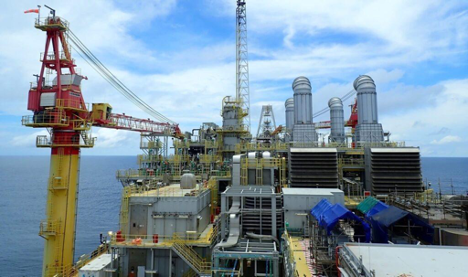
This call comes as government continues to pursue the construction of a Second Gas Processing Plant (GPP II), a major infrastructure project expected to ease the country’s energy challenges and save millions of dollars in fuel costs – potentially expanding the domestic gas value chain’s scale and complexity.
Dr. Asante also called for clearer institutional mandates, stressing the need for an unambiguous regulatory framework to eliminate overlapping roles across the gas value chain.
“There are times when we have conflicting roles even between the institutions. Maybe an aggregator role. The other one is doing that as well. It’s got to be very clear. Who is the aggregator? Who is the operator? Who is running the pipeline? Who is running the processing plant? So, clear and unambiguous institutional and regulatory framework,” he stated.
He further stressed the need for improved access to capital for financing infrastructure linking gas supplies to markets, as well as prompt and regular payments for gas suppliers and service providers to support the industry’s long-term sustainability.
The second TCW organised by PIAC follows its maiden edition held in October 2024, which focused on decline of the country’s petroleum production.
Chairman-PIAC Richard Ellimah said some attempts had been made to implement recommendations from the previous workshop, while describing natural gas as strategically important to national development.
“Gas is essential not only for electricity generation and energy security, but also for industrialisation, job creation, revenue mobilisation and the broader transformation of our economy,” he said.
However, he said the sector continues to face challenges including inadequate infrastructure, supply constraints, financial obligations across the energy value chain and gas utilisation inefficiencies.
“Recent discussions on expanding gas processing capacity and strengthening gas-to-power supply underscore the urgency of addressing these challenges in a coordinated and sustainable manner,” he stated.
Mr. Ellimah said the second TCW is therefore taking place at a critical moment, providing an opportunity for stakeholders to examine the sector’s constraints and develop practical recommendations.
He said PIAC is particularly interested in ensuring that the country’s gas resources are managed efficiently, that the public derives maximum value from them and decisions taken today contribute to sustainable development for present and future generations.
Against the backdrop of government’s industrialisation drive under its ‘24-Hour Economy’ initiative, Mr. Ellimah said PIAC fully supports the construction of GPP II to drive the industrialisation agenda.
A member of the National Energy Transition Committee (NETC) – Ministry of Energy and Green Transition, Callistus Neru, said the ministry has taken note of the policy recommendations made by the former Ghana Gas CEO.
“Building a resilient gas economy has been one of the ministry’s top priorities, not only because of gas availability in the country, but also the potential of gas to provide energy security and drive industrialisation,” he said.
Mr. Neru said about 70 percent of electricity consumed in the country currently comes from gas, while the resource is also used for other purposes.
this, he said, gas remains a valuable asset to the ministry and country – commending PIAC for bringing stakeholders together to deliberate on strategies for building a resilient gas economy.
He said the ministry looks forward to the engagement’s outcome, adding: “We believe that a well-developed gas value chain is fundamental to achieving a resilient gas economy”.
Leave a Reply