


Monrovia, Liberia
The Managing Director of the Liberia Electricity Corporation, Mohammed M. Sherif, says Liberia is making significant progress in expanding access to electricity. The country has set an ambitious target of connecting 75 percent of households and businesses by 2030.
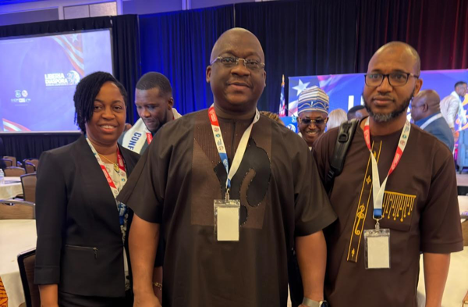
Mr. Sherif stated this in an address during Liberia’s second Annual Diaspora Conference held in the United States of America, under the theme: “From Dialogue to Delivery: Mobilizing the Global Liberian Diaspora for National Transformation.”
He told Liberians across the diaspora that the electricity sector has recorded some improvements under the administration of President Joseph Boakai, with access rising from about 20 percent in 2023 to between 38 and 40 percent currently.
The LEC Managing Director said the government’s 2030 vision means expanding electricity connections to various communities across Liberia, while ensuring that businesses also have reliable access to power.
He highlighted recent connections in areas including Brewerville, Bentor, Buchanan, Cestor, Compound One and Two, and other parts of western Liberia.
Mr. Sherif encouraged Liberians living abroad to consider returning home, as the country’s electricity provision has changed significantly as compared with previous years.
According to Mr Sherif, the country’s current power generation is about 146 megawatts, with the Mount Coffee Hydropower Plant contributing approximately 88 megawatts, while solar generation is also being expanded.
He said the government and LEC are pursuing several major generation projects that could increase Liberia’s power capacity to more than 1,000 megawatts.
The planned projects include:
316 megawatts from the St. John River Hydropower Project;
250 megawatts from the St. Paul 2 Hydropower Project;
200 MWp solar project in Grand Cape Mount County;
Two 100 MWp solar projects in Yekepa and Buchanan;
Modular rural heavy-fuel-oil power plants and associated 33-kilovolt networks.
The LEC is also working with Tarpeh Global Initiatives on plans for a 300-megawatt gas-fired power plant in Buchanan, while other independent power producer projects are reportedly underway.
Mr. Sherif put the estimated combined investment in the planned power projects at about US$1.3 billion.
Smart Meters to Tackle Power Theft
The LEC is also introducing smart meters as part of efforts to reduce electricity theft and commercial losses.
Mr. Sherif highlighted about 28 percent of electricity losses linked to power theft, adding that the new technology will allow the corporation to monitor consumption more effectively.
Under the smart-meter system, customers and the LEC will receive alerts when attempts are made to tamper with meters, allowing the corporation to respond more quickly to suspected electricity theft.
The government has also allocated an additional US$50 million in the national budget to support the smart-meter programme.
Lower Tariffs and Rising Revenue
Mr. Sherif said electricity tariffs have also been reduced significantly, from about 60 percent to 22 percent, resulting in lower bills for consumers.
He added that the LEC’s revenue performance has improved, rising from about US$30 million to US$85 million in 2025.
He revealed that the corporation is also developing a self-service platform intended to allow customers to access electricity-related services more directly.
Mr. Sherif assured LEC remains open to private-sector investment and partnerships as Liberia seeks to expand generation, transmission and distribution infrastructure.
He said the corporation’s long-term projection is to increase generation capacity to about 506 megawatts by 2030, alongside the larger pipeline of projects being developed.
LEC says the expansion programme is intended to improve electricity access, support businesses and attract investment as Liberia works toward its 2030 national development goals.
Leave a Reply