

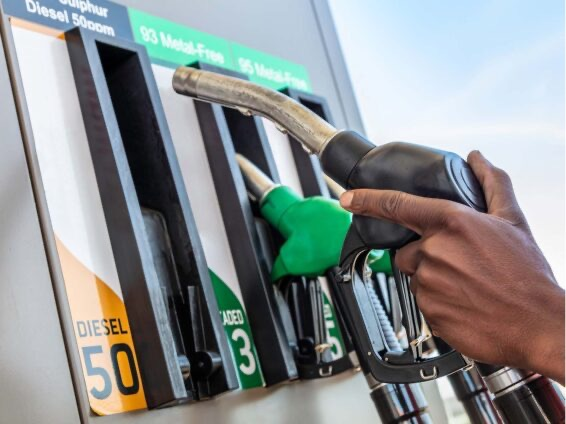
Ghanaian motorists and businesses could face a sharp increase in diesel prices in the first pricing window of October 2026, with the Chamber of Petroleum Consumers (COPEC) projecting a rise of 22.91%.
The Chamber estimates that the mean price of diesel could increase from GH¢18.24 to GH¢22.42 per litre, reflecting rising international petroleum prices and a depreciation of the cedi against the US dollar.
COPEC also projects a 5.21% increase in petrol prices, while Liquefied Petroleum Gas (LPG) is expected to rise to GH¢15.68 per kilogramme.
The projections point to renewed pressure on Ghana’s downstream petroleum market as international prices and exchange-rate movements combine to raise the cost of petroleum products.
International prices push diesel higher
According to COPEC, the international Free on Board (FOB) price of diesel increased from US$1,404.73 to US$1,524.22 per metric tonne during the pricing period, representing an 8.51% increase.
The Chamber said the cedi also weakened against the US dollar, with the average interbank exchange rate moving from GH¢11.4830 to GH¢11.6211.
COPEC’s calculation takes both developments into account in arriving at the projected pump price of GH¢22.42 per litre.
The Chamber estimates that diesel could trade within a range of GH¢19.40 to GH¢21.44 per litre within a ±5% range around its projection.
«“The projected retail pump price for diesel in the next window shall work up to GH¢22.42/L, representing a 22.91% increase of the current mean price of GH¢18.24/L,” COPEC stated.»
The projected diesel increase is significantly higher than that expected for petrol and could have broader implications for businesses and commercial transport operators that rely heavily on diesel.
Petrol expected to rise by 5.21%
Petrol prices are also projected to increase, although at a considerably slower rate.
COPEC estimates that the FOB price of petrol rose from US$1,251.07 to US$1,304.39 per metric tonne, equivalent to a 4.26% increase.
After factoring in the exchange-rate movement, the Chamber projects a petrol pump price of GH¢17.78 per litre, up 5.21% from the current mean price of GH¢16.90.
The expected price range is between GH¢16.89 and GH¢18.67 per litre.
LPG price projected at GH¢15.68 per kilogramme
The pressure is also expected to extend to LPG, an important fuel for households and businesses.
COPEC said the international FOB price of LPG increased from US$712.43 to US$777.59 per metric tonne, representing a 9.10% increase.
Based on the international price and exchange-rate movements, the Chamber projects an LPG retail price of GH¢15.68 per kilogramme.
It expects prices to fall within a range of GH¢14.89 to GH¢16.48 per kilogramme under its ±5% pricing margin.
Crude prices climb
COPEC attributed the projected increases largely to developments on the international petroleum market.
The Chamber said global crude oil prices increased from US$103.07 per barrel to US$124 per barrel during the relevant pricing window.
The combination of higher international petroleum prices and a weaker local currency increases the cedi cost of petroleum products imported into Ghana.
The impact, however, varies across products depending on movements in their respective international benchmark prices.
COPEC calls for expansion of local refining
Beyond the immediate October price outlook, COPEC has renewed its call for increased domestic refining capacity as a way of reducing Ghana’s dependence on imported finished petroleum products.
The Chamber commended government for maintaining crude supplies to local refineries, saying the move was supporting refinery operations.
However, COPEC said Ghana needs to accelerate the expansion of the Tema Oil Refinery’s capacity from the current 45,000 barrels per day to 100,000 barrels per day.
“We believe this will go a long way in reducing our reliance on imported finished petroleum products,” COPEC Executive Secretary Duncan Amoah said.
Expanding local refining would not insulate Ghana completely from international crude-price movements, but it could reduce the country’s reliance on imported refined products and strengthen domestic supply capacity.
OMCs urged to absorb some increases
COPEC has also appealed to Oil Marketing Companies (OMCs) to consider absorbing part of the expected increase by reducing their margins.
The Chamber urged marketers to consider “shelving some of their margins” rather than passing the entire increase on to consumers.
The call comes as households, transport operators and businesses face potential increases in fuel-related operating costs.
The October pricing outlook therefore highlights the continuing influence of three key factors on Ghana’s petroleum market: international petroleum prices, movements in the cedi-dollar exchange rate and the country’s domestic refining capacity.
For consumers, the immediate focus will be on how the projected increases translate into actual pump prices when OMCs announce their prices for the first October pricing window.
Leave a Reply